Baltimore Declares Code Blue Extreme Cold Jan. 19 to 21; Shelters Open
Baltimore is under a Code Blue Extreme Cold alert through Jan. 21 as wind chills drop into the teens and single digits, prompting expanded shelters and services for vulnerable residents.
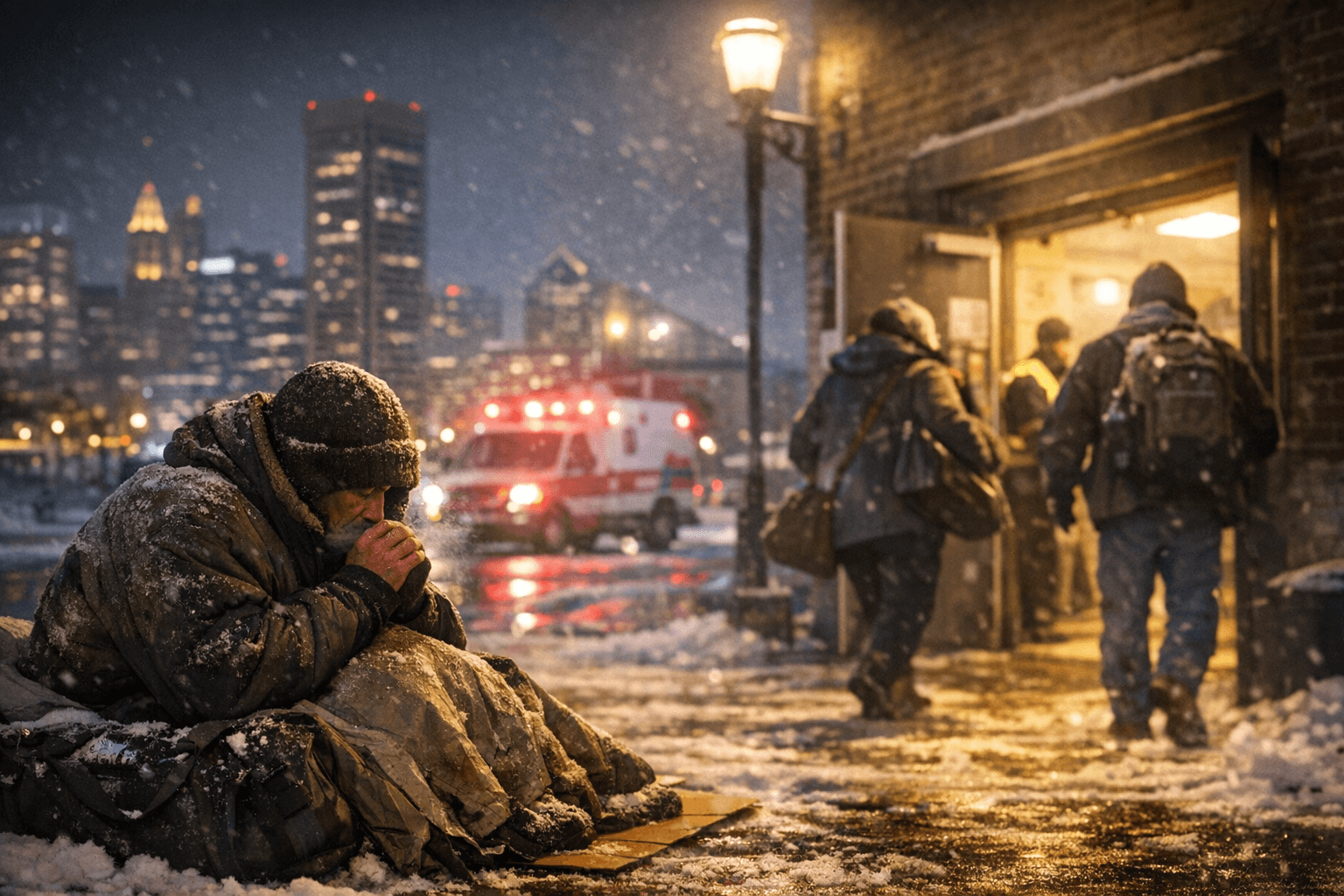
Baltimore is under a Code Blue Extreme Cold alert through Jan. 21 as forecasted wind chills are falling into the teens and single digits, the Baltimore City Health Department said. The alert mobilizes city resources to protect people at highest risk of hypothermia and frostbite and expands access to shelters and warming centers across the city.
BCHD announced the Code Blue on Jan. 18 after meteorologists forecast temperatures and wind chills near the threshold that triggers an extreme cold response - roughly 13°F or below. The agency cited the increased risk of hypothermia and frostbite for infants, older adults, and people experiencing homelessness, and described a coordinated city response to reduce that risk.
Under the alert, the city has opened additional warming centers and expanded shelter capacity, increased meal distribution targeted to at-risk older adults, and stepped up outreach to people living outside or in shelters. City agencies are also promoting weatherization and energy-assistance resources to help households cope with high heating costs and to reduce exposure in poorly insulated homes. Residents are urged to use 311 or 211 to access information about services and resources, and to call the Baltimore City Shelter Hotline for emergency shelter placement.
The immediate public health concern is straightforward: prolonged exposure to extreme cold can lead to hypothermia and frostbite, and those conditions progress rapidly for people with limited shelter or underlying health problems. Infants require special attention because they lose heat faster than adults, and older adults can have blunted cold responses and chronic conditions that increase vulnerability. The city’s outreach teams are prioritizing these groups for shelter referral and meal services during the alert period.
The alert also highlights deeper systemic issues that shape who bears the brunt of cold weather. Housing instability, underfunded heating assistance, and energy-inefficient housing leave many Baltimoreans - particularly low-income households and people experiencing homelessness - more exposed to weather extremes. The expanded services aim to mitigate immediate harm, but advocates note that recurring Code Blue responses point to persistent gaps in housing and energy policy.
For residents, the immediate actions are practical: check on vulnerable neighbors, follow city guidance on cold-weather safety for infants and older adults, and use city hotlines to connect people in need with shelter and services. As the city weathers the cold spell, the coming days will also test how short-term emergency response links to longer-term efforts to reduce housing and energy vulnerability in Baltimore.
Sources:
Know something we missed? Have a correction or additional information?
Submit a Tip