Bamberg Historic District Showcases 19th-Century Homes, Railroad Era Growth
Bamberg Historic District preserves 56 19th- and early-20th-century homes tied to the Southern Railway; preservation affects downtown planning, tourism, and neighborhood identity.
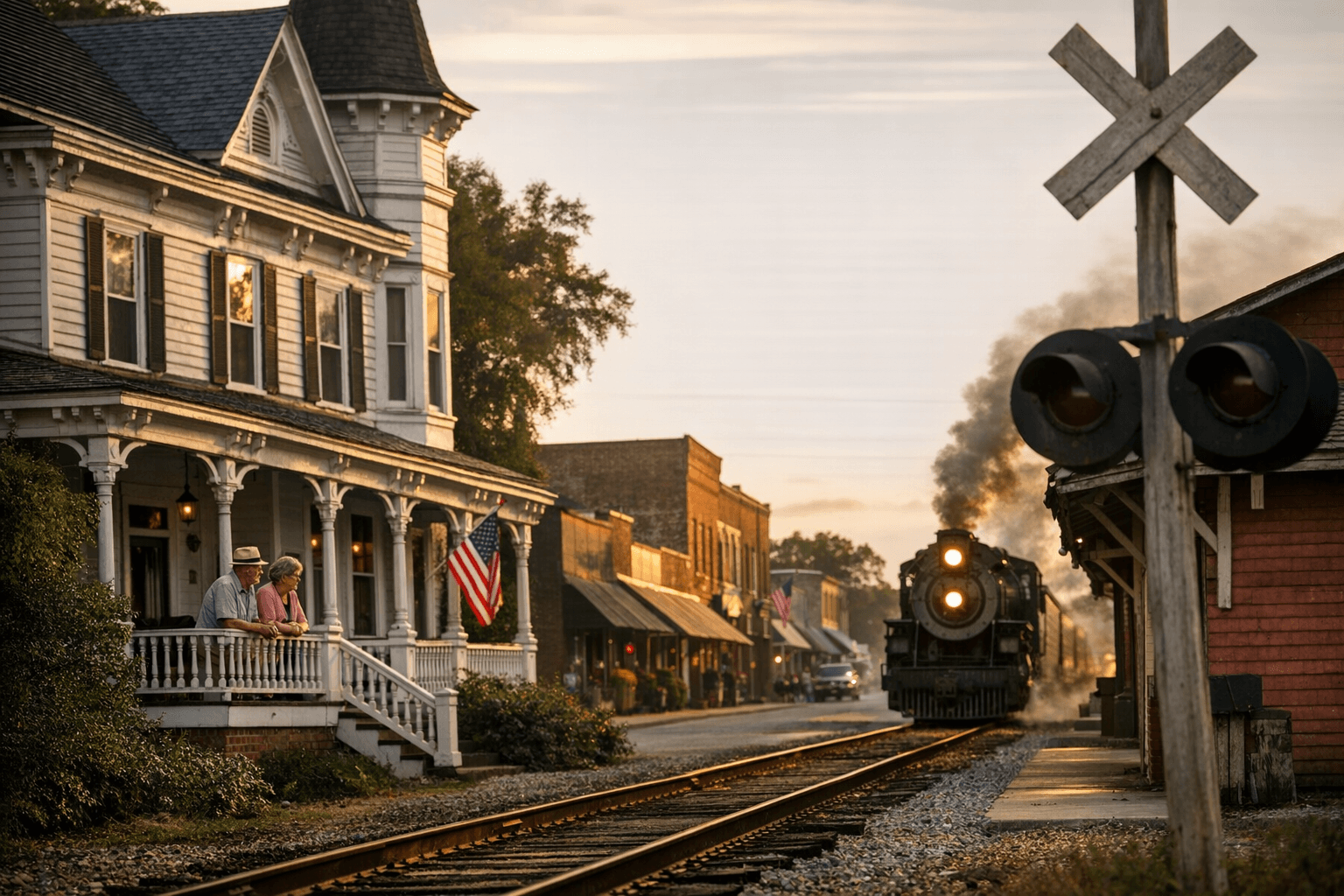
The Bamberg Historic District, centered on East Railroad Avenue and sections of 2nd, Midway, Elm, Cannon, North Carlisle, and Church Streets, preserves a concentrated collection of 19th- and early-20th-century residential architecture that helped shape Bamberg’s identity and role as county seat. Listed on the National Register of Historic Places on May 19, 1983, the district includes 56 contributing buildings and a cemetery dating to 1852, documenting community growth from about 1875 through the early 1900s.
Architectural variety is a signature of the district. Homes display vernacular residential forms alongside Late Victorian, Queen Anne, Neo-Classical, Second Empire, Bungalow/Craftsman, and Gothic Revival influences. Many properties feature expansive porches and decorative carpenter’s ornamentation, creating the porch-lined streetscape that residents recognize today. The district also contains properties associated with locally important citizens, including the General Francis Marion Bamberg House, anchoring local memory alongside built form.
Railroad-driven growth is central to the district’s historic significance. The old Southern Railway corridor helped concentrate commerce and civic development around East Railroad Avenue, producing the residential expansion visible in the district’s building stock. That transportation link is not merely historical; it shaped the municipal layout and the civic functions that affirmed Bamberg as county seat.
For residents and local planners, the district functions as a downtown anchor and a lever for economic and infrastructure decisions. Preservation-minded projects are part of planning conversations, and the district figures into grant applications and targeted investments. Recent local planning has highlighted stormwater and infrastructure upgrades designed to protect both access to downtown and the historic structures themselves, reflecting the way physical maintenance intersects with cultural preservation.
The district is primarily residential, and many buildings are privately owned; visitors should respect homeowners’ privacy. A walking-tour brochure has been produced in the past and is or was available through local tourism offices and the Bamberg County Chamber of Commerce for those who want a self-guided look at architectural highlights.
What this means for Bamberg County is practical and civic: preserved homes and a well-defined historic district offer opportunities for modest tourism, downtown revitalization, and competitive historic-preservation grants while reinforcing local pride. As infrastructure projects proceed and planning continues, protecting the district’s porches, rooflines, and streetscapes will remain central to sustaining both access and the community character residents value.
Sources:
Know something we missed? Have a correction or additional information?
Submit a Tip

%2Ffit-in%2F200x300%2Ffilters%3Afill(white)%2Fprod%2F795%2F201479%2Fxcxi6jzsvufh1umgwiyz.jpg&w=1920&q=75)