Bambu Lab Retires P1P Feb 2026; Parts and Support Guaranteed Through 2031
Bambu Lab has retired the P1P, stopping sales and manufacture while committing firmware updates, security patches, spare parts, and support through set dates ending in 2031.
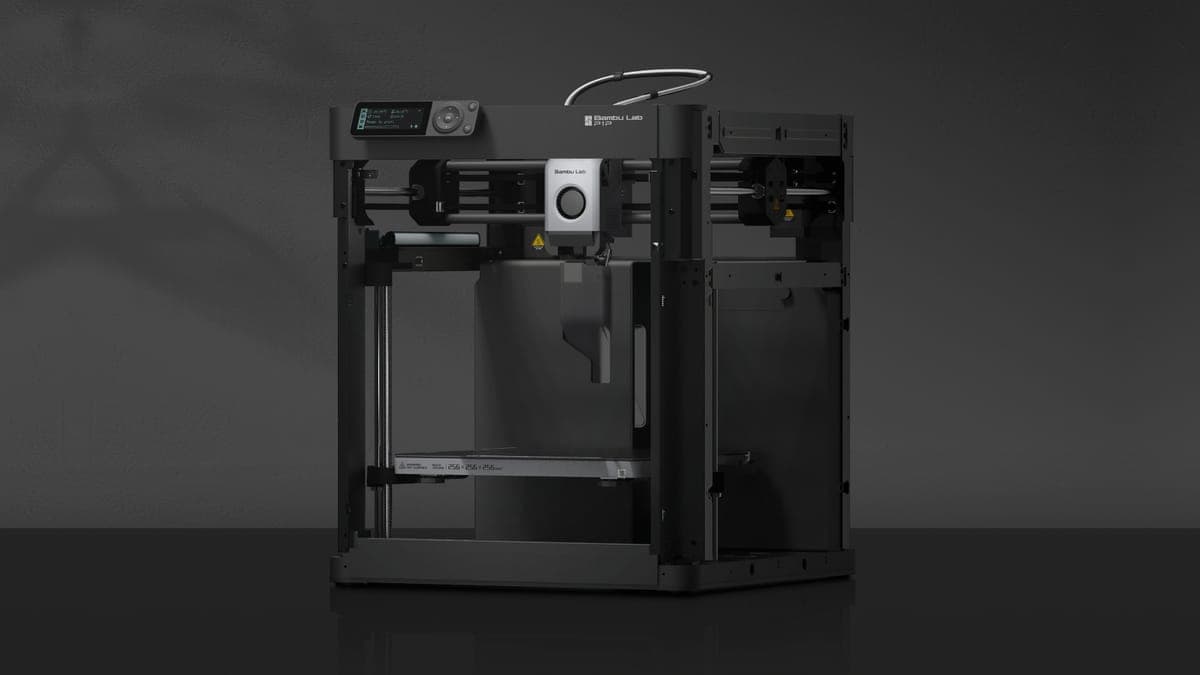
Bambu Lab has retired the P1P desktop FFF 3D printer, ending manufacture and new orders while laying out a firm end-of-life schedule that gives owners years of ongoing support. The company framed the move as the close of a three-year run for a machine it called "one of the most popular desktop 3D printers of recent years," and said the model "leaves behind a rich legacy, proudly carried on by the P1S and P2S models."
The official EOL timeline is explicit and actionable. Bambu Lab listed the dates this way: "End of manufacturing and active sales = 2026-02-10", "Software & firmware bug fixes and feature updates = 2027-11-14", and "Software & firmware security patches = 2029-11-14". The company further pledged "continuous supply of spare parts = February 2031" and "uninterrupted support = February 2031", noting "The EOL of the P1P simply means that the 3D printer will no longer be manufactured or sold. Support in terms of spare parts availability and service will continue for the next five years, until 2031."

For owners and service providers the practical picture is clear: bug fixes and new features will continue through late 2027, security patches will arrive through late 2029, and parts and technical support remain guaranteed until February 2031. Many spare parts are interchangeable with the P1S, easing maintenance and repairs. At the same time Bambu Lab and observers warn that some accessories may go out of stock sooner and the company does not plan to manufacture replacements for every accessory, so plan accordingly.
Product background explains the decision. The P1P was Bambu Lab's entry-to-mid level P-series machine, presented as the lowest-price option in the line and essentially a P1S without the enclosure. It kept the X1-derived core mechanics, electronics, and motion control while dropping enclosure and color display, and worked with the AMS system for multi-color and multi-material prints. Company messaging noted that with the P2S available, maintaining two P1-series models no longer made sense: "The decision to declare the P1P end-of-life is a natural business move... Ultimately, the market itself decided, as consumers had long been choosing the P1S over the P1P, or opting for the newer and more advanced P2S."
Verify compatibility of replacement parts, consider stocking high-use spares such as hotends and belts, and evaluate whether P1S or P2S models better match future needs. The P1P will keep printing under supported maintenance for years, but accessories and aftermarket demand are likely to shape modding and repair options as inventories dwindle.
This retirement underscores rapid product turnover in desktop 3D printing while setting an unusually long support window for a consumer-grade machine. Expect community modders and spare-parts sellers to respond quickly, and use the posted dates to plan maintenance, upgrades, or resale with confidence.
Know something we missed? Have a correction or additional information?
Submit a Tip