Bank of America CEO says World Cup could boost U.S. economy by $20 billion
Brian Moynihan said the World Cup could add about $20 billion to U.S. economic activity, a boost that would mostly hit travel, retail and hospitality.
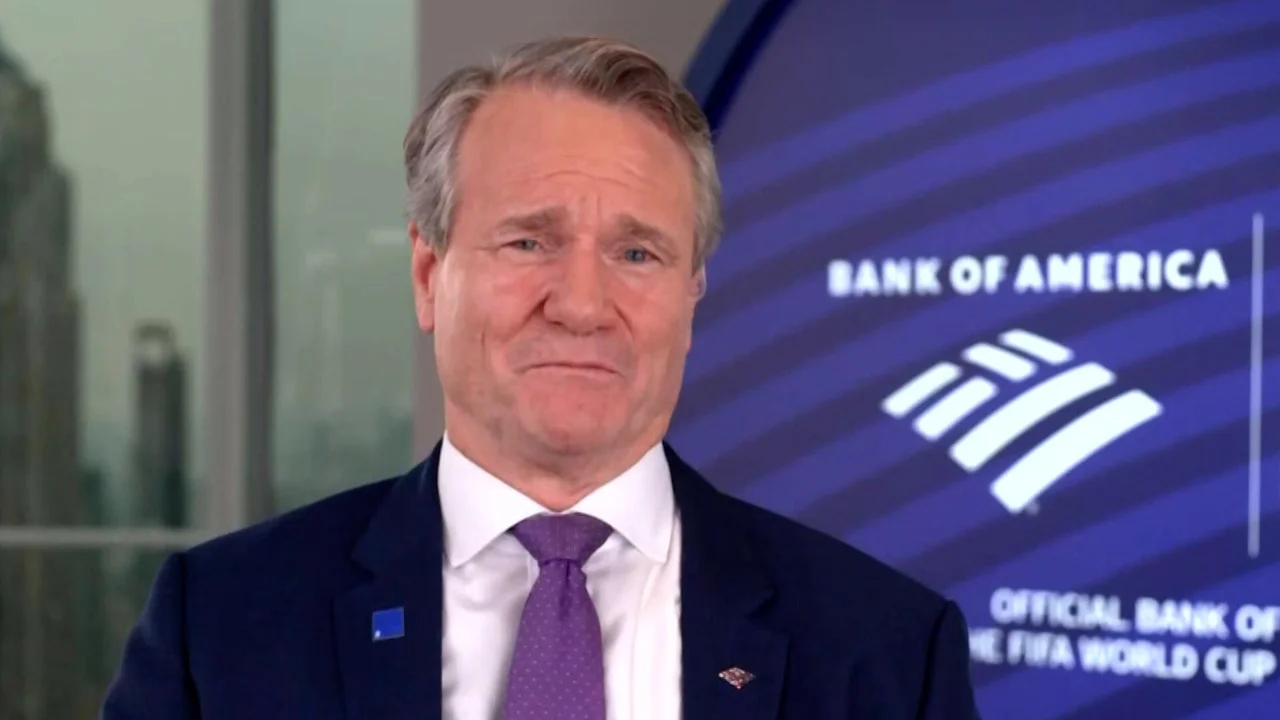
Bank of America CEO Brian Moynihan put the 2026 FIFA World Cup at about $20 billion in economic activity in the United States. The comments aired on Face the Nation with Margaret Brennan on July 19, after the interview was taped July 16.
The tournament is an economic boon for host cities across the United States, Canada and Mexico. The U.S. share of that activity flows first through hotels, restaurants, transportation and other service businesses tied to stadium traffic, rather than through a durable lift in nationwide growth.

Major sporting events push up demand for rooms, rides, meals and entertainment in host markets, raising prices in the short run while also creating extra shifts for workers in hospitality and retail. Outside those markets, the economic impact is more likely to be a brief bump in discretionary spending than a change in paychecks, borrowing costs or family budgets.
Moynihan’s number points to a measurable increase in transaction volume and consumer activity tied to the tournament, but it does not by itself change the Federal Reserve’s outlook or the broader direction of rates. Higher card spending, stronger merchant receipts and fuller hotels in the cities that host matches are the concrete measures to watch.
Moynihan also said the World Cup’s effect was “absolutely not” an insignificant one. Hotel occupancy, restaurant sales, airport traffic and payment volumes are the concrete measures in the markets that stand to benefit most from the games.
This article was produced by Prism’s automated news system from verified source data, official records, and press releases, then run through automated quality and moderation checks before publishing. The system is built and supervised by the people who set the standards it runs under. Read our full AI policy.
Did this article answer your question?