Bank of Japan to begin ultra‑slow sale of massive ETF and REIT holdings
The BOJ said it will start selling portions of its ETF and REIT portfolio next week, beginning an unwind that officials plan to pace deliberately to avoid market disruption.
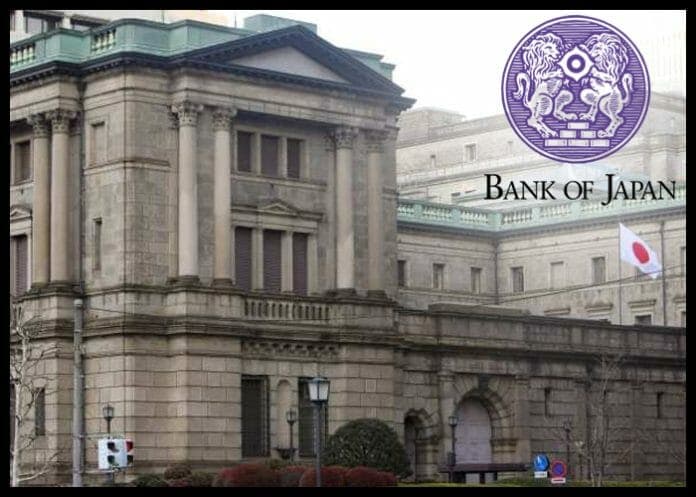
The Bank of Japan said it will begin selling parts of its vast exchange‑traded fund and real estate investment trust holdings next week, launching a deliberately gradual program first approved at a policy board meeting last September. The move marks the first explicit timetable for trimming assets accumulated since 2010 as part of a long campaign to combat deflation and stabilize markets.
BOJ disclosures show the market value of its ETF portfolio stood at about ¥83 trillion at the end of September, roughly $534 billion. The central bank has set a sales pace expressed on a book‑value basis of ¥330 billion per year, equivalent to about $2.1 billion annually. Some analysts convert that pace to market value, estimating roughly ¥620 billion a year on a market‑value basis, reflecting the difference between acquisition cost and current market prices.
Simple arithmetic at the announced pace yields strikingly long horizon estimates. Dividing the BOJ’s stated market stock by the ¥330 billion book‑value sales rate produces an interval measured in decades; one such calculation implies roughly 112 years to clear current ETF holdings if pace and portfolio composition remain unchanged. BOJ governor Kazuo Ueda is reported as saying the program would "take more than 100 years" to complete.
The central bank began buying ETFs in 2010 as part of an aggressive easing strategy to lift inflation and support asset prices in the aftermath of the global financial crisis. The latest shift comes after the BOJ abandoned ultra‑low interest rates, beginning to raise policy rates in March 2024 and signaling a long transition away from unconventional stimulus. Officials have framed the selling plan as a cautious, market‑sensitive unwind that prioritizes stability over speed.
Market implications are substantial even if the annual sales are small relative to the total portfolio. At the planned pace the BOJ will remain a dominant shareholder in Japanese equities for the foreseeable future, leaving its footprint on corporate governance and capital markets intact. Analysts and op‑eds warn that continued equity price appreciation could outpace the modest programmed sales, potentially leaving the BOJ’s market exposures unchanged or even larger in value despite steady disposals.

The disposition of gains from any sales touched on broader fiscal considerations. Elevated market values of BOJ holdings could generate accounting gains relevant to government finances, though officials have not detailed any direct fiscal use of proceeds. BOJ spokespeople did not immediately respond to media queries about operational details and sequencing.
The program’s mechanics are designed to limit market impact: sales will be paced monthly and concentrated on minimizing disruption to price discovery. That approach aims to preserve orderly conditions while testing how markets absorb the return of a major seller after a decade and a half as a steady buyer.
What begins next week is therefore less a decisive exit than a formalization of a very long transition. Policymakers will watch equity prices, liquidity metrics and corporate behavior closely as the gradual unwind unfolds, weighing the tradeoffs between reducing central bank balance‑sheet distortions and maintaining financial stability over the long term.
This article was produced by Prism’s automated news system from verified source data, official records, and press releases, then run through automated quality and moderation checks before publishing. The system is built and supervised by the people who set the standards it runs under. Read our full AI policy.
Did this article answer your question?