Bath Iron Works Workers Ratify Four-Year Deal, Ending Weeklong Strike
Workers who design and engineer the Navy's guided-missile destroyers ratified a four-year contract at Bath Iron Works, ending a strike that ran during the U.S. war effort in Iran.
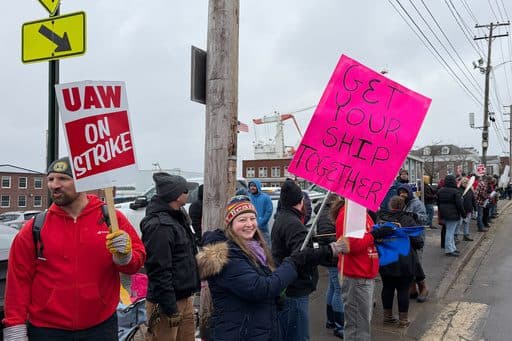
The USS Harvey C. Barnum Jr. departed Bath Iron Works on March 4, headed to Naval Station Norfolk for commissioning as the 74th Arleigh Burke-class destroyer. Days later, the technical workforce still inside Bath, Maine building the ships behind it walked off the job.
Hundreds of designers, engineers, and technicians at Bath Iron Works ratified a four-year collective bargaining agreement on Saturday, ending a weeklong strike that briefly halted production at one of the Navy's largest private shipbuilders at a moment of acute strategic pressure. The shipyard is under a multiyear contract, awarded in 2023, to produce several Arleigh Burke-class guided-missile destroyers, what Navy officials describe as "the backbone of the Navy's surface fleet." That contract was running up against a labor dispute while the United States was actively engaged in a war effort in Iran.
The Bath Marine Draftsmen's Association, affiliated with the United Auto Workers, approved the deal following an hours-long union meeting at a high school. Bath Iron Works confirmed the contract takes effect immediately.
"We look forward to working together once again to deliver the Navy's ships on time to protect our nation and our families," the company said in a statement, invoking a phrase anchored to its century-old identity: "Bath built is best built."
The union local conceded that not all its goals were met, but said "the deal includes improvements that are a win for workers." Neither side disclosed specific wage figures or vote tallies, and the union gave no specifics of the agreement. Bath Iron Works spokesperson David Hench had previously said the company "proposed a number of historic wage and benefit options" after three weeks of failed negotiations, and union leaders characterized the final agreement as a hard-won compromise.
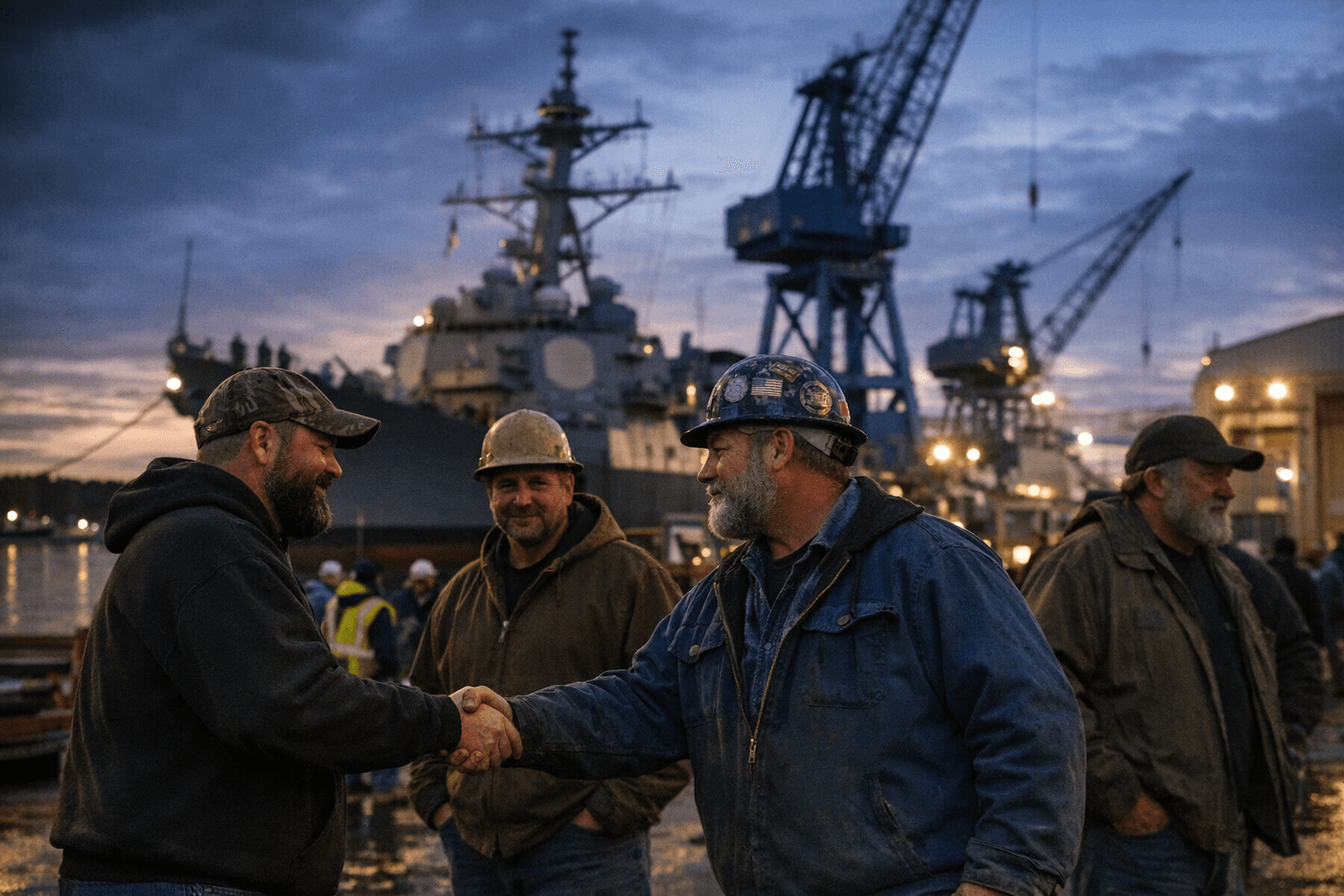
What distinguishes the Bath Marine Draftsmen's Association from other labor groups at the shipyard is the nature of the work its members perform. The BMDA represents shipyard designers, nondestructive test technicians, laboratory technicians, technical clerks, and associate engineers, the white-collar technical workforce whose sign-offs gate production milestones. A strike by hull welders slows physical construction; a strike by this cohort can freeze design changes, halt quality-control certifications, and block the documentation sequences that precede Navy acceptance trials. The weeklong work stoppage, the company acknowledged, "briefly disrupted certain production activities."
The stakes extend well beyond Bath. The Congressional Budget Office has found that Arleigh Burke-class destroyers spend more than a quarter of their planned service lives out of the fleet for maintenance, a structural readiness drain compounded by any new-build delay. The Navy exercised an option last year to add USS Kyle Carpenter (DDG-148) to Bath Iron Works' existing destroyer backlog, meaning every schedule slip ripples forward into a queue already stretched by high operational tempo in the Persian Gulf region.
Defense Secretary Pete Hegseth visited the yard in the weeks before the strike to champion the need to accelerate defense manufacturing, a backdrop that gave the walkout unusual political visibility and pushed a quick resolution well up the priority list. Representatives of the Maine AFL-CIO confirmed the ratification vote via text message to the Associated Press. Members returned to work immediately upon approval.
What the contract does not settle, at least publicly, is whether Bath Iron Works has addressed the structural staffing and retention pressures that have chronically strained the yard's ability to meet schedules. No figures were released on wage increases or benefit changes. The union's closing statement carried a pointed edge: it spoke of "developing an engaged and motivated membership that now has this experience to bring to bear in any future negotiation or organizing activity." That is less a valediction than a reminder that the current workforce just ran a dress rehearsal, and the next contract cycle is four years away.
This article was produced by Prism’s automated news system from verified source data, official records, and press releases, then run through automated quality and moderation checks before publishing. The system is built and supervised by the people who set the standards it runs under. Read our full AI policy.
Did this article answer your question?