Battery storage fire in Warwick validates New York safety code
A lithium-ion battery system fire in Warwick was contained with no injuries or evacuations, showing New York's fire code protected public safety.

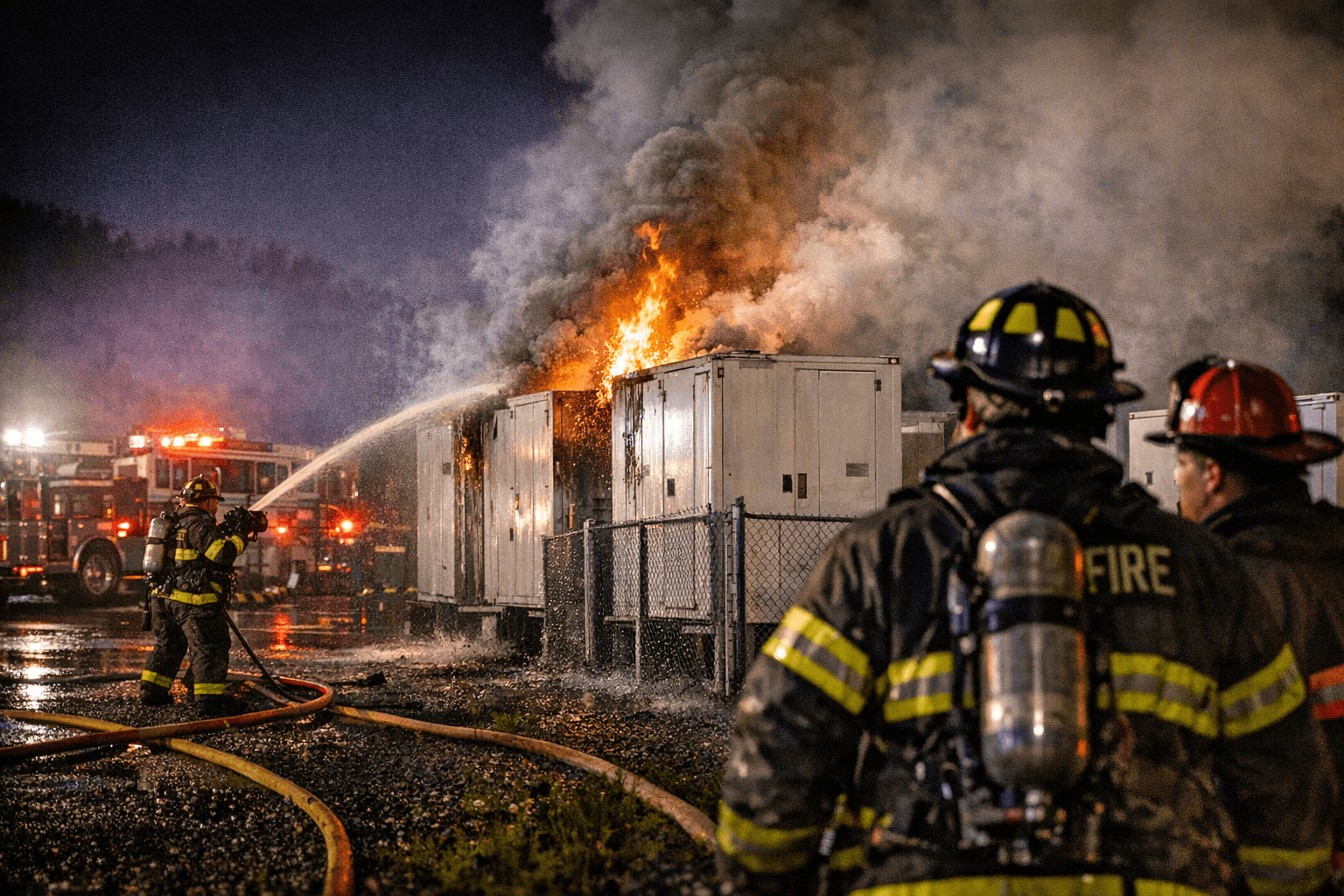
In late December a lithium-ion battery energy storage system in Warwick, Orange County, caught fire, and local fire protection systems performed as designed. Firefighters brought the incident under control within hours, the blaze was confined to limited, replaceable equipment, and air monitoring found no public health risks. There were no injuries, no evacuations, no fire spread beyond the affected unit, and no measurable impact on air quality.
The outcome highlights how New York’s updated fire code and operational practices address the particular hazards of lithium-ion batteries. Unlike conventional fires, thermal runaway in lithium-ion cells generates heat and gases that do not respond to standard water-based suppression. Fire service science and practice around the country has shifted accordingly: aggressive interior suppression can increase risk, while containment, isolation and focused air monitoring better protect people and nearby communities. For outdoor cabinet-style systems, where immediate life hazards are limited or absent, a defensive operational posture is widely considered best practice.
New York’s current safety framework emerged from a two-year collaborative effort that brought together state agencies, independent safety experts and the fire safety community. Fire safety leaders played a central role in shaping those standards, which were written to align code with how battery fires are managed on the ground. The Warwick incident provided a real-world test of that framework and, by all available measures, it passed: the safeguards prevented escalation and preserved public safety.
For Orange County residents the episode offers reassurance but also a reminder of continuing priorities. Energy storage is an important tool for grid reliability and decarbonization, yet it requires careful siting, robust fire protection design and clear operational plans for first responders. Local emergency planners, town officials and utility project developers will likely keep these considerations front and center as more battery systems come online in the region.
The larger lesson is practical and forward looking: no code can eliminate every equipment failure, but well crafted regulations and trained first responders can stop individual failures from becoming community crises. For Warwick and neighboring towns, the incident means continued vigilance, ongoing air quality monitoring where appropriate, and periodic review of response plans as technology and best practices evolve. Residents can expect officials to use this case to refine procedures and to keep the focus on protecting public health and neighborhood safety as storage projects expand.
Sources:
Know something we missed? Have a correction or additional information?
Submit a Tip