Baylor scientists identify tubulin as possible defense against protein clumps
Baylor researchers found tubulin may steer Alzheimer’s and Parkinson’s proteins away from toxic clumps, opening a new path before aggregates form.
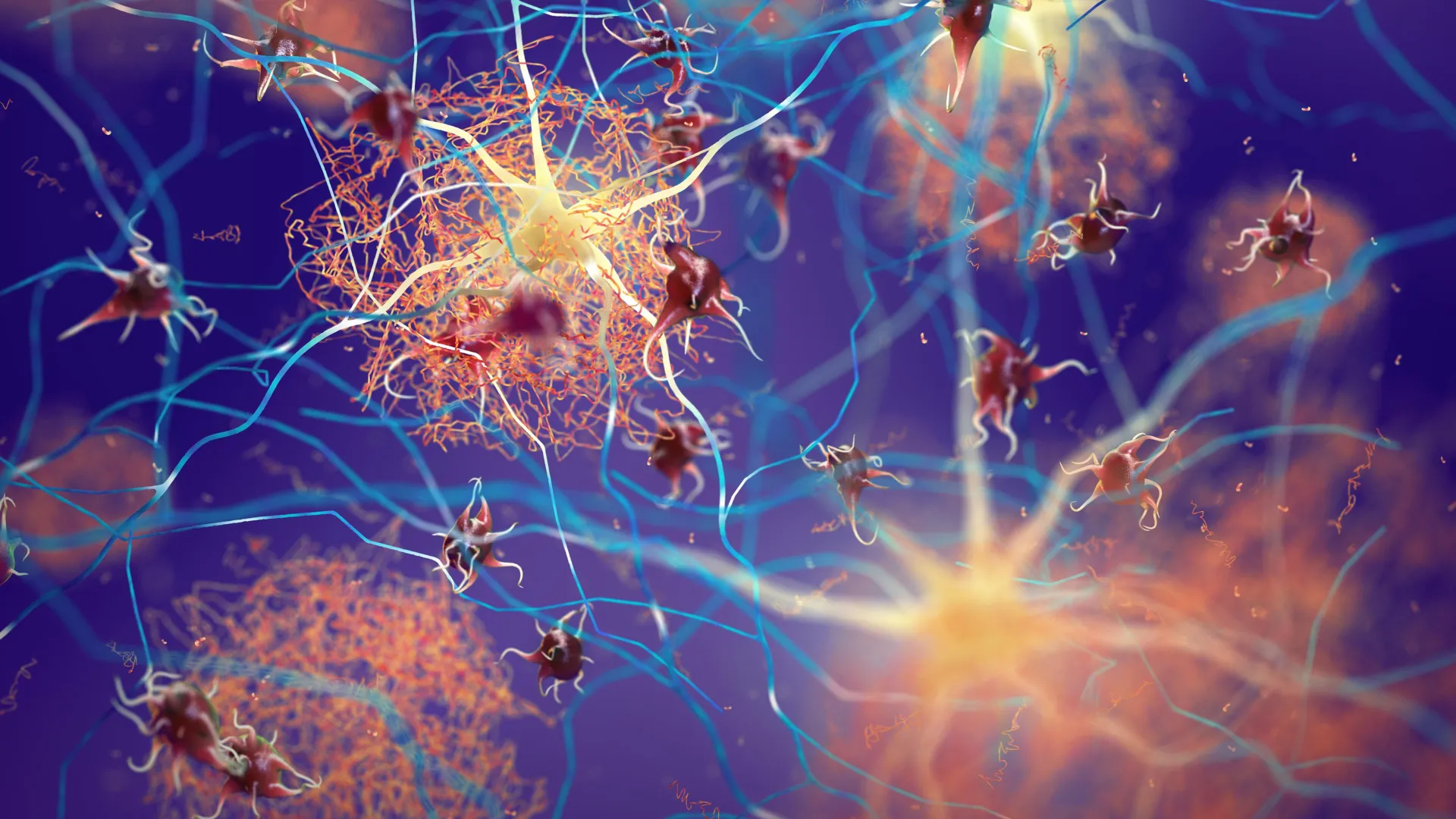
A Baylor College of Medicine study is shifting attention to an earlier question in neurodegeneration: what keeps dangerous protein clumps from forming in the first place. Rather than focusing only on clearing Tau and alpha-synuclein after they have already gathered, the work points to tubulin, a core building block of microtubules, as a possible safeguard that helps keep those proteins in a healthier state.
The study, published in Nature Communications, suggests that tubulin can alter the behavior of Tau and alpha-synuclein inside cells so they are less likely to become toxic aggregates. Baylor researchers used biochemical and biophysical techniques, high-resolution microscopy and neuronal-based assays to test how the proteins behaved in relation to the cell’s internal framework. The paper was received Nov. 1, 2025, and accepted Feb. 2, 2026.
Tubulin matters because it forms microtubules, the structural network Baylor describes as the cell’s internal railway tracks. Those microtubules help cells maintain shape and move materials where they are needed. ScienceDaily’s summary of the Baylor work said Tau and alpha-synuclein normally also help maintain cell structure and communication by interacting with tubulin and supporting microtubule assembly and stabilization. In other words, the proteins tied to Alzheimer’s and Parkinson’s are not simply villains; they also have healthy jobs in neurons.
That makes the finding more nuanced than a simple anti-clumping strategy. Baylor’s report said the goal was not to eliminate the droplets entirely, but to push Tau and alpha-synuclein toward their healthy functions inside them. The concern is that condensates can become harmful if their balance is lost. Baylor also noted that tubulin levels are low in Alzheimer’s disease, which may leave microtubules less abundant and make toxic aggregation more likely.
The work is promising, but it remains an early mechanistic step, not a therapy. Even so, it opens another route for drug development in diseases that have resisted easy fixes for years. If researchers can stabilize the cellular environment so proteins stay in their normal roles longer, that could eventually complement approaches aimed at symptoms or at removing plaques and tangles after they form.
The public health stakes are large. The Alzheimer’s Association says 7.2 million Americans age 65 and older had Alzheimer’s dementia in 2025. The Parkinson’s Foundation says more than 1.1 million people in the United States live with Parkinson’s disease, about 90,000 are diagnosed each year, and annual health care costs are nearing $82.2 billion. Baylor’s Center for Alzheimer’s and Neurodegenerative Diseases says it is working toward precision diagnosis and personalized therapies, backed in part by more than $52 million in NIH funding in 2021 for Alzheimer’s disease and related dementias research.
This article was produced by Prism’s automated news system from verified source data, official records, and press releases, then run through automated quality and moderation checks before publishing. The system is built and supervised by the people who set the standards it runs under. Read our full AI policy.
Did this article answer your question?