BBC finds foreign AI accounts pushing UK decline narrative online
Foreign-run AI pages posed as patriotic Britons while pushing anti-immigration content, with dozens of Facebook and Instagram accounts traced to Sri Lanka and Vietnam.
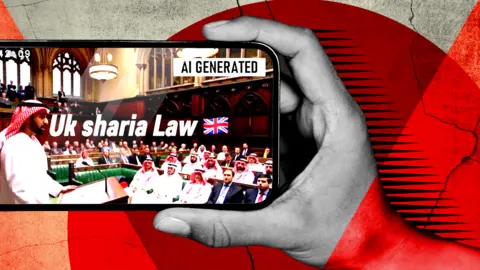
Foreign operators used AI-generated videos and images to make anti-immigration anger look homegrown, packaging a narrative of British decline as if it were emerging from ordinary patriotic users. The accounts, identified by BBC Panorama and the Top Comment podcast, were part of dozens of interconnected Facebook and Instagram profiles traced to Sri Lanka and Vietnam.
The operation mattered because it did more than spread hostile content. It simulated grassroots opinion at scale, using the credibility of familiar national identity cues to launder posts that attacked immigration and cast the United Kingdom as socially and culturally in decline. That tactic turns debate into a performance: the audience sees supposed local outrage, while the machinery behind it sits offshore.
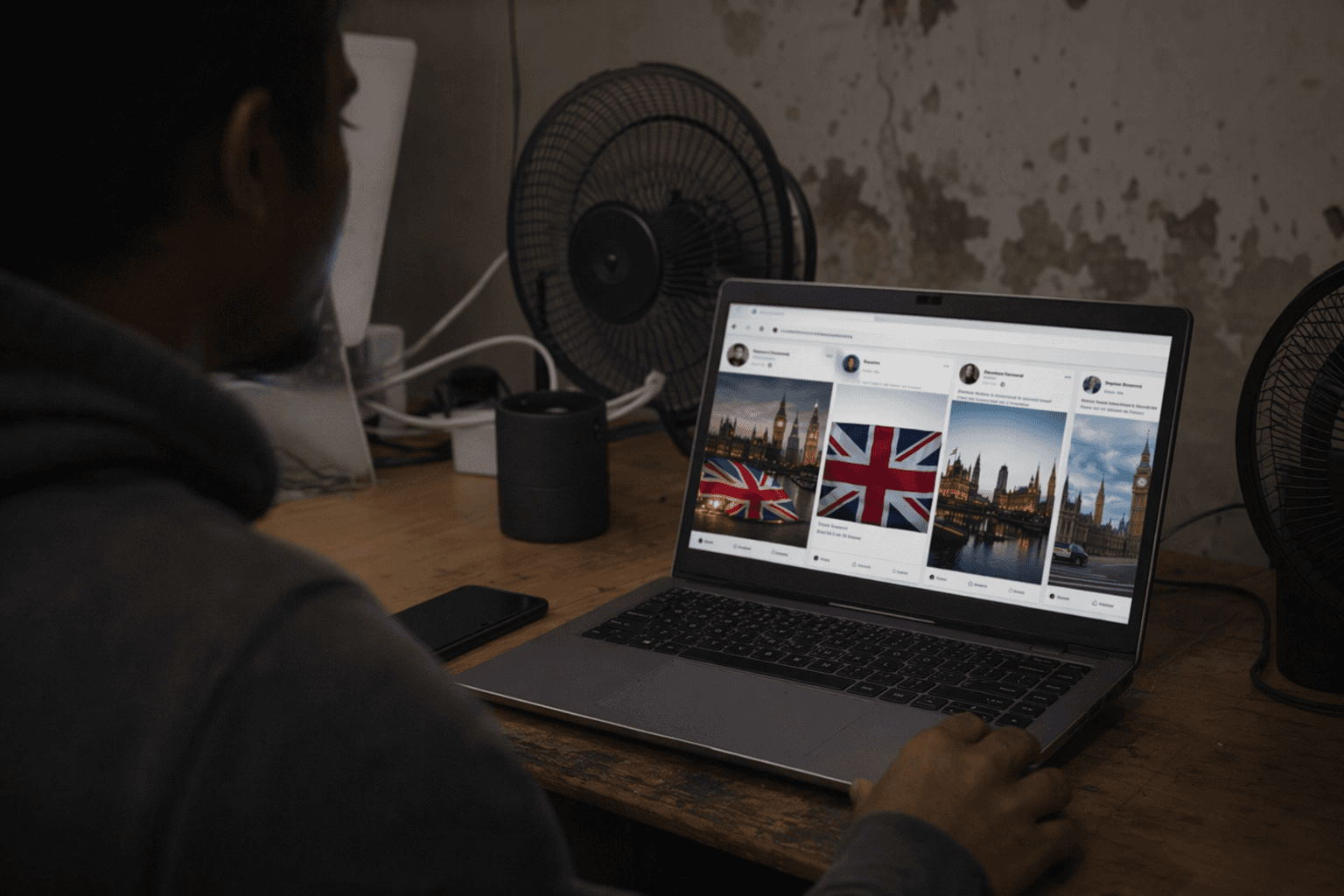
The BBC findings fit a wider pattern in which engagement-driven pages are monetized through divisive political material. In a separate 2025 investigation, the Bureau of Investigative Journalism and the Institute for Strategic Dialogue identified a commercial social media network based in Sri Lanka that ran more than 100 Facebook pages and groups and reached more than 1.6 million followers. Its most shared post drew almost 23,000 shares, and the operator claimed to have made about $300,000 from Facebook pages and groups.
Researchers have warned that generative AI has changed the economics of this work. Sam Stockwell of the Centre for Emerging Technology and Security said the tools now let users create highly realistic, tailored content that can be scaled quickly, lowering the cost of manufacturing seemingly personal political messages. That is exactly what makes the current threat more dangerous than the old fake-account playbook: content farms no longer need polished production teams or native fluency to imitate emotional, locally resonant anger.
For Meta, the findings sharpen the enforcement problem. The platform is not just confronting fake profiles or spam networks; it is confronting coordinated political influence operations that exploit its recommendation systems, cross-post across Facebook and Instagram, and adapt quickly enough to keep pace with moderation. For UK regulators, the issue is election-era information integrity in an environment where foreign actors can mimic domestic debate at industrial scale. The central risk is no longer simply that false accounts exist online. It is that outsourced manipulation can make manufactured resentment look like a national mood.
This article was produced by Prism’s automated news system from verified source data, official records, and press releases, then run through automated quality and moderation checks before publishing. The system is built and supervised by the people who set the standards it runs under. Read our full AI policy.
Did this article answer your question?