BBC Sport ranks the 10 most iconic World Cup shirts
These shirts became symbols, not souvenirs. BBC Sport’s ranking shows how football fabric outlives the tournament.
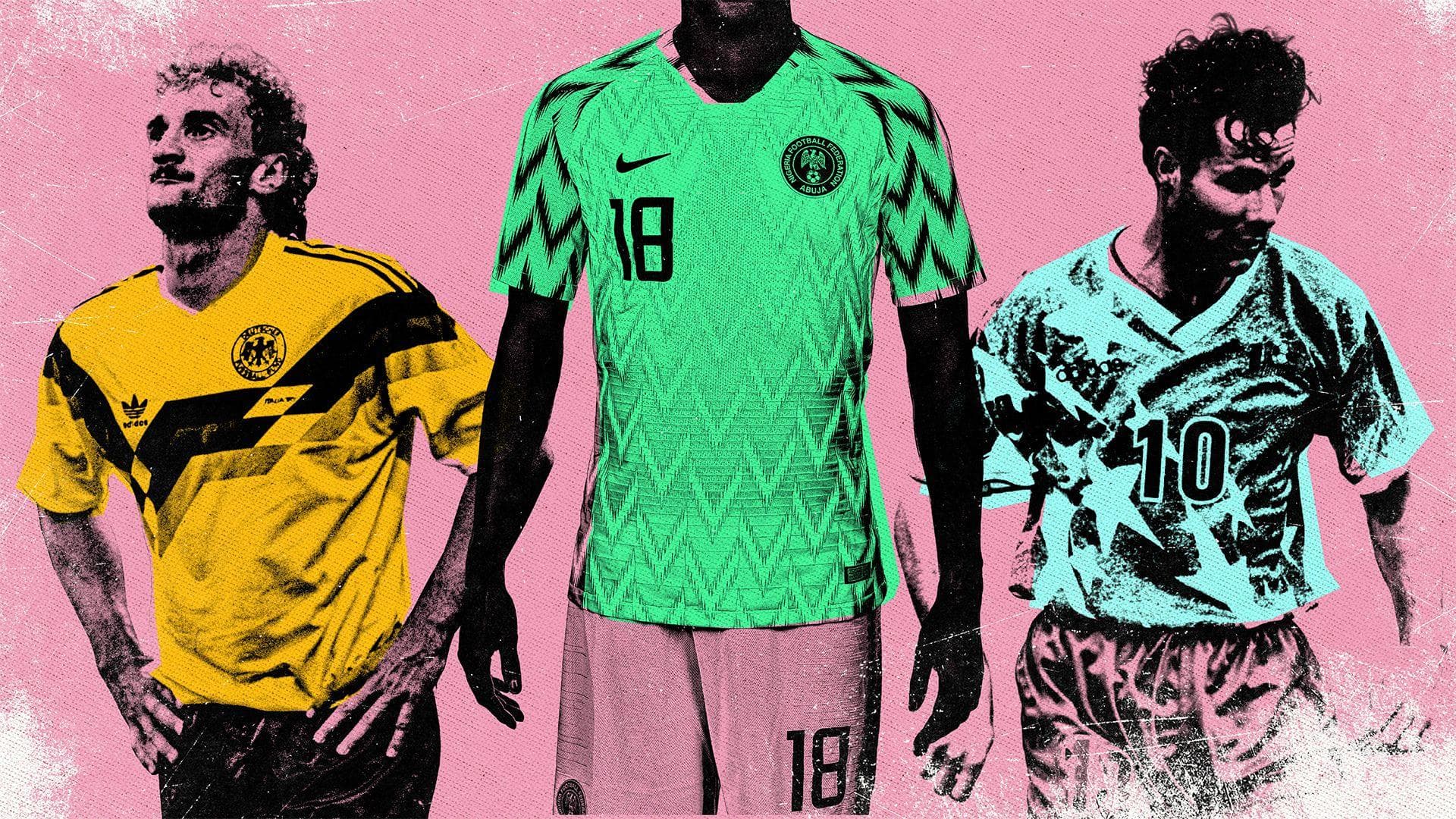
1. Nigeria 2018
Nigeria’s 2018 home shirt turned a World Cup kit into a global fashion drop. Nike unveiled it on 1 June 2018, CNBC reported 3 million pre-orders, and Matthew Wolff’s design nodded back to Nigeria’s 1994 debut with a green torso and black-and-white sleeves, making the shirt feel like both heritage and hype. Wolff also names Mexico 1998, USA 1994, Germany 1990 and 1994, Japan 1998, Nike’s 2002 set and Cameroon’s sleeveless top among his childhood favourites, which is exactly the point: a shirt becomes iconic when memory, mythology and mass demand collide.
2. Cameroon 2002
Cameroon’s sleeveless Puma top is iconic because it crossed the line from bold to banned. FIFA blocked the design for the 2002 World Cup because the tournament patch could not be attached to the sleeves, and the eventual compromise only sharpened its reputation as one of the bravest ideas ever pushed through football’s uniform rulebook.
3. Brazil 1970
Brazil’s 1970 shirt remains the visual shorthand for football at its most expressive. The canary-yellow jersey with green trim, worn by Pelé’s generation in Mexico, still represents the game’s ideal of elegance, joy and attacking flair, which is why it keeps resurfacing whenever people talk about the sport’s most beloved side.
4. Argentina 1986

Argentina’s 1986 shirt is tied to Diego Maradona’s legend so tightly that the fabric itself has become part of the folklore. The Tepito-to-Azteca story around that jersey, and the way it is still spoken of as the shirt of one of the game’s defining tournaments, explains why a match-worn example reportedly sold for $9.28 million.
5. France 1998
France’s 1998 home shirt was built for a home-soil triumph and then fixed in place by one of the cleanest championship narratives in World Cup history. The adidas design, with its blue base and red-and-white accents, is inseparable from Les Bleus’ first world title and the moment a national shirt became the uniform of a winning generation.
6. Spain 2010
Spain’s 2010 shirt proves that restraint can still become a national symbol when it is paired with a breakthrough. The red adidas home strip with yellow accents became the look of La Roja’s first World Cup title, and the star added to the crest turned a simple design into a permanent marker of Spain’s football peak.
7. Germany 1990
West Germany’s 1990 shirt is one of football’s sharpest examples of design carrying political and sporting symbolism at once. The white adidas jersey with its black, red and gold chest pattern was worn in Italy when Germany won the World Cup, with Andreas Brehme’s penalty and Lothar Matthäus’ leadership giving the shirt an image that still reads as instant history.

8. Italy 1982
Italy’s 1982 Le Coq Sportif shirt endures because it says so much with so little. The blue base, finished with white and gold details and the red, white and green trimmings at the collar and cuffs, became the uniform of the Azzurri’s title run in Spain, a look that still feels like old-world football authority.
9. United States 1994
The United States’ 1994 shirt made the World Cup feel newly accessible to a mass American audience. Flashscore describes the adidas home kit as denim-inspired blue, with stars above bright red shorts, a direct translation of the flag into sportswear that helped turn the host nation’s tournament into a broader pop-culture event.
10. Netherlands 1974
The Netherlands’ 1974 shirt is the kind of kit that outlives the result because the idea behind it was bigger than the final score. The bright orange jersey, with its black trim and the Cruyff-era aura of Total Football, became a permanent cultural artifact, and it sits at the start of a collecting boom that now spans 1,000 World Cup shirts designed between 1930 and 2022, before the first 48-team tournament in 2026 adds a new wave of contenders.
This article was produced by Prism’s automated news system from verified source data, official records, and press releases, then run through automated quality and moderation checks before publishing. The system is built and supervised by the people who set the standards it runs under. Read our full AI policy.
Know something we missed? Have a correction or additional information?
Submit a Tip