BBC’s early immigrant show helped South Asians settle in Britain
BBC immigrant shows mixed Hindi, Urdu and English with practical advice for new arrivals, turning public broadcasting into a settlement guide.
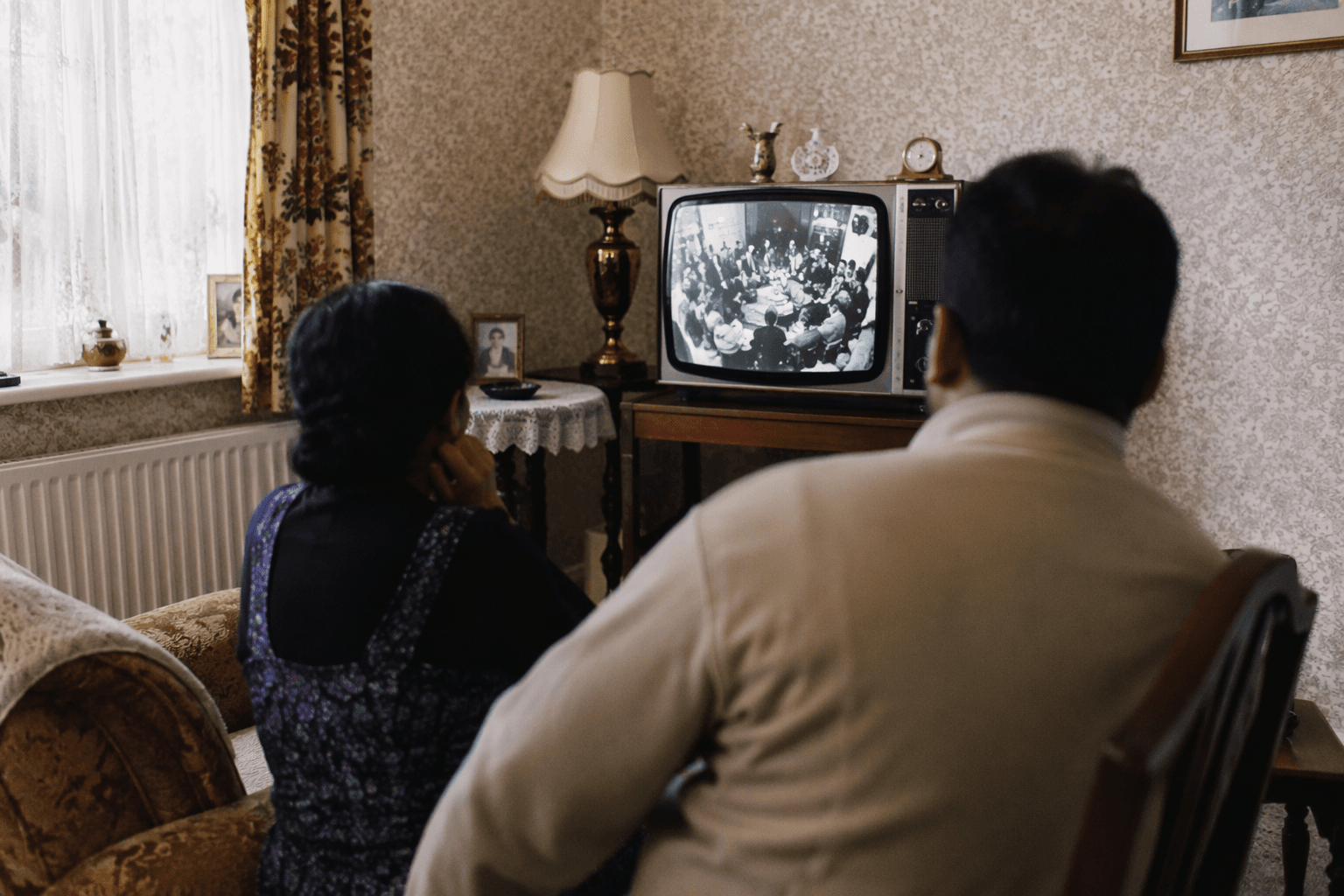
BBC television helped South Asian newcomers find their footing in Britain by pairing practical settlement advice with familiar languages and music. The early model was Make Yourself at Home, a BBC One programme that aired on 10 October 1965 for recent immigrants from India and Pakistan. By the 1970s, that approach had widened into BBC programmes for Asian immigrants in Britain, showing public broadcasting acting as an informal guide to daily life.
A broadcast built for newcomers
BBC History’s Make Yourself at Home page places the 1965 broadcast at the centre of the corporation’s early immigrant programming. The programme used Hindi, Urdu and English, and the University of Southampton’s 2022 repository entry says contributors offered informal language help and practical support based around everyday situations encountered in the UK. That combination mattered because it treated language not as a barrier to be corrected later, but as part of the service itself.
The Southampton description also ties the programme to recent immigrants from India and Pakistan, making clear that this was not general multicultural programming. It was specific, practical and designed around immediate needs: how to understand the country, how to manage ordinary interactions, and how to settle without losing cultural continuity. In that sense, the show functioned less like a showcase and more like a public service.
From settlement advice to cultural continuity
By the 1970s, BBC programmes for Asian immigrants in Britain had developed into a more recognisable strand of output. British Online Archives’ document on the subject points to programmes that included music alongside practical tips for settling into British life, a format that blended familiarity with instruction. That mix is important because it shows the BBC understanding that new arrivals needed both orientation and recognition.
Music gave the broadcasts a cultural anchor, while the practical segments translated the rhythms of British life into something usable. The result was a programming model that did two jobs at once: it helped people navigate the systems around them, and it let them hear themselves reflected on screen and through the radio. That balance is what made the BBC’s immigrant programming distinct from simple assimilation messaging.
Why the BBC built this kind of service
The BBC did not stumble into this role by accident. A report on immigrant programming said the corporation wanted to discover whether there was a desire, and perhaps a need, among British Commonwealth citizens living and working in Britain for such services. That line captures a broadcaster testing whether public media could meet a demographic change that postwar Britain was already living through.
This was part of a wider postwar immigration and settlement context in which broadcasters were adjusting to new audiences with language support, cultural familiarity and practical information. The BBC’s own anniversaries material and the archive record both point to that wider effort, showing that immigrant programming sat inside a larger institutional response to changing Britain. The point was not simply to entertain existing audiences, but to make broadcasting useful to people trying to build a life in the country.
A long institutional memory
The strand did not vanish after the 1960s and 1970s. The BBC marked 60 years of South Asian programming across the corporation in 2025, a sign of how durable the format became. BBC Asian Network also carried a feature called Celebrate 50 Years of Asian Programming, while Pebble Mill published a 50 Years of BBC Asian Programmes post on 15 October 2015.
Taken together, those milestones show a broadcaster repeatedly revisiting the same history because the institutional story still matters. The anniversary markers are not just ceremonial. They acknowledge that South Asian broadcasting became a sustained part of the BBC’s output, not a one-off accommodation. The scale of that arc matters because it reflects how early immigrant programming helped define expectations for later service to minority audiences.
What that history says about integration now
The relevance of this history is easy to miss if it is reduced to nostalgia. The BBC’s early South Asian programmes were part of a national integration story told through media: they used the airwaves to answer basic questions, preserve cultural familiarity and reduce the friction of arriving in a new country. That is the same logic now at stake in debates over language access, public-service media and what institutions owe new arrivals trying to navigate daily life.
Today the policy question is not whether migrants exist or need information. It is whether public institutions treat communication as a core service or as an afterthought. The BBC’s early immigrant shows suggest a clear standard: settlement is easier when information arrives in more than one language, and when public media is willing to meet people where they are rather than where the system expects them to be.
This article was produced by Prism’s automated news system from verified source data, official records, and press releases, then run through automated quality and moderation checks before publishing. The system is built and supervised by the people who set the standards it runs under. Read our full AI policy.
Did this article answer your question?