BCI and OCA elevate Indian cotton growers' voices at OECD forum
Farmers from Gujarat, Odisha and Maharashtra led a 90-minute OECD side session on 9 February 2026, urging that due diligence start at the farm level and calling for fairer incentives and long-term investment.
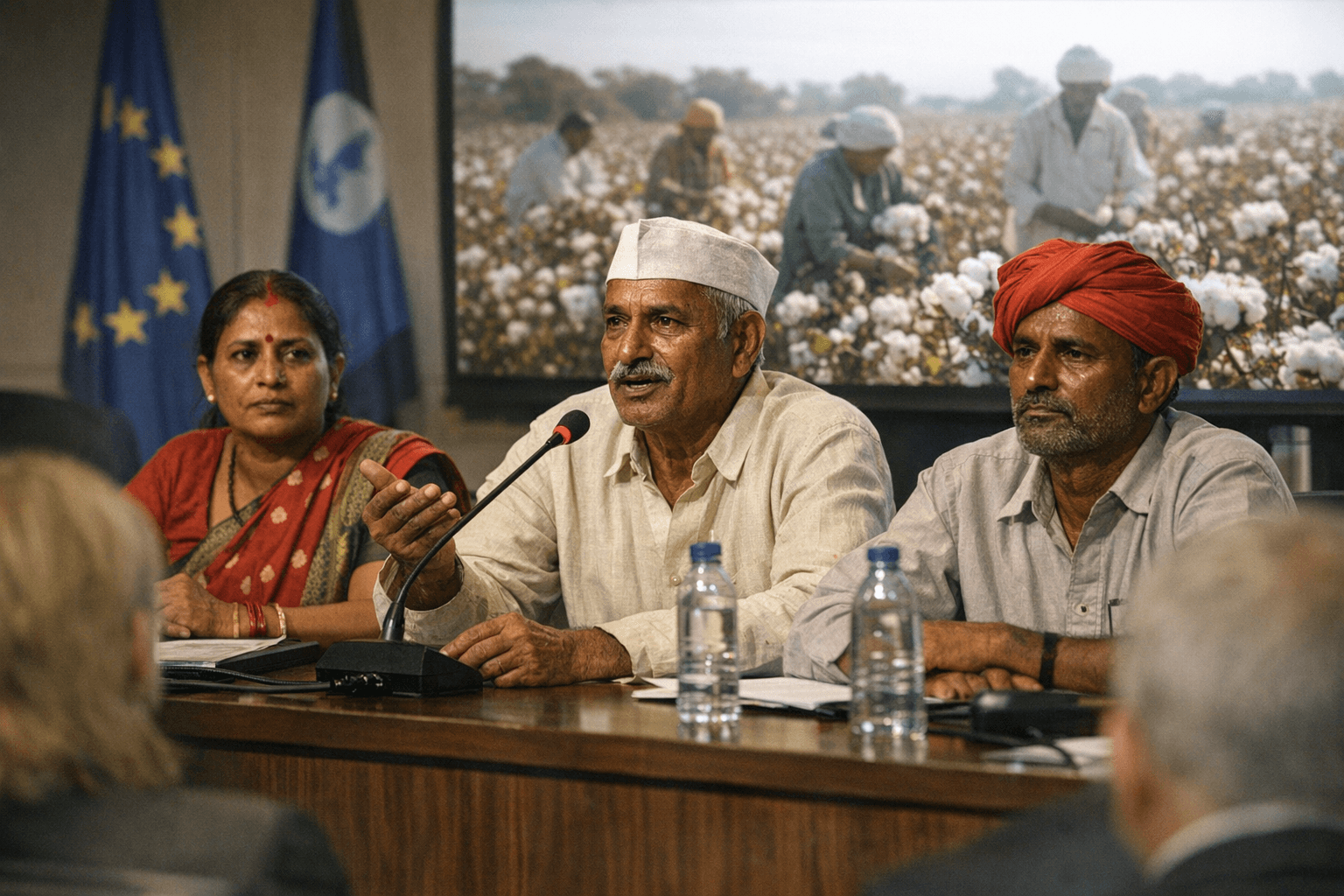
The Better Cotton Initiative and the Organic Cotton Accelerator co-hosted a 90-minute online side session titled "Invisible no more: Elevating India’s cotton growers’ voices in HREDD" at the OECD Forum on Due Diligence in the Garment and Footwear Sector on 9 February 2026. Moderated by Shankhamala Sen, Programme Implementation Manager, OCA India, and Saleena Pookunju, Senior Programme Manager, BCI India, the session placed smallholder farmers at the centre of Human Rights and Environmental Due Diligence discussions.
Three farmers from India spoke directly to brands and field partners about day-to-day labour and community concerns. Gopalbhai Vashrambhai Charaniya of Gujarat, who serves on a village-level Decent Work committee, said, “Our goal is to protect the rights of workers. We discuss the day-to-day conditions of the workers as well as the situation of their children, and we take care that there is no injustice or bad experience for them.” Farmers from Odisha (listed as Pankajini Nial in BCI material) and Maharashtra (listed as Vaijayanti Gokhale) also presented practical examples from their fields that illustrated how labour, gender inclusion and income pressures shape on-the-ground practice.
BCI and OCA framed those testimonies with a clear policy line: due diligence is only credible when it starts at the farm level. The co-authored article by Hélène Bohyn, Policy and Advocacy Manager at BCI, and Ioana Betieanu, Communications and Public Affairs Director at OCA, underlined that “While the HREDD acronym might be unfamiliar to most farmers, the realities behind it are not.” Speakers emphasised long-term investment, fairer economic incentives and approaches that reflect daily production pressures as prerequisites for credible HREDD processes.
Representatives from field partners and brands joined the conversation to discuss shared responsibility. Chandrakant Kumbhani of Ambuja Foundation and Claus Teilmann Petersen of BESTSELLER were named participants, reflecting a mix of civil society and retail stakeholders on the panel. BCI used the session to contextualise scale: through its network of field-level partners the organisation has trained over 2.9 million farmers in 26 countries, and it reports that 22% of the world’s cotton is now grown under the Better Cotton Standard. BCI’s 2030 targets — to train 5 million farmers and to double global production of Better Cotton — featured as part of the argument for systemic, upstream engagement.
The session closed with the audience committing to concrete actions before the next cotton harvest, a collective pledge tied to the call that “responsibility must be shared across brands, civil society, governments, and field partners, not pushed downstream onto smallholders.” BCI and OCA characterised the event as creating “a unique space for discussion” where farmers, field partners and brands began mapping farm-level priorities into HREDD practice.
Know something we missed? Have a correction or additional information?
Submit a Tip