Beijing bans drone sales and flights, tightens security rules citywide
Beijing will bar private drone sales and flights citywide, giving owners until April 30 to register as officials cite security around sensitive sites.
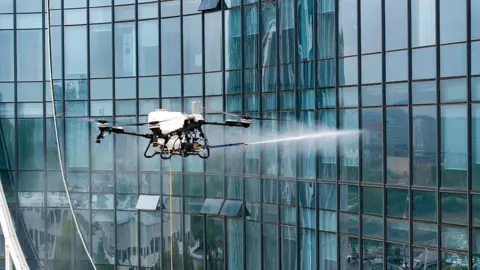
Beijing moved to close the capital’s skies to private drones, banning sales, flights, storage and transport across the city as it extends one of China’s toughest urban security regimes over a fast-growing consumer technology.
The Standing Committee of the Beijing Municipal People’s Congress approved the regulations on March 28, and they take effect May 1, 2026. From that date, the city bans the sale, lease, storage, transport and flight of many drones and 17 designated core components unless public security authorities approve them or a listed exception applies. E-commerce platforms are also barred from shipping UAVs to Beijing, and existing owners had until April 30 to complete real-name registration.

After the rules take effect, drone users will have a three-month window to register devices with local police stations. Inside Beijing’s sixth ring road, individuals may keep no more than three drones at a single location. Violations can bring fines and confiscation. The city also said all outdoor drone flights will require prior approval, with dedicated flight zones created for special operations including research, education and industrial testing.
The restrictions leave narrow openings for universities, research institutions and public safety use, but even those categories still need police approval. In practice, Beijing has designated the entire city as drone-controlled airspace, turning a patchwork of consumer rules into a citywide security perimeter around a technology once marketed for photography, recreation and light commercial work.
Officials said the crackdown was driven by public security and “low-altitude security” concerns, with Beijing’s lawmakers arguing that the capital faces greater risks because of sensitive government, military and embassy sites. That rationale places Beijing at the sharp end of a broader debate over how far governments should go in restricting civilian drones when the same machines can be used for surveillance, smuggling or disruption.
China already had national provisional drone regulations that took effect on Jan. 1, 2024, requiring identification for registration, qualifications for some operators, no-fly zones and application processes for drone activity. Beijing’s rules go further by locking down the sale and movement of drones themselves, not just where they can fly.
For Beijing, the message is clear: low-altitude airspace is now part of the security state. For other high-security capitals, the capital’s model offers a harder question, whether restricting civilian drones at the point of sale is becoming the new frontier of urban surveillance governance.
This article was produced by Prism’s automated news system from verified source data, official records, and press releases, then run through automated quality and moderation checks before publishing. The system is built and supervised by the people who set the standards it runs under. Read our full AI policy.
Did this article answer your question?


