Berrettini withdraws from Australian Open, McDonald steps in as lucky loser
Matteo Berrettini withdrew from the Australian Open with recurring oblique pain; Mackenzie McDonald will take his place and face Alex de Minaur in the first round.
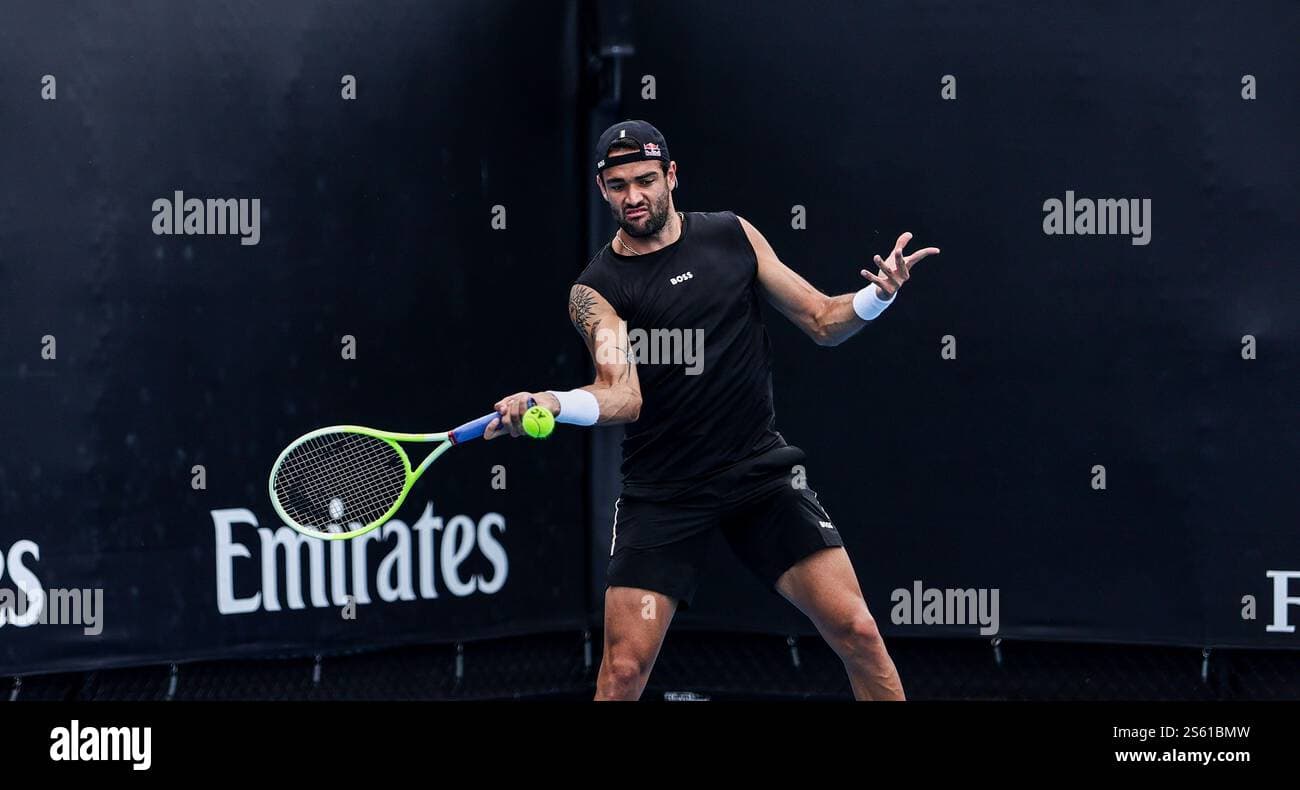
Matteo Berrettini withdrew from the Australian Open after a recurring oblique injury flared up days after he stopped an exhibition match, robbing the tournament of one of its most compelling return narratives. The 29-year-old, currently ranked No. 56 and a former Wimbledon finalist who once rose as high as world No. 6, cited the inability to prepare for the Grand Slam test of five-set matches as the decisive factor.
Tournament organizers confirmed the withdrawal on Jan. 17, and Berrettini posted on Instagram that he had felt renewed discomfort in his obliques. He wrote: “It's never easy to take this kind of decisions, but unfortunately I've felt a discomfort in my obliques once again and I won't be ready to perform at my best level for 5 sets. It hurts because playing in Australia has always been special and after 4 weeks of intense training I was excited and ready to get going.” The timing was particularly painful for local fans and the player himself after weeks of focused preparation in Melbourne.
Early accounts varied about the lead-up to the withdrawal. Reports differed on opponents and precise circumstances of an exhibition retirement, with names such as Learner Tien, Tristan Schoolkate and Nicolai Budkov Kjaer all appearing in early coverage. What is clear is that Berrettini stopped during at least one match in the days before the tournament and managed only limited on-court work at Melbourne Park before deciding to withdraw.
Mackenzie McDonald has been inserted into the main draw as a lucky loser and will take Berrettini’s scheduled first-round spot against sixth-seeded Alex de Minaur. McDonald earned the place after losing in the final round of qualifying to Canadian Liam Draxl. For de Minaur, the change alters preparation and tactical planning; for McDonald, it is an unpredictable second chance that can revitalize a season.

Berrettini’s withdrawal underscores a larger pattern in men’s tennis: players with heavy serves and aggressive styles are vulnerable to torso and oblique strains, and repeated interruptions raise questions about workload, recovery protocols and the calendar’s demands. Berrettini’s 2025 campaign was described as injury-hampered, and the oblique issue previously forced him to miss tournaments including the Italian Open as well as the French Open and the U.S. Open in recent seasons. Those absences have not only affected his ranking and momentum but also the commercial calculus around player appearances at marquee events.
For tournament organizers, late changes complicate scheduling, broadcast narratives and local engagement. For fans, the withdrawal is both a disappointment and a reminder of the precariousness of elite sport. For Berrettini, the decision to step back rather than compete while impaired is consistent with a growing emphasis on player welfare and long-term career management over short-term spectacle.
As the Australian Open moves into first-round play, attention will shift quickly to the reshaped matchups and to how McDonald seizes this unexpected opportunity. For Berrettini, the focus will be on recovery and rebuilding the continuity his game requires if he is to climb back toward the heights that once made him one of the tour’s most feared servers.
This article was produced by Prism’s automated news system from verified source data, official records, and press releases, then run through automated quality and moderation checks before publishing. The system is built and supervised by the people who set the standards it runs under. Read our full AI policy.
Did this article answer your question?
.jpg&w=1920&q=75)