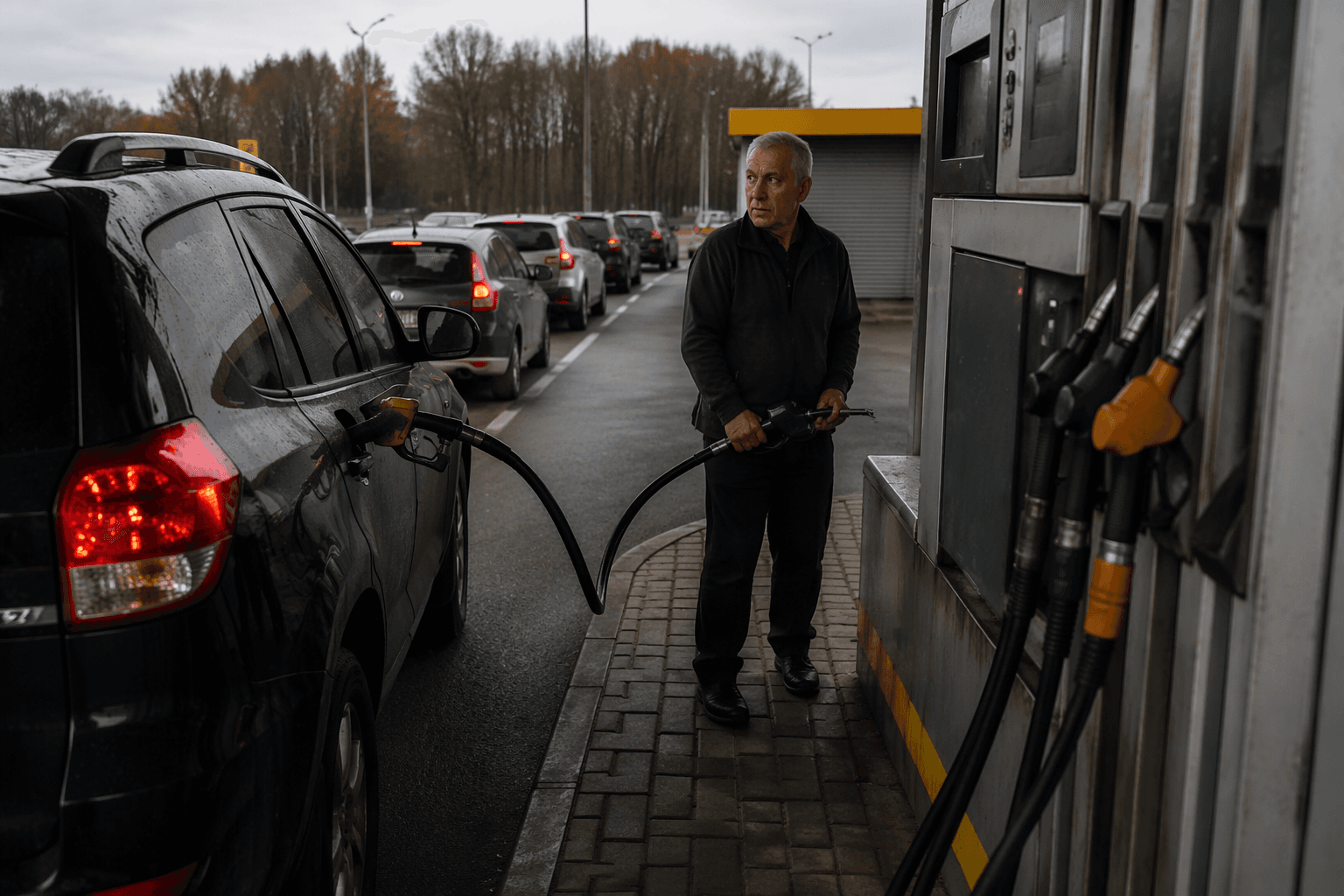
Besieged Oleshky residents face food, medicine shortages under Russian occupation
Oleshky’s remaining civilians are trapped between hunger and the “Road of Death,” with no safe evacuation, no reliable aid and almost no medicine.
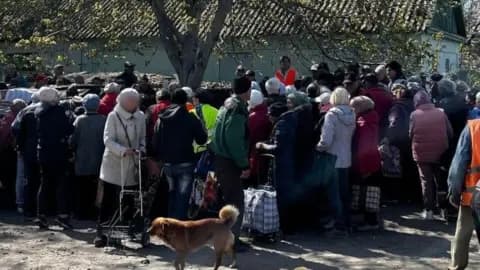
In Oleshky, civilians face a brutal choice: stay and go without food and medicine, or leave along a route residents call the “Road of Death.” For months, people on the left bank of the Dnipro River, directly opposite Kherson, have lived under Russian occupation with no reliable way out and little hope of resupply.
Tetiana Hasanenko, head of the exiled Oleshky city military administration, estimated that about 2,000 people remain in the city, including at least 47 children. Before the full-scale invasion, Oleshky had more than 24,000 residents, with some local estimates putting the prewar population closer to 25,000. Other local accounts say as many as 6,000 civilians may still be there, but all point to the same reality: a population trapped in a city stripped of basic services.
Residents and officials say Oleshky has no reliable drinking water, electricity, gas, food deliveries or medical care. People have been forced to ration every sip of water and every crumb of food as the humanitarian situation worsened after the destruction of the Kakhovka Dam in June 2023, which flooded the area and left infrastructure badly damaged. That damage compounded the isolation already created by occupation and the front line.
The danger is not only deprivation but the route out. Ukrainian officials and residents say Russian troops mined access roads into and out of Oleshky, turning evacuation and aid runs into lethal missions. The city’s escape corridor has come to be known locally as the “Road of Death” because mines and drone attacks have reportedly killed evacuation drivers and blocked food deliveries. Some residents say food reached the city only once in about a month and a half, leaving families to calculate survival day by day.
Ukraine’s human rights commissioner, Dmytro Lubinets, appealed in early March 2026 to Russian commissioner Tatyana Moskalkova and to the International Committee of the Red Cross to open a humanitarian corridor for evacuation and aid delivery. So far, residents and officials say nothing has changed.
The crisis in Oleshky shows what occupation looks like for civilians when state protection collapses: medical care disappears, supply lines are severed and the choice to flee can be as dangerous as staying. In a city already scarred by war and flooding, the remaining residents are being left to endure siege conditions with no dependable humanitarian lifeline.
This article was produced by Prism’s automated news system from verified source data, official records, and press releases, then run through automated quality and moderation checks before publishing. The system is built and supervised by the people who set the standards it runs under. Read our full AI policy.
Did this article answer your question?