Bessent urges Americans to skip lotteries, build wealth through investing
Bessent blasted lottery tickets and other quick-money habits, urging Americans to invest instead as Treasury tied Financial Literacy Month to savings and homeownership planning.

Scott Bessent used Financial Literacy Month to argue that Americans need fewer shortcuts and more discipline, warning that lottery tickets, buy-now-pay-later debt and crypto windfalls can pull households farther from stability. His sharpest criticism focused on young men in blue-collar jobs. “There are a lot of young people, mostly young men, going to blue-collar construction jobs, playing the lottery. It drives me crazy,” Bessent told the AP, adding that “the best thing you can do is not play the lottery” but invest and “watch it grow.”
The Treasury Department framed the message as part of a broader effort in April 2026, saying it would coordinate events and public-engagement efforts with the Financial Literacy and Education Commission. Treasury said Americans can turn to MyMoney.gov for guidance on saving, investing and planning for education, homeownership and retirement, and described financial literacy as something that “fuels the American Dream.” The department also tied the effort to the nation’s approaching 250th anniversary, casting the campaign as both practical advice and civic preparation.
The pitch lands in a household economy where the gap between aspiration and reality remains wide. Federal consumer data showed buy-now-pay-later lending has expanded rapidly since 2019, and the Consumer Financial Protection Bureau found that 21% of consumers with a credit record used BNPL at least once in 2022. The same report noted that many of those loans were not reported to major credit bureaus, making it harder for consumers to see the full picture of their debt. Treasury’s message asks families to resist speculative habits, but the data suggest many are already leaning on short-term credit to keep up.
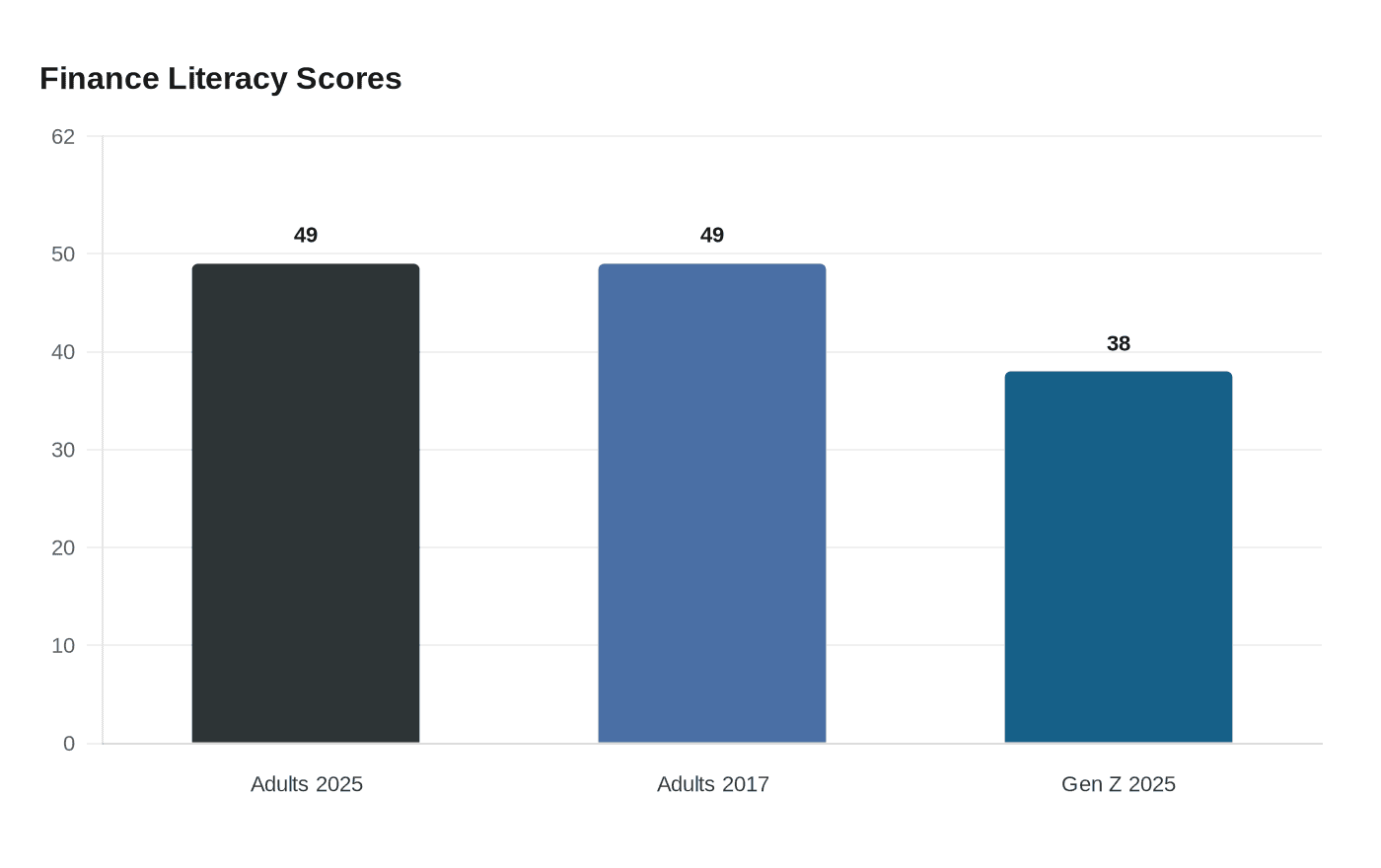
The literacy problem is just as stark. The 2025 TIAA Institute-GFLEC Personal Finance Index found that U.S. adults answered only 49% of questions correctly on average, unchanged from 2017. Gen Z scored 38% on average, underscoring how weak basic money knowledge remains even as younger workers navigate student debt, volatile housing costs and a market crowded with easy-credit offers.

Bessent has made the issue part of his public identity since taking office as the 79th Treasury secretary on January 28, 2025, after Senate confirmation the day before. Treasury says he was born in Conway, South Carolina, earned a Yale degree, taught economic history as an adjunct professor at Yale, worked at Soros Fund Management and later founded Key Square Capital Management. He is the first openly gay Treasury secretary and the first openly gay Senate-confirmed Cabinet member in a Republican administration.
His current push builds on an April 1, 2025 meeting with Operation HOPE founder John Hope Bryant to launch a Financial Literacy Month collaboration centered on Bryant’s Financial Literacy for All initiative. The Senate passed a resolution on April 28, 2026 designating April 2026 as Financial Literacy Month, giving Bessent’s message a formal political backdrop even as the deeper question remains unchanged: financial education can help households, but it cannot replace wages, savings or policies that make stability easier to reach.
This article was produced by Prism’s automated news system from verified source data, official records, and press releases, then run through automated quality and moderation checks before publishing. The system is built and supervised by the people who set the standards it runs under. Read our full AI policy.
Did this article answer your question?

