Bessent urges calm as U.S.-Europe tariff rows flare over Greenland
At Davos, U.S. Treasury Secretary urges de-escalation amid tariff threats tied to Greenland, insisting transatlantic ties remain strong.
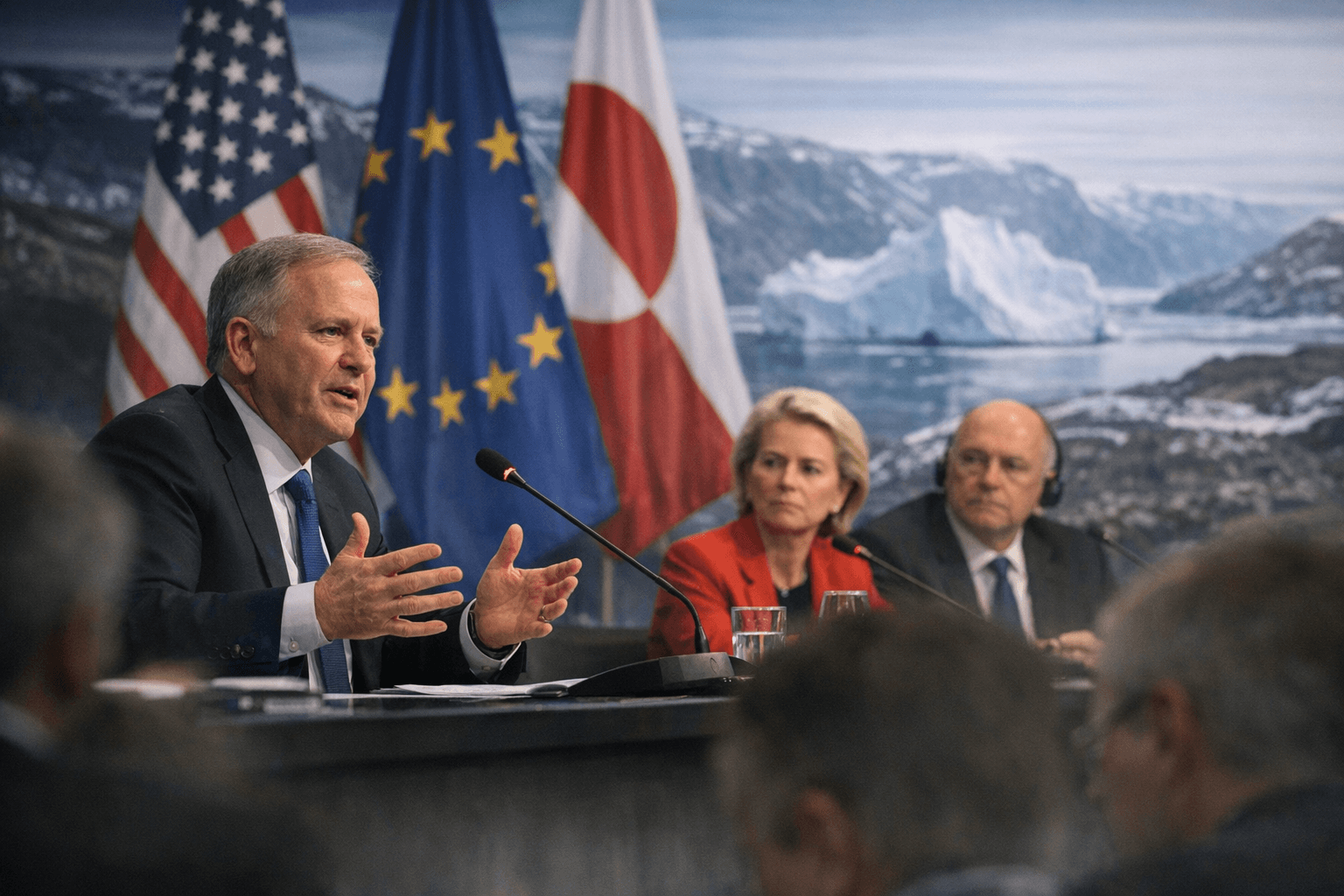
U.S. Treasury Secretary Scott Bessent sought to defuse a sharp transatlantic confrontation at the World Economic Forum in Davos, urging trading partners to "take a deep breath" as tensions over President Donald Trump's linked push for Greenland and threats of tariffs intensified. Speaking at a press briefing at the USA House during the annual meeting, Bessent insisted "I think our relations have never been closer" and said, "I am confident that the leaders will not escalate, and that this will work out in a manner that ends up in a very good place."
The diplomatic flare-up centers on an unprecedented White House plan that targets goods from eight European countries with tariffs starting at 10 percent on Feb. 1 and rising to 25 percent in June unless an agreement is reached on a "purchase of Greenland." The proposal has prompted urgent discussions in capitals across Europe and a burst of diplomatic activity in Brussels and NATO forums as leaders weigh legal and economic responses.
Bessent worked to tamp down fears of a broader economic rupture, dismissing as unlikely a forceful European response involving the mass sale of U.S. Treasuries and other financial escalations. He asked partners to allow the tension to "play out" while expressing confidence that leaders on both sides would avoid escalation. In interviews since the announcement, Bessent has defended the administration's posture, framing the use of tariff threats as a strategic instrument to "avoid a hot war" and arguing the economic measures are intended to "avoid a national emergency", in his words, "the national emergency is avoiding a national emergency." He also said Europe "projects weakness" while the U.S. "projects strength" and described as "a false choice" assertions that a move for Greenland would end NATO cohesion.
European leaders reacted sharply. French President Emmanuel Macron called the tariff proposal "unacceptable" and officials in several capitals signaled that the European Union could consider invoking its anti-coercion tools and preparing retaliatory measures, including reciprocal tariffs. Some governments have also been reviewing the legal authority the United States might invoke; the White House has signaled it could rely on emergency powers that differ from standard trade agreement mechanisms, saying a trade deal with the EU "hasn't been finalized" and suggesting emergency action could operate under distinct legal grounds.
The episode has spilled beyond diplomatic exchanges into public protest and military signaling. Demonstrations in Nuuk have underscored local opposition to any sale of Greenland, while some NATO members have announced small deployments to the Arctic to participate in joint exercises with Denmark, a move that has complicated the strategic conversation in Europe.
Bessent's presence in Davos underscores a dual message from Washington: an appeal to stabilize relations and a simultaneous defense of a tough negotiating posture that links trade, security and Arctic sovereignty. For European capitals, the immediate questions are legal thresholds and calibrated countermeasures that preserve trade ties and alliance cohesion without yielding to coercion. For markets and diplomats alike, the coming days will test whether rhetoric and leverage can be contained within a political negotiation or will widen into a prolonged confrontation with costs across security and economic lines.
This article was produced by Prism’s automated news system from verified source data, official records, and press releases, then run through automated quality and moderation checks before publishing. The system is built and supervised by the people who set the standards it runs under. Read our full AI policy.
Did this article answer your question?


