Beyond Good & Evil 2 and other long-delayed games remain in development
These games are still alive, but their long silence shows how reveal culture can damage trust long before a release date arrives.
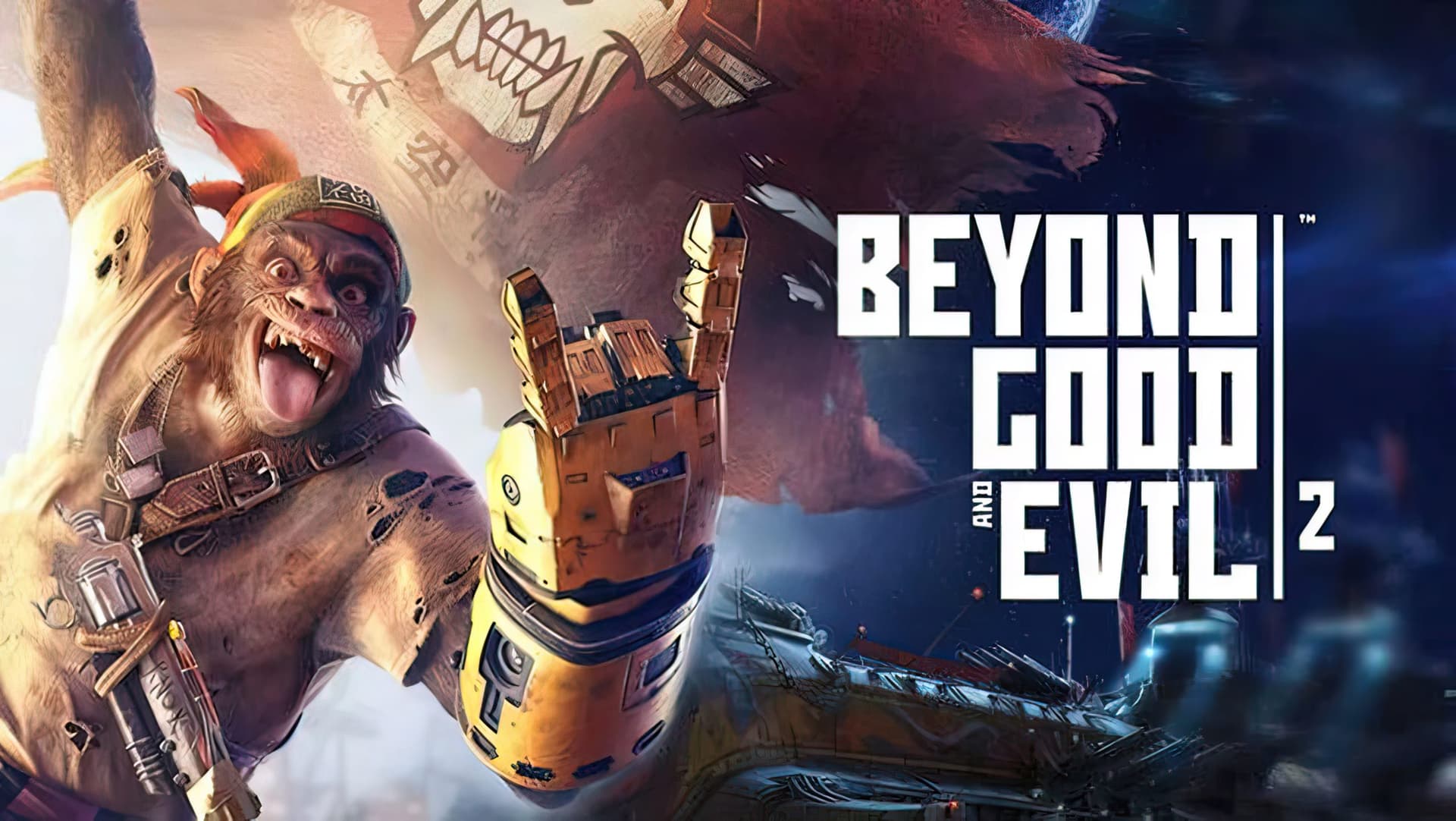
Beyond Good & Evil 2 has become the clearest test of how much patience the modern games industry can demand before credibility starts to crack. Ubisoft still treats it as an active project, the company said in June 2024 that it remained in development, and creative director Fawzi Mesmar later confirmed the work was still proceeding after Ubisoft’s 2025 restructuring.
The problem with announcing too early
The game was re-announced at Ubisoft’s E3 2017 conference as a prequel and open-world space adventure, but that was only the latest restart in a saga that stretches back to an earlier reveal in 2008 and nearly a decade of silence. That timeline matters because it shows how a teaser can outlive the production reality behind it. Once a major publisher puts a name on stage, the title becomes part marketing asset, part public promise, and the gap between those two roles can widen fast.
Ubisoft’s own messaging has kept the title technically alive, but the public evidence has been thin. The official Beyond Good & Evil 2 site still presents it as an active project, and the original game’s 20th Anniversary Edition in June 2024 included narrative tie-ins that teased the sequel. Even so, GameSpot’s framing is blunt: beyond occasional updates, there has been almost nothing substantive for years.
Beyond Good & Evil 2 and the cost of limbo
This is not just a question of delays, it is a question of accountability. Following Ubisoft’s structural overhaul in 2025, several games were canceled outright, yet Beyond Good & Evil 2 survived the cull. That survival is meaningful, but it also leaves the project in a strange place, publicly alive and commercially unresolved, with no release date and no visible roadmap that would let fans or investors model when, or whether, the long wait ends.
The human cost is harder to ignore. Reporting tied a 2023 labor investigation at Ubisoft Montpellier, in Montpellier, France, to burnout and sick leave concerns during the game’s development. Ubisoft said the team was undergoing third-party well-being assessments, which is a reminder that long development cycles are not abstract. They stretch teams, complicate leadership, and can turn a creative project into a sustained pressure test.
The Wolf Among Us 2 shows how momentum can vanish without a cancellation
Telltale Games’ The Wolf Among Us 2 sits in a different corner of the same problem. It was announced in 2017, re-announced in 2019, and then delayed from a previously discussed 2023 target. By September 2023, major layoffs hit much of the team working on the game, a blow that would have looked fatal in almost any other industry.
Yet Telltale did not kill the project. In October 2023, the company said The Wolf Among Us 2 was still in development, and later repeated that it would share more when the time was right. That is the modern announcement paradox in miniature: a title can be officially alive while being functionally invisible to the public for long stretches, leaving players to infer progress from corporate restraint rather than from concrete milestones.
State of Decay 3 is the cleaner version of the same uncertainty
State of Decay 3 is less dramatic, but it still belongs in the limbo list because it illustrates how even healthier-looking projects can drift into uncertainty. Microsoft / Xbox Game Studios first unveiled it in 2020, then showed a new trailer at the 2024 Xbox Games Showcase. Its official site still places it within the franchise’s current roadmap, but there is no announced release date.
That combination matters. A new trailer signals that work is real and the project is still being sold as part of a long-term strategy, but the absence of a date means the market still has no timing anchor. For a company like Microsoft, which uses showcase events to frame its platform pipeline, a title like State of Decay 3 helps signal future strength. For consumers, though, it still lives in the same suspense cycle as the most troubled projects: visible enough to expect, vague enough to disappoint.
How to separate ordinary delay from something closer to vaporware
The limbo list is useful because it keeps all long-delayed games from being treated as equal. Some projects are simply late. Others look alive on paper but have lost the normal signs of production momentum, which is where the vaporware conversation begins.
A practical way to read the difference is simple:
- Ordinary delay usually comes with regular proof of life, such as trailers, hiring, roadmap references, or direct confirmation that the team is still working.
- Projects drifting toward vaporware usually show the opposite pattern, years of silence, repeated resets, leadership churn, layoffs, and no release window.
By that standard, State of Decay 3 looks like the least alarming of the three because it has a recent trailer and an active franchise roadmap. The Wolf Among Us 2 is more fragile because layoffs removed much of the team and the game has had to be reaffirmed rather than demonstrated. Beyond Good & Evil 2 is the most exposed to skepticism because it combines an extraordinary development span with public silence, internal upheaval, and a labor investigation, even as Ubisoft insists it is still moving forward.
Why trust is the real variable now
The larger industry pattern is what makes these cases so important. Modern AAA development now often involves years-long production cycles, repeated internal resets, and public silence that leaves fans and investors without clear timelines. Publishers may insist a project is still alive, but if the reveal arrives years before the game can realistically ship, the announcement itself starts to look like overreach.
That creates a credibility problem. Every showcase trailer or anniversary tease becomes a reminder that hype has been front-loaded while the product remains distant, and every missed window makes future promises harder to believe. The games in limbo are not all the same, but they point to the same conclusion: in an industry built on anticipation, trust is its own finite resource.
This article was produced by Prism’s automated news system from verified source data, official records, and press releases, then run through automated quality and moderation checks before publishing. The system is built and supervised by the people who set the standards it runs under. Read our full AI policy.
Did this article answer your question?