Big Tech signs White House ratepayer pledge to cover AI power costs
Major tech firms agreed to cover or secure electricity for new AI data centers to prevent higher household bills; the pledge is voluntary and key details remain unclear.
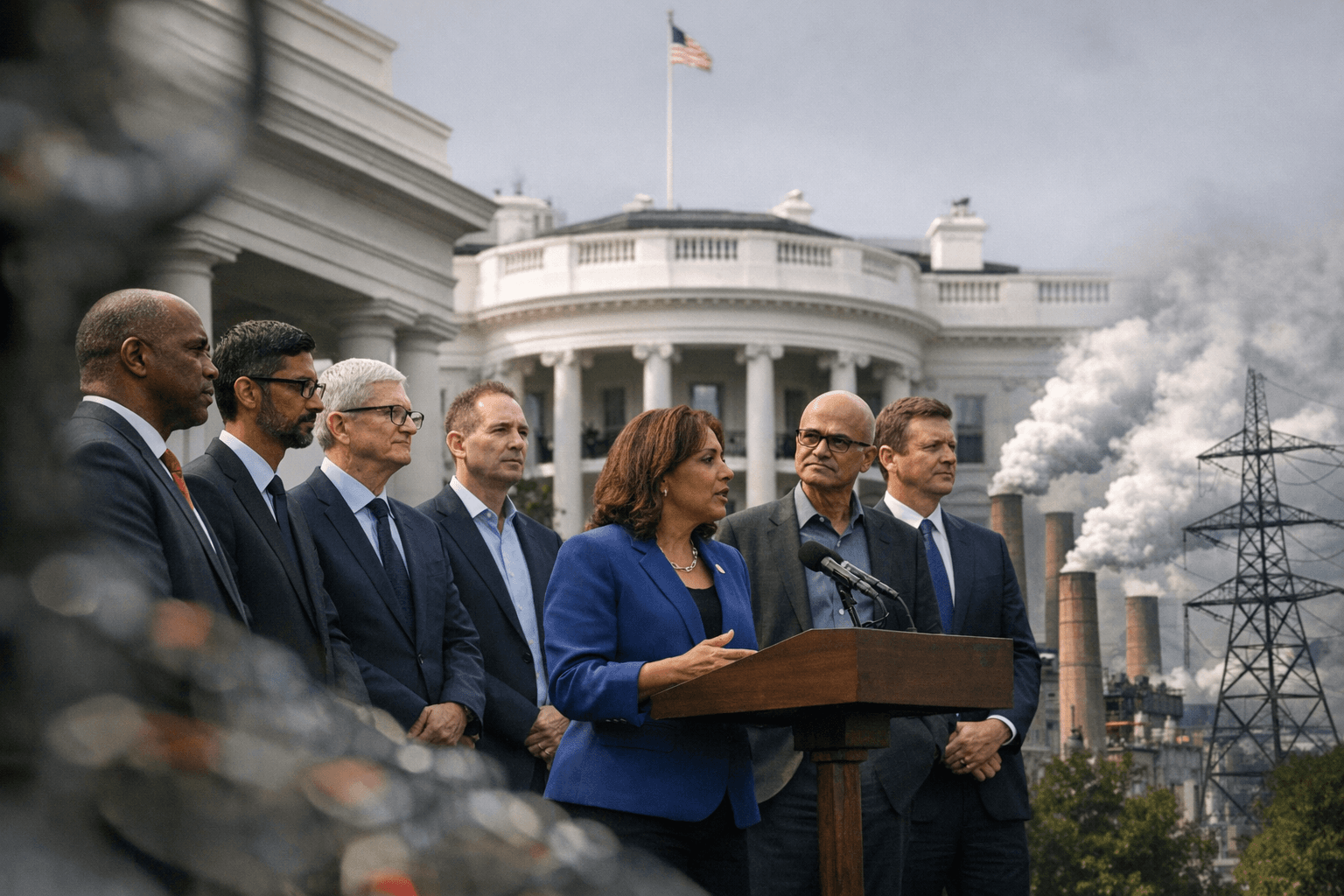
On March 4, 2026, President Donald Trump hosted executives from Google, Microsoft, Meta, Oracle, xAI, OpenAI and Amazon at the White House where the companies signed a White House-brokered "Ratepayer Protection Pledge" committing to generate or secure electricity for new AI data centers so household power prices will not rise.
The White House framed the agreement as a direct protection for ratepayers. "We're telling the major tech companies that they have the obligation to provide for their own power needs and can build their own power plants so no one’s prices will go up," Trump said during his State of the Union, according to multiple administration accounts. Energy Secretary Chris Wright, as reported via Politico, said "all of the brand-name hyperscalers" have signed onto the deal.
White House officials describe the pledge as a mechanism to prevent data-center growth from shifting costs onto consumers by encouraging on-site generation, long-term power purchases, or other arrangements that keep incremental load off local utility rate bases. The administration has also sought market actions, pressing the regional grid operator PJM Interconnection to consider an emergency auction that would allow the companies to secure long-term power agreements, according to reporting on White House actions.
Key implementation details of the pledge were not released at the signing. The text circulated by the White House has not been published publicly, and officials did not provide standard enforcement language, reporting requirements, or a verification regime. It remains unclear whether the pledge applies only to newly announced AI facilities, whether on-site generation, power purchase agreements, or retirement of renewable attributes meet the obligation, and what penalties, if any, exist for noncompliance.
Corporate and state context is already shifting. GeekWire reported that Microsoft and OpenAI made similar commitments last month to cover electricity costs for projects, and Amazon this week announced a $12 billion data center development in Louisiana in which the company vowed to fund energy and infrastructure. At the same time, state lawmakers are moving toward statutory safeguards. Washington state’s HB 2515, which would require utilities to create tariffs shielding residential customers, mandate company reporting on water, energy and pollution, and impose renewable-energy rules on data centers, is under active consideration.
Critics and local officials warned the pledge may not resolve the practical tensions that have driven community opposition: grid capacity constraints, diesel backup-generator pollution, and opaque agreements between developers and utilities. Some analysts described the signing as largely symbolic and questioned its ability to alter local rate-setting or grid planning absent enforceable commitments and public documentation.
The pledge represents an administrative, voluntary approach to a politically sensitive problem: how to accommodate rapidly growing AI-related power demand without shifting costs to households. Its near-term effects will hinge on the detailed written agreement, which companies and the White House have yet to publish, the market steps PJM may take, and whether state regulators or legislatures impose parallel rules that carry legal force.
This article was produced by Prism’s automated news system from verified source data, official records, and press releases, then run through automated quality and moderation checks before publishing. The system is built and supervised by the people who set the standards it runs under. Read our full AI policy.
Did this article answer your question?

