Big Tech's Legal Troubles Echo a Landmark 1998 Antitrust Battle
Apple now faces the same antitrust fire it once helped set for Microsoft, and the outcome could trim the hidden "iPhone tax" millions of consumers pay on every app subscription.

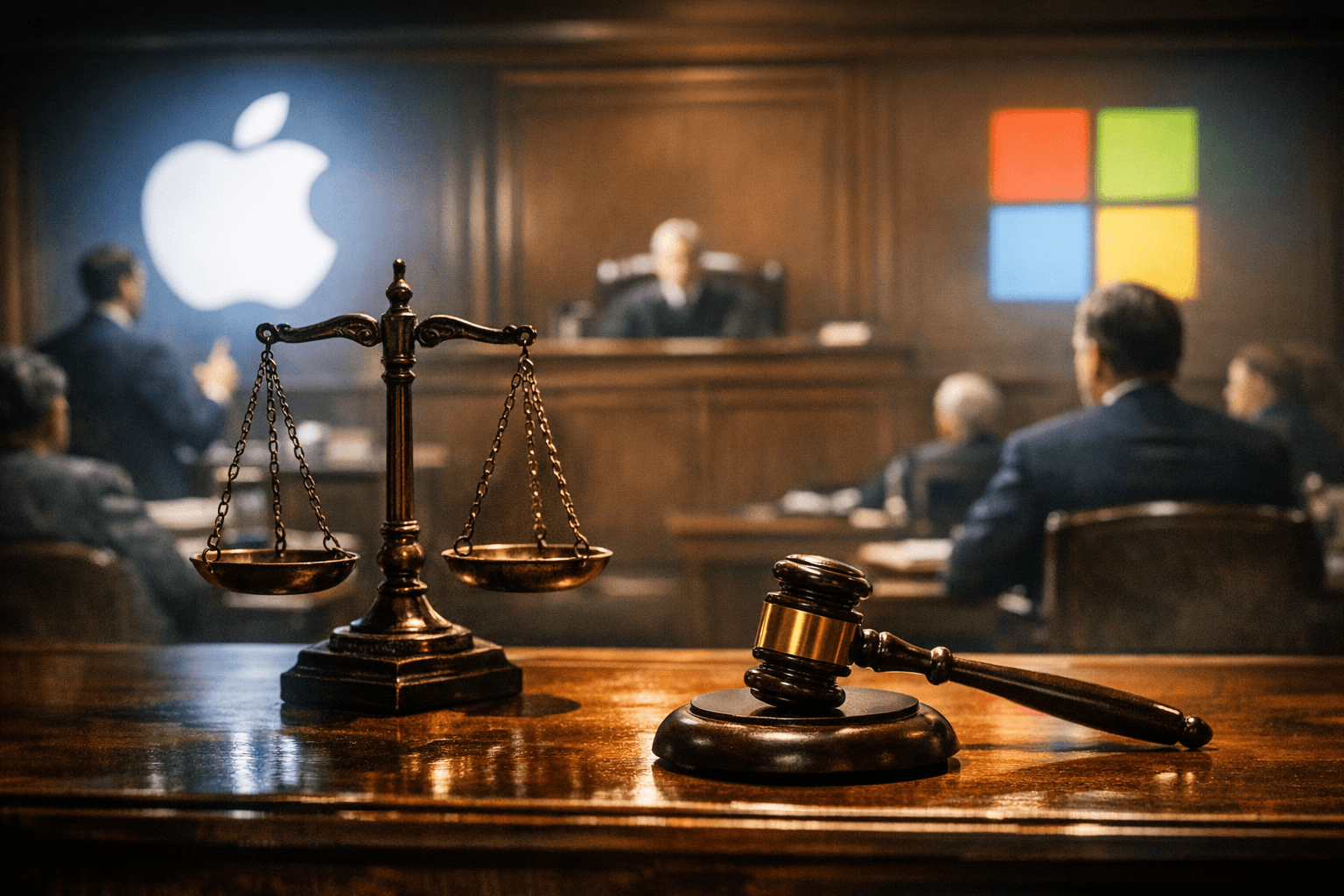
Steve Jobs stood before the Department of Justice in 1998 and called Microsoft's grip on the personal computer market a product of "dirty tactics," urging regulators to force the software giant to play fair. Today, Apple sits in the same chair Jobs once pointed at. The DOJ's own 2024 antitrust complaint against Apple specifically invoked that moment, noting that the same company whose co-founder went to regulators to rein in a monopolist is now accused of running one. History rarely telegraphs its irony this clearly.
The 1998 Blueprint
The landmark case against Microsoft was about control of a platform so dominant that rivals had no realistic path around it. The DOJ argued, and federal judges agreed, that Microsoft used its Windows operating system to strangle competing web browsers, particularly Netscape, along with media players and other software that might have given users a way to escape Windows' orbit. Judge Thomas Penfield Jackson found in November 1999 that Microsoft's dominance constituted an illegal monopoly, and in June 2000 he ordered the company split in two. An appeals court later reversed the breakup order but upheld the core finding of illegal monopolization.
The structural parallel to Apple is not incidental. In its 2024 complaint, the DOJ described Apple's behavior in the smartphone market as essentially the same playbook: using a dominant platform to block technologies and rivals that might let consumers or developers route around Apple's control. Where Microsoft killed Netscape, prosecutors argue Apple has suppressed rival app stores, third-party payment systems, and cross-platform tools that would make iPhones feel less essential.
The 30% Question
For most iPhone owners, Apple's antitrust battles feel distant and procedural. The pocketbook argument changes that. Apple charges developers up to 30% commission on in-app purchases and subscriptions sold through the App Store, a fee critics have labeled the "iPhone tax." Developers who want to sell a subscription-based service on iOS have faced a stark choice: absorb the 30% hit or pass it along to consumers through higher prices.
That charge has cascaded through almost every subscription category: streaming music, video, cloud storage, productivity tools, and gaming. The 30% figure is not unique to Apple; competing platforms have charged similar rates. But Apple's insistence on requiring that all iOS apps use its own in-app purchase system, with no ability to send users to a cheaper checkout elsewhere, is precisely what triggered the legal battle that has now reshaped the App Store.
Epic's Injunction and Two Apps That Feel the Difference
The most consequential legal blow so far came from an unlikely source: the maker of Fortnite. Epic Games sued Apple in federal court, challenging the prohibition on external payment links as an unfair business practice. A 2021 district court ruling found that prohibition violated California law and issued an injunction ordering Apple to allow developers to link out to external payment options.
What that means in practice is visible in two apps that millions of Americans use every week.
Spotify became the first major app to take full advantage of the injunction. On May 2, 2025, Apple approved Spotify's updated iOS app, which can now advertise subscription deals and send users directly to Spotify's website to complete a purchase, no App Store checkout required. For U.S. iPhone users, that means Spotify can offer subscription prices without building Apple's 30% commission into the sticker price. In the European Union, where the Digital Markets Act has pushed Apple further, Spotify and other apps can go even further, using entirely alternative payment processors and operating outside Apple's billing infrastructure altogether.
Amazon's Kindle app offers the second, and perhaps more tangible, example. For years, Kindle users on iPhone could not buy an e-book inside the app. Apple's rules forced Amazon to remove any purchase button, leaving readers to open a browser, navigate to Amazon's website, complete the purchase, and return to the app to find their book waiting. It was a deliberately clunky experience designed to make Apple's own competing services more attractive. After the Epic v. Apple injunction took effect, Amazon rolled out a "Get Book" button directly inside the iOS Kindle app. Tap it, and you land on Amazon's website to buy; Apple collects nothing. The friction that had defined Kindle on iPhone for years disappeared.
The EU Takes a Different Road
While American courts have addressed Apple's App Store rules through years of individual antitrust litigation, the European Union took a regulatory shortcut. The Digital Markets Act, which came into force with Apple-specific requirements in 2024, mandated that Apple allow sideloading of apps from outside the App Store, permit alternative app marketplaces, and accept third-party payment processors. Apple's compliance has been grudging; the European Commission found Apple's initial App Store rules still violated the DMA by preventing developers from "freely steering consumers to alternative channels."
The structural difference between the two approaches is significant. U.S. antitrust law requires proving harm through years of litigation, with remedies typically narrowly targeted at specific practices. The DMA operates as a presumptive obligation: platforms designated as "gatekeepers" must comply with structural openness requirements or face fines of up to 10% of global annual revenue. The EU framework has already produced concrete changes for European iPhone users, including access to third-party app stores, that American users cannot yet access.
In December 2025, the Ninth Circuit Court of Appeals added another layer of complexity to the U.S. picture, ruling that Apple should be able to charge some fee on purchases made through external payment links, rather than the zero commission it had been collecting since the injunction took effect. The exact fee structure remains to be determined, meaning the final dollar amount of the "iPhone tax" is still being written by the courts.
The DOJ Lawsuit Still Looms
Beyond the App Store fights, a broader federal antitrust suit filed by the DOJ in 2024 accuses Apple of monopolizing the smartphone market itself. A New Jersey federal judge denied Apple's motion to dismiss the case on June 30, 2025, allowing it to proceed toward trial. The case covers a wider set of practices than just App Store fees, including Apple's restrictions on digital wallets, cloud streaming games, and messaging interoperability, arguments that echo the Microsoft case's focus on platform-level control rather than any single product.
Apple's defense mirrors Microsoft's in one important respect: both companies argued that the features critics call anticompetitive are the same features that make their platforms valuable and secure. Microsoft said Windows' integration made PCs more reliable. Apple argues that its App Store review process and payment system protect users from fraud and malware in ways that open alternatives cannot match.
That argument did not save Microsoft from a finding of illegal monopolization, even if it ultimately escaped the breakup order. Whether it saves Apple from a similar verdict may depend on how willing courts are to treat the smartphone era as fundamentally different from the PC era. The DOJ, drawing a straight line from 1998 to today, is betting that a monopoly is still a monopoly, whatever device it runs on.
This article was produced by Prism’s automated news system from verified source data, official records, and press releases, then run through automated quality and moderation checks before publishing. The system is built and supervised by the people who set the standards it runs under. Read our full AI policy.
Did this article answer your question?