Biruté Galdikas, Third of the Great Ape Trimates, Leaves Lasting Legacy
Biruté Galdikas, the last surviving member of the primatologist trio known as the trimates, died March 24 in Los Angeles after a battle with lung cancer. She was 79.
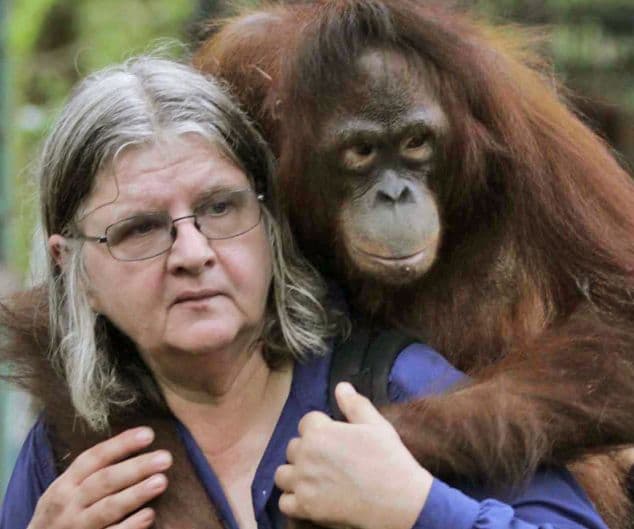
Biruté Mary Galdikas arrived in Indonesian Borneo in 1971 at age 25, accompanied by her then-husband and photographer Rod Brindamour, with a dream she had carried since childhood: to find and study the least understood of all the great apes, the elusive orangutan. She never really left. What began with two huts in the swampy forests of Tanjung Puting Reserve became Camp Leakey, named in honor of her mentor, the paleoanthropologist Louis Leakey, and eventually grew into one of the most significant wildlife research and rehabilitation centers in the world.
Galdikas died in the early morning hours of Tuesday, March 24, 2026, in Los Angeles, California, with loved ones by her side. She was just seven weeks shy of her 80th birthday. She had been battling lung cancer.
Her passing marks the closing of an era of legendary conservation icons. She was the last survivor of the "Trimates" or "Leakey's Angels," a group of pioneering women researchers that also included Dr. Jane Goodall and Dr. Dian Fossey, who studied chimpanzees and gorillas, respectively. These three women, initially mentored and supported by Leakey, revolutionized humankind's understanding of our closest living relatives in the animal kingdom.
Leakey and the National Geographic Society helped Galdikas set up Camp Leakey to conduct field study on orangutans in Borneo. Before her studies, the orangutan was the least understood of the great apes. Her long-term research at Camp Leakey, carried out in collaboration with doctoral students Gary Shapiro in the early 1980s and Graham L. Banes in the 2000s and 2010s, spanned multiple generations of fieldwork. Together, this collaborative body of work helped establish one of the most comprehensive longitudinal datasets on a wild great ape population. At the time, the research program constituted the world's longest continuous study of any mammal led by a single principal investigator.
For more than 50 years, she studied orangutans in the rainforests of Tanjung Puting National Park, Indonesia, conducting some of the longest-running field research on the species. Galdikas remained in Borneo for over 40 years while becoming an outspoken advocate for orangutans and the preservation of their rainforest habitat.

In 1986, Galdikas and her colleagues founded Orangutan Foundation International (OFI), based in Los Angeles, to help support orangutans. She also held professorships at Simon Fraser University in Burnaby, British Columbia, and at Universitas Nasional in Jakarta, and appeared twice on the cover of National Geographic.
Ian Redmond, chair of the Ape Alliance, a coalition dedicated to the conservation of apes that Galdikas helped found, said: "Her legacy is immense, laying the foundation for much of our scientific understanding of orangutan behaviour and ecology, the better protection of key orangutan habitat, and public awareness of the red ape and its role as a keystone species in the forests of Borneo."
Galdikas is survived by her three children and her grandchildren. The legacy continues with her son Fred Galdikas, who is taking the reins of Orangutan Foundation International for the next generation.
Know something we missed? Have a correction or additional information?
Submit a Tip

