Blue Origin rebuilds Florida launch pad after New Glenn explosion
Blue Origin said it has started rebuilding its Florida pad after the New Glenn blast, but its 2026 comeback depends on more than a repaired rocket.

Blue Origin has started rebuilding its Florida launch pad after a New Glenn rocket exploded during a ground test, and CEO Dave Limp said the company still expects launches to resume before the end of 2026. The repair effort is now the clearest test of whether Blue Origin can recover fast enough to keep its heavy-lift ambitions on schedule.
Limp said in Paris at the VivaTech conference, alongside Jeff Bezos, that work was already underway at Launch Complex 36 at Cape Canaveral Space Force Station. The explosion happened on May 28 during a static-fire test, and Blue Origin said no injuries were reported. The blast was visible across Brevard County, briefly turned the sky orange and shook nearby homes, underscoring how much force was involved when the vehicle failed on the pad.
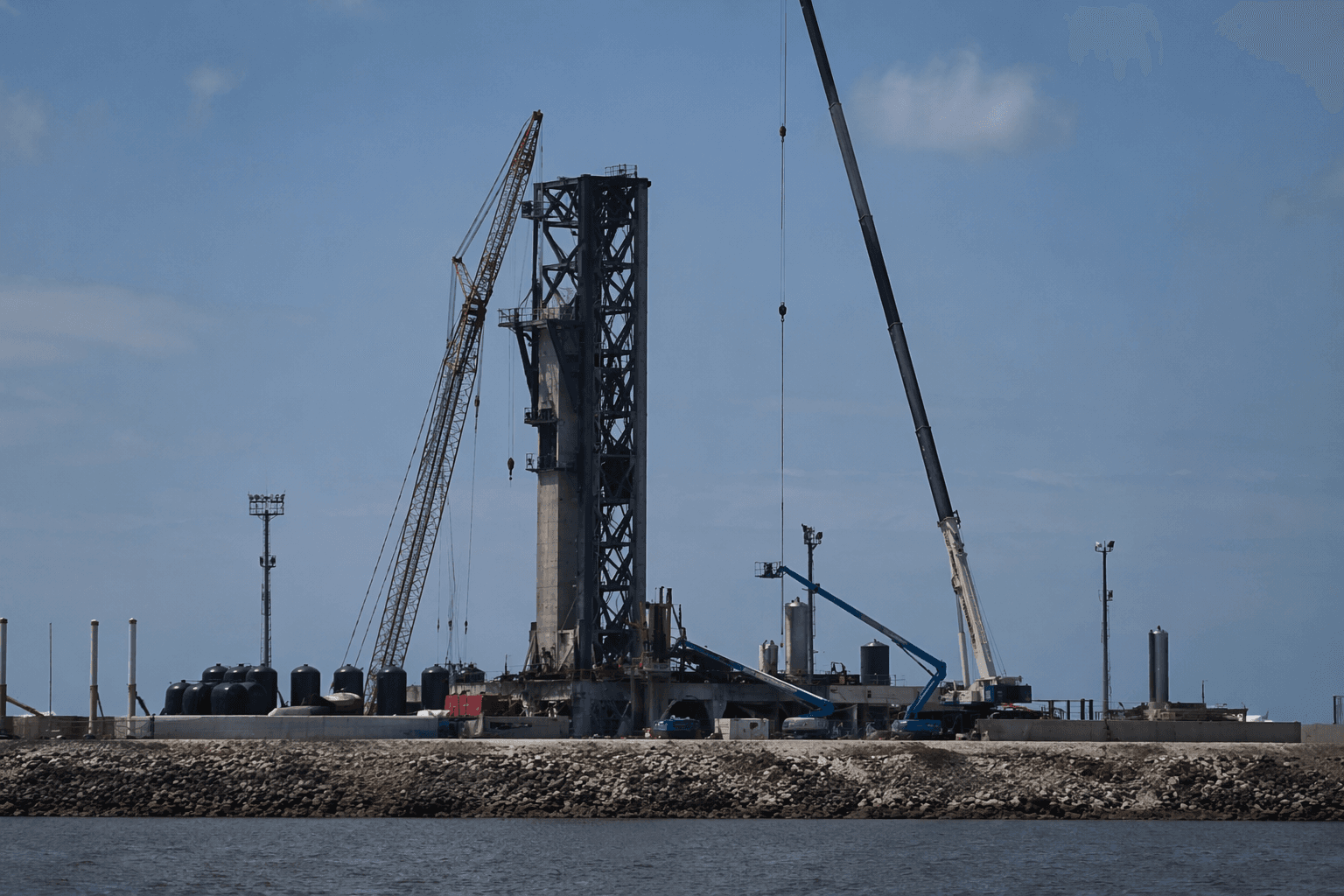
Blue Origin later said the propellant farm, along with tanks for oxygen, liquid hydrogen and LNG, were in good shape after the company regained access to the site. The water tower was also intact, but the large support tower was damaged. Blue Origin said the tower could be repaired in place rather than replaced, a sign that the company thinks the pad damage, while serious, is not total.
That matters because New Glenn is central to Blue Origin’s effort to move from a development program to a steady launch business. The rocket had just flown its third mission, NG-3, on April 19, 2026, before the May failure disrupted momentum. SpaceNews reported that the vehicle being prepared for the NG-4 mission was carrying 48 Amazon Leo satellites, showing how directly the setback could ripple into customer schedules.
The timeline is especially sensitive for Blue Origin’s lunar work. NASA has said Blue Origin’s first Blue Moon Mark 1 lunar lander mission is targeted for launch later in 2026, and the agency’s Human Landing System program also ties Blue Origin to Artemis V. NASA has separately selected Blue Origin to deliver VIPER to the Moon’s south pole in late 2027, a mission with a targeted science window that requires landing by then. If pad reconstruction slips, the pressure would spread beyond commercial customers to NASA’s broader lunar cadence.
For Blue Origin, the rebuild at LC-36 is about more than replacing damaged hardware. It is a credibility test for a company trying to match SpaceX in large launch services and prove it can absorb a major failure without losing the launch window that now defines its place in the market.
This article was produced by Prism’s automated news system from verified source data, official records, and press releases, then run through automated quality and moderation checks before publishing. The system is built and supervised by the people who set the standards it runs under. Read our full AI policy.
Did this article answer your question?