BMW brings humanoid robots to German plant in Europe first
BMW put two humanoid robots on track for its Leipzig plant, betting they will take on tedious jobs that strain workers in the body shop.
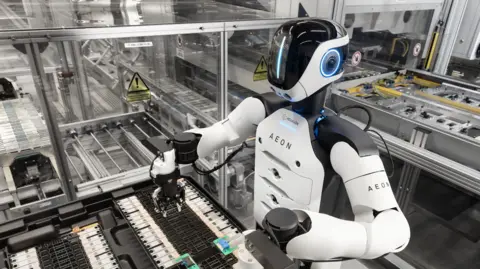
BMW has moved humanoid robots from trial to plant planning in Germany, setting up a pilot at its Leipzig factory that the company said was its first use of “Physical AI” in Europe. The rollout, announced on March 9, 2026, came with a new Center of Competence for Physical AI in Production, a sign that BMW is treating robotics as an industrial strategy rather than a one-off demonstration.
Two humanoid robots made by Hexagon Robotics were planned to begin work in production from the summer at BMW Group Plant Leipzig. BMW said the pilot would test how humanoid robots could fit into existing series car production, battery assembly and component manufacturing. That focus matters because the hardest jobs in auto plants are often not the headline-grabbing ones, but the repetitive, awkward tasks that wear down human bodies over long shifts.

BMW pointed to its earlier test at BMW Group Plant Spartanburg in South Carolina as the basis for the German pilot. There, the company and Figure AI tested the Figure 02 robot in the body shop, where it inserted sheet-metal parts into fixtures. BMW said the robot worked 10-hour shifts every weekday for roughly ten months, supported production of more than 30,000 BMW X3 vehicles and moved more than 90,000 components.
Figure later said the Spartanburg deployment lasted 11 months and generated more than 1,250 hours of run-time. BMW said the trial showed the robot could relieve workers of ergonomically awkward and tiring tasks, especially in the body shop, where precision, repetition and physical strain often collide. That is the labor case at the center of the technology: not replacing the entire workforce, but targeting the jobs most likely to cause fatigue and injury.
BMW had previously described the Figure 02 robot as about 170 centimetres tall, roughly 70 kilogrammes and able to carry 20 kilogrammes. The company said it was being tested in a real production environment, underscoring how quickly humanoid robots have moved from showcase machines toward tools meant for factory floors. For BMW, Leipzig is now the test of whether that experience can scale in Europe without losing sight of the human labor it is meant to supplement.
This article was produced by Prism’s automated news system from verified source data, official records, and press releases, then run through automated quality and moderation checks before publishing. The system is built and supervised by the people who set the standards it runs under. Read our full AI policy.
Did this article answer your question?