BMW Cuts Earnings Outlook as Tariffs and China Slump Bite Deep
BMW warned tariffs will shave 1.25 percentage points from its 2026 margins as China sales stagnate, sending shares down sharply.
BMW has slashed its financial targets for 2026, warning that escalating trade tariffs and deepening weakness in China will push group pre-tax earnings lower and leave vehicle deliveries flat for the second consecutive year.
The German automaker said group earnings before tax, which already fell to €10.2 billion in 2025, will decline a further 5% to 9.9% this year. The core automotive margin is expected to contract to a range of 4% to 6%, down from 5.3% in 2025 and 6.3% in 2024, with higher tariffs alone responsible for a 1.25 percentage-point hit to that figure.
The company also halved its 2025 automotive free cash flow target to €2.5 billion from €5 billion, citing a weaker profit outlook and delays in expected reimbursements of customs duties from American and German authorities. BMW predicts the European Union will retroactively lower tariffs on imported vehicles and parts from 10% to zero, pushing those reimbursements into 2026. The return on capital employed target was cut to 8% to 10% from a previous range of 9% to 13%.
China sits at the center of BMW's problems. Sales in the country fell 12.5% in 2025, and a separate pressure has emerged in the dealer network. "The impact of a significant reduction of commissions from local Chinese banks in connection with the brokering of financial and insurance products to end customers requires financial support to strengthen dealer profitability," BMW said. CFO Walter Mertl offered a cautious note of optimism for the year ahead: "China could reach last year's level," he said.
The tariff environment compounds those pressures. BMW faces duties in both the United States and the European Union, including EU tariffs on its Chinese-made fully electric Mini. Its large production presence in the United States, anchored by its biggest plant in Spartanburg, South Carolina, has softened some of the American tariff exposure. Mertl said he hopes new trade deals between Washington and partners in the EU, Mexico and Canada will ease the burden in the second half of the year.
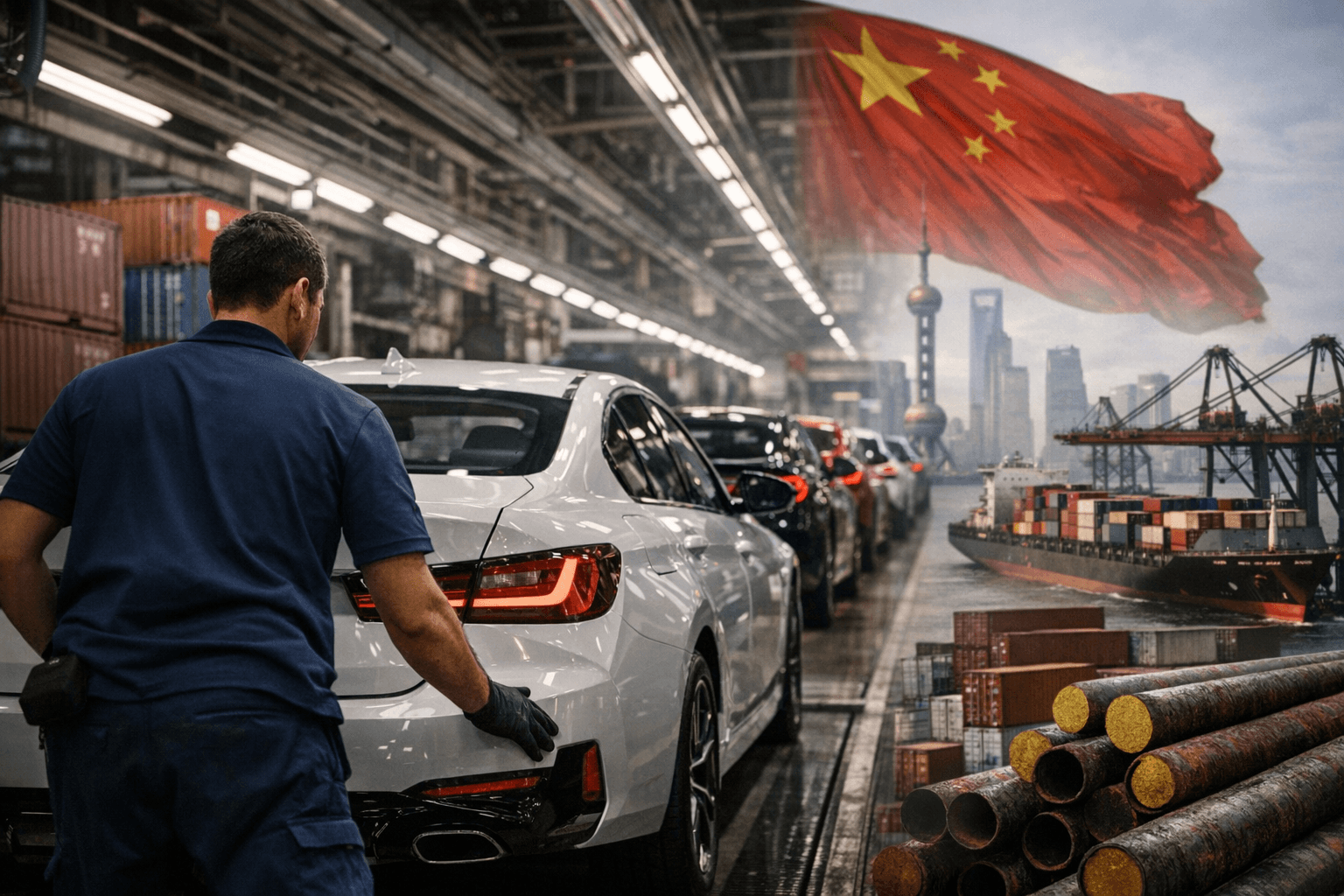
BMW's delivery outlook reflects the accumulated weight of these headwinds. The company said 2026 volumes will stay on a par with 2025, a year already scarred by the China sales collapse. That stagnation leaves BMW dependent on growth momentum in the United States and Europe to hold the line.
To drive a medium-term recovery, the company is accelerating its Neue Klasse program, a sweeping overhaul of its vehicle lineup, with 40 model launches planned across this year and next.
BMW is not alone in its predicament. Rivals Volkswagen and Mercedes both reported weak 2025 results under the same combination of trade barriers, falling China sales and uneven transitions to electrification.
Markets reacted sharply to the guidance revisions. Shares fell 1.3% in early trading and extended those losses as the day progressed, dropping nearly 9% to €79.80 by midday. Whether the Neue Klasse launches prove compelling enough to offset structural margin pressure will be the central test of BMW's strategy over the next two years.
This article was produced by Prism’s automated news system from verified source data, official records, and press releases, then run through automated quality and moderation checks before publishing. The system is built and supervised by the people who set the standards it runs under. Read our full AI policy.
Did this article answer your question?

