Boeing’s Starliner Will Fly Uncrewed, NASA and Boeing Say
NASA and Boeing announced today that the next flight of the CST 100 Starliner to the International Space Station will be an uncrewed cargo mission, reflecting continuing concerns about propulsion and other onboard systems. The move postpones the return of astronauts on Starliner until engineers complete additional thruster and systems testing, and it reduces the number of planned Starliner crew flights pending successful verification.
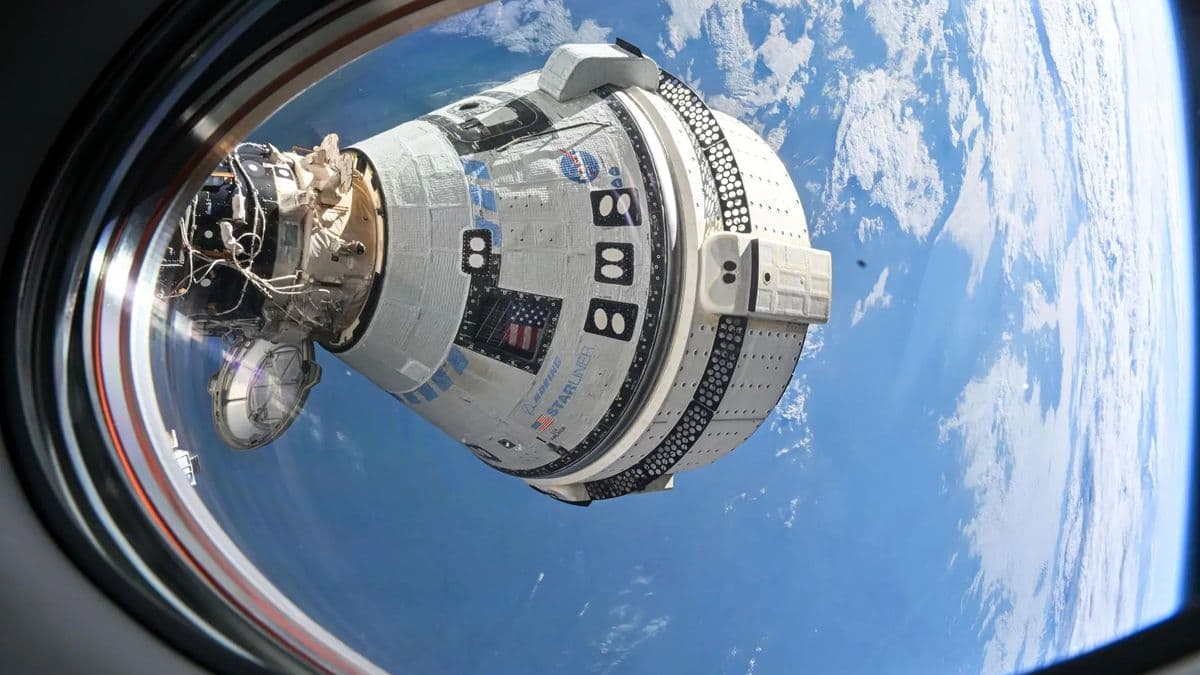
NASA and Boeing announced today that the next mission of Boeing’s CST 100 Starliner will be an uncrewed cargo flight to the International Space Station rather than a crewed trip. The change follows technical and propulsion concerns identified during earlier Starliner flights, and it comes as engineers prepare a program of additional thruster and systems testing intended to verify the spacecraft’s readiness to carry astronauts.
The cargo test is tentatively scheduled no earlier than April 2026, officials said. That launch window leaves months for Boeing and NASA to complete diagnostic work and for flight teams to reexamine hardware and software implicated in the propulsion anomalies. NASA also said it will reduce the number of planned Starliner crewed missions from six to four until testing and certification demonstrate the spacecraft meets the agency’s safety and reliability standards.
The decision underscores the continued scrutiny of Boeing’s commercial crew work after a string of issues on prior Starliner flights that raised questions about propulsion performance and systems behavior under flight conditions. The company has emphasized that safety is its top priority while it collaborates with NASA on the verification path forward. NASA said further decisions about when astronauts will fly aboard Starliner again will depend on the outcomes of the uncrewed cargo flight and the verification work currently underway.
For NASA the move maintains a cautious approach to crew safety while preserving the station’s logistics chain. The Starliner program was intended to provide a second crew transport capability in addition to the Crew Dragon spacecraft built by SpaceX. With Starliner temporarily sidelined for crewed missions, NASA will continue to rely on the alternative vehicle for crew rotation and contingency planning, maintaining redundancy at a time when the agency supports an expanded station crew and growing commercial activity in low Earth orbit.
Boeing faces a dual challenge of resolving technical issues and restoring confidence with regulators, partners and the public. The company must complete hardware inspections, software validation, and integrated thruster testing to demonstrate that whatever performance shortfalls surfaced in earlier flights have been corrected. Certification milestones that initially supported a larger slate of crewed missions have been scaled back pending those results.
The schedule change also has implications for astronauts and mission planners who had been preparing for Starliner flights. Crew assignments, training timelines and ISS utilization plans may be adjusted as NASA integrates the new flight plan and assesses risks. International partners and commercial cargo customers will likewise watch the cargo test for signals about when full crewed operations can safely resume.
The tentative April 2026 date gives teams time to work through the remaining technical agenda, but it is not a guarantee. NASA and Boeing said the timeline will be driven by test outcomes and safety verification rather than by a fixed schedule, reinforcing that the pace of future crewed flights will be dictated by demonstrated readiness.
This article was produced by Prism’s automated news system from verified source data, official records, and press releases, then run through automated quality and moderation checks before publishing. The system is built and supervised by the people who set the standards it runs under. Read our full AI policy.
Did this article answer your question?


