Bollywood Studios Using AI to Cut Costs, Transform Film Production
Galleri5's AI studio cut mythology film costs to one-fifth, but deepfake lawsuits by Arijit Singh and NTR Jr. expose a consent crisis reshaping Bollywood's production pipeline.
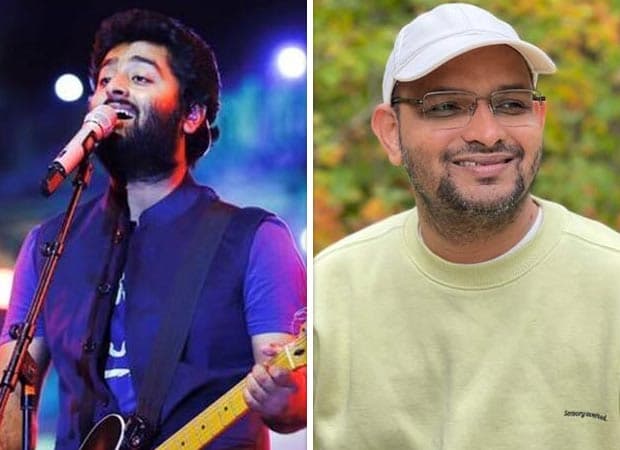
The quiet hum of a coding floor has replaced the chaos of camera crews at Galleri5's Bengaluru studio, where employees in motion capture suits feed footage not into a traditional film set but into an AI production pipeline now rewriting the economics of Indian cinema.
Collective Artists Network, one of Bollywood's top talent agencies, built Galleri5 as its dedicated AI production arm. The studio has already completed "Mahabharat: Ek Dharmayudh," an entirely AI-generated retelling of the ancient Hindu epic that premiered on JioHotstar, and has a second production, "Chiranjeevi Hanuman: The Eternal," targeting global theatrical release later in 2026. Rahul Regulapati, CEO of Galleri5, said the technology had cut production costs "to one-fifth" for mythology and fantasy genres and compressed timelines "down to a quarter" compared with conventional methods.
For writers, dubbing artists, visual effects crews and background performers, those figures describe not just a budget line item but a structural threat to employment. Work that once required specialists across multiple departments, from language voice casts to pre-visualization teams, can now be automated or absorbed by smaller crews operating through generative tools. Vijay Subramaniam, founder and Group CEO of Collective Artists Network, framed the shift as a fix to a broken cost model for ambitious productions. "Can you show the world of India and the history of this glorious nation without having to spend 500 to 600 crore rupees on it, which is a fundamentally broken economic model?" he said. "It's hardcore engineering, not just prompting."
Studios across Mumbai and other production hubs are experimenting with AI-driven dubbing to release films simultaneously in multiple Indian languages, collapsing a post-production cycle that previously required separate voice casts for each market. Back catalogs are also being reviewed for AI-enhanced re-releases with alternate endings, a commercial play aimed at extracting new revenue from older titles. Some small-budget projects reported completing a feature-length film for as little as 15 percent of a conventional budget. EY valued India's media and entertainment market at 2.5 trillion rupees in 2024 and projects growth to roughly 3.1 trillion rupees by 2027.
The pace of adoption in India is outrunning Hollywood, where union contracts and strike-era agreements have slowed generative AI integration. Indian producers face fewer institutional constraints, which has given the industry room to experiment at a scale and speed that has drawn attention from global media companies.
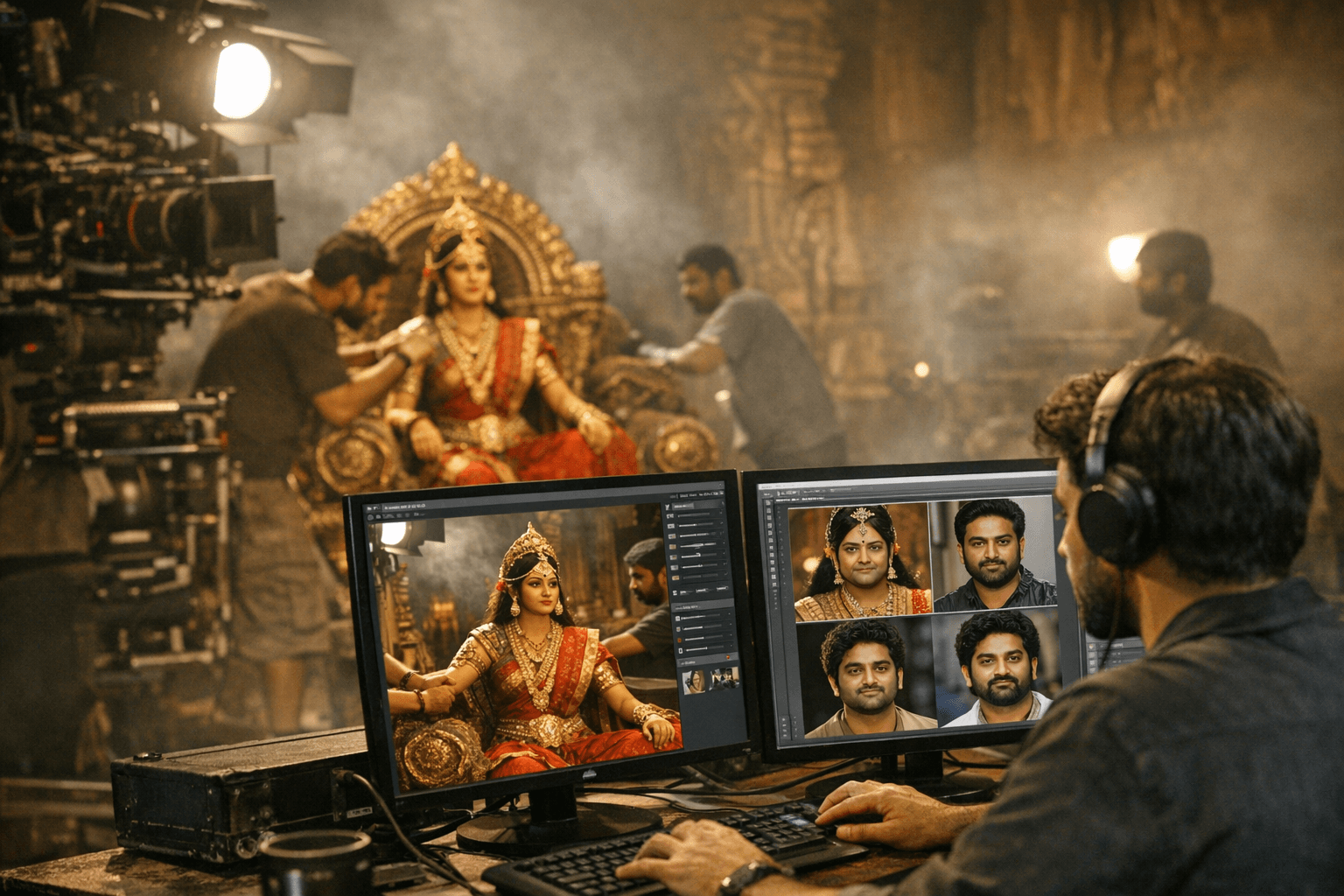
But the rapid pivot has surfaced legal battles that expose how little the regulatory framework has kept pace. In December 2025, actors NTR Jr., R. Madhavan and Shilpa Shetty filed lawsuits and won emergency court orders in Delhi and Mumbai blocking AI-generated deepfakes and voice clones of their likenesses. The Bombay High Court had earlier restrained platforms from enabling voice cloning of singer Arijit Singh without his permission. Aishwarya Rai Bachchan, Abhishek Bachchan, Karan Johar, Asha Bhosle and Kumar Sanu also pursued cases against unauthorized AI impersonation and false endorsements. India's personality rights framework currently relies on a patchwork of trademark, copyright and constitutional privacy principles rather than a single statute, with courts building precedent case by case.
Industry executives argue that AI can extend creative reach and open new distribution markets if deployed with licensing contracts and revenue-sharing mechanisms. Whether those protections materialize for the dubbing talent, visual effects artists and writers whose livelihoods are embedded in the old production pipeline is the question that courts, studios and regulators have not yet answered.
This article was produced by Prism’s automated news system from verified source data, official records, and press releases, then run through automated quality and moderation checks before publishing. The system is built and supervised by the people who set the standards it runs under. Read our full AI policy.
Did this article answer your question?