Bora Aksu FW26 Invokes Sukie, 18th-Century Barmaid, For Bridal Gowns
At London Fashion Week FW26, Bora Aksu staged Sukie’s legend in two acts at St Paul’s Church, closing with a veil threaded with white roses that ghost hunters say Sukie wore.
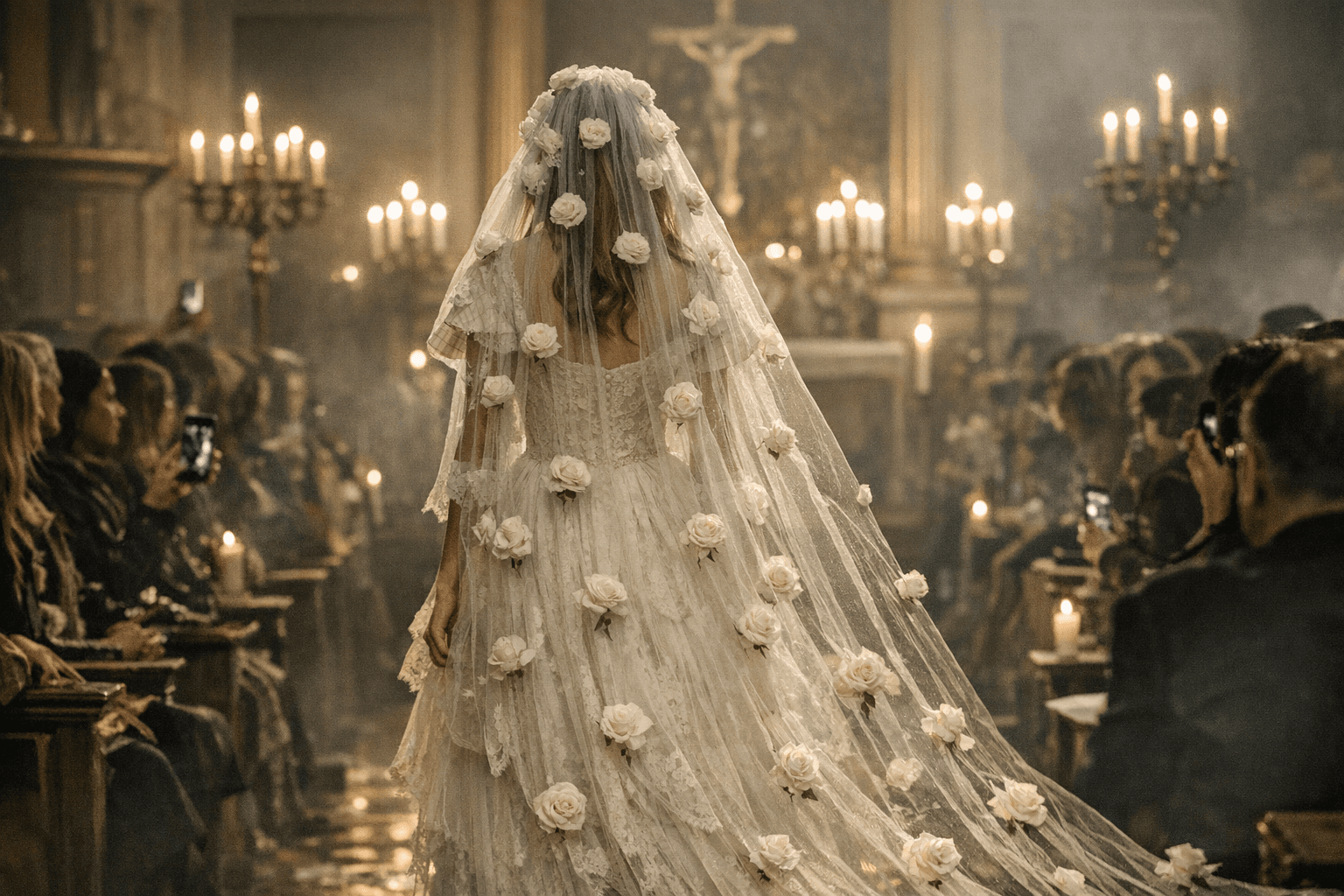
Bora Aksu opened his Fall/Winter 2026 presentation at St Paul’s Church, Covent Garden with a working-wardrobe sensibility that shifted, by the finale, into full-on spectral bridal theater. The collection, dated on the show roster as London Fashion Week FW26 (February 20, 2026), was built around the folklore of Sukie, an 18th-century barmaid linked to the George & Dragon and the Hellfire Caves; Vogue notes the mythology ends in an ambush and a body found at dawn, and the show culminated in “the dress that contemporary ghost hunters claim to have seen Sukie wearing.”
Aksu organized the runway in two clear movements: the living woman and the lingering spirit, a structure the designer used to move from pragmatic tailoring to ghostly romance. The opening looks leaned on crystal-studded short suits, check-wool hybrids that read as skirt-trousers layered over sheer legs, velvet puffers fastened with ribbons atop crochet skirts, and tailored jackets with martial undertones — all filtered, the show notes say, “through Aksu’s signature romanticism.”
The second movement turned theatrical. Kendam captured the effect succinctly: “Gossamer capelets hovered over structured bouclé blazers, the sheer overlays reading like a spectral hand resting on the shoulder.” Polka-dot ruffled gowns and saloon-style puff-sleeve dresses were veiled in lace so diaphanous they seemed to float; Kendam continued, “Black slip dresses erupted with blood-red crochet poppies, while pale blossoms crawled up tulle necklines in unsettling bloom.” Sound played a part in the drama too — the show summary reports an Alison Sudol-fronted chorus that began to yelp and scream from the rostrum at the altar as Sukie’s spectral forms appeared.
Materials and provenance mattered as much as silhouette. Multiple outlets described porcelain-like, doll-ish forms in organza, tulle, lace, bouclé, and crochet; the Arabic-language video transcript singled out a shimmering, iridescent lace rescued from the unsold stock of a defunct Turkish bridal house and used across overlays and trims. As that video put it, “Among the notable creations is a nightdress adorned with sophisticated ruffles, crafted from shimmering lace sourced from the reserves of a defunct Turkish bridal house. This textile… is used for various overlays and embellishments, illustrating Aksu’s commitment to ecology and sustainable creativity.” The same coverage flagged a renewed interest in cotton across exaggerated sleeves and striped peplum blouses, and YouTube praised the collection’s baroque ruffles in mustard georgette and crimson silk.
The finale threaded the show’s references into a single, unsettling bridal relic: a suite of ivory organza and lace gowns embroidered with clusters of orchid appliqués, and a final veil threaded with white roses. Kendam concluded that the closing looked “felt almost funereal in their accumulation,” calling the final bridal image “less wedding dress than relic.” Bora Aksu laughed off any personal supernatural encounter, telling Vogue, “Oh, I’m glad I didn’t. I don’t think I’m ready to see the afterlife just yet.” Practically speaking, the collection signals bridal direction for the season: expect heirloom lace, reconstructed vintage trims, and veils that read more like talismans than finishing touches.
Know something we missed? Have a correction or additional information?
Submit a Tip