BorderPlex executive defends $165 billion AI campus amid local concerns
BorderPlex defended its Project Jupiter AI campus at a local AI and energy conference. The company pledged infrastructure investments but community worries about water and pollution persist.
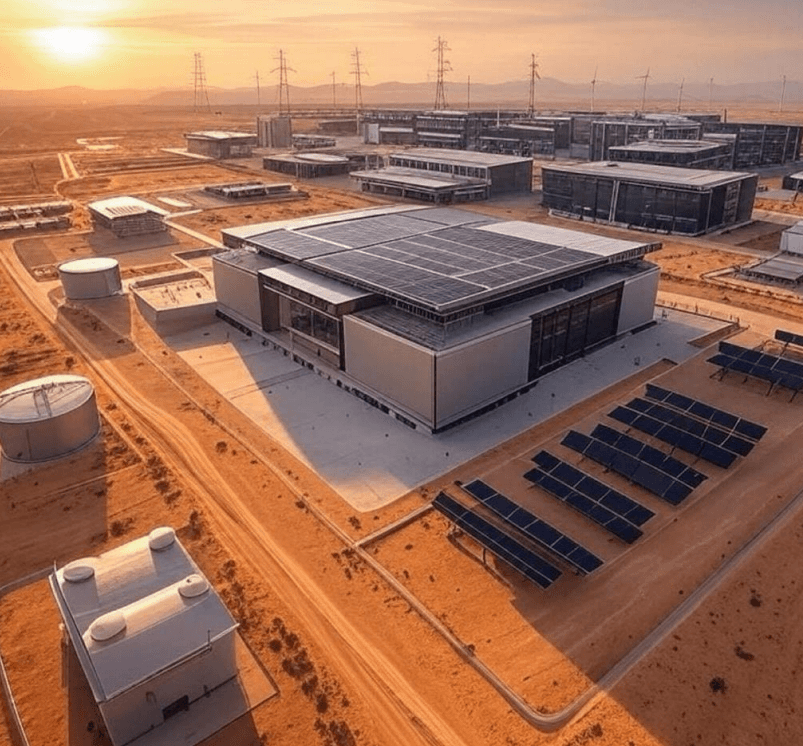
At a packed AI and Energy Conference hosted by the Mesilla Valley Economic Development Alliance, Lanham Napier of BorderPlex Digital Assets argued that large-scale AI infrastructure can deliver measurable benefits to surrounding communities even as some residents remain wary. Napier, the conference’s final speaker on January 13, outlined economic gains he says follow data center investment and pointed to local examples and commitments intended to address community concerns.
Napier highlighted the company’s Project Jupiter plan, the $165 billion AI data center campus proposed for Santa Teresa that drew stiff opposition last year over water usage and pollution. He framed the campus as part of a broader wave of investment that can strengthen local services and grid resilience, and said BorderPlex will invest $50 million in local water infrastructure tied to the project.
To make his case, Napier pointed to ten years of empirical data from Meta’s data center presence in Los Lunas. “We look at Los Lunas and about ten years of empirical data. The population grew by 20%. If you look at what happened to gross receipts tax, it went up 350%. It showed up, it made an incredible difference in the neighborhood,” Napier said. He argued those kinds of gains are replicable where infrastructure and regulatory frameworks allow private investment to flow.
Napier also addressed public opposition directly. Organizers displayed a photo of a protester holding a sign that read “You can’t drink data,” which Napier used to illustrate skepticism around data centers. He characterized much of the criticism of Project Jupiter as standard pushback that accompanies major infrastructure projects and drew historical parallels while urging a long-term view. “Go back and look at infrastructure projects like the interstate highway system. The Hoover Dam. Even really cool things like the Apollo Missions, all litigated,” Napier said.
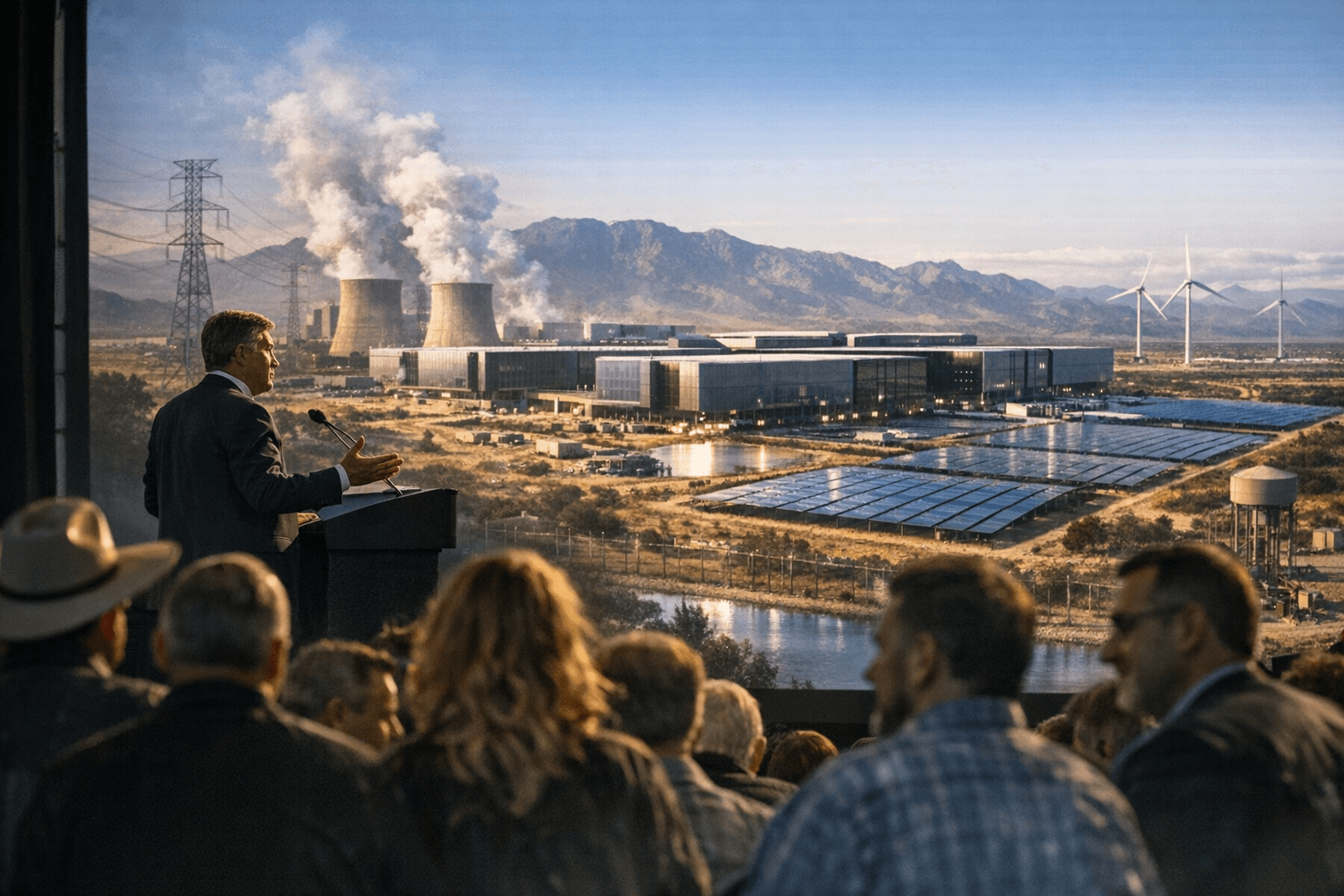
He warned that competition for AI and industrial investment is accelerating, and presented Project Jupiter as part of a strategic race for the region. “Regions that win now will keep winning. The regions that do not win over the next year, they are not going to win,” Napier said. He also asserted New Mexico had missed earlier opportunities from companies such as Microsoft and Tesla, framing BorderPlex’s project as a corrective chance to capture large-scale investment.
The conference brought together New Mexico State University professors and local energy providers to discuss technical and policy aspects of AI-related infrastructure, with a focus on workforce, grid upgrades, and environmental safeguards. Project Jupiter remains controversial in Valencia County and the broader region; construction is scheduled for completion in 2028.
For residents, the debate centers on balancing potential tax and service gains with water access and environmental protection. With Project Jupiter moving forward toward a multi-year construction timeline and a company pledge for targeted infrastructure investments, local officials and community groups will continue to scrutinize agreements, permitting and monitoring as the next phases proceed.
Sources:
Know something we missed? Have a correction or additional information?
Submit a Tip