BP profit doubles on exceptional oil trading, beats estimates sharply
War-driven oil volatility turned into a trading windfall for BP, lifting first-quarter profit to $3.2 billion and sharpening calls for scrutiny of energy gains.

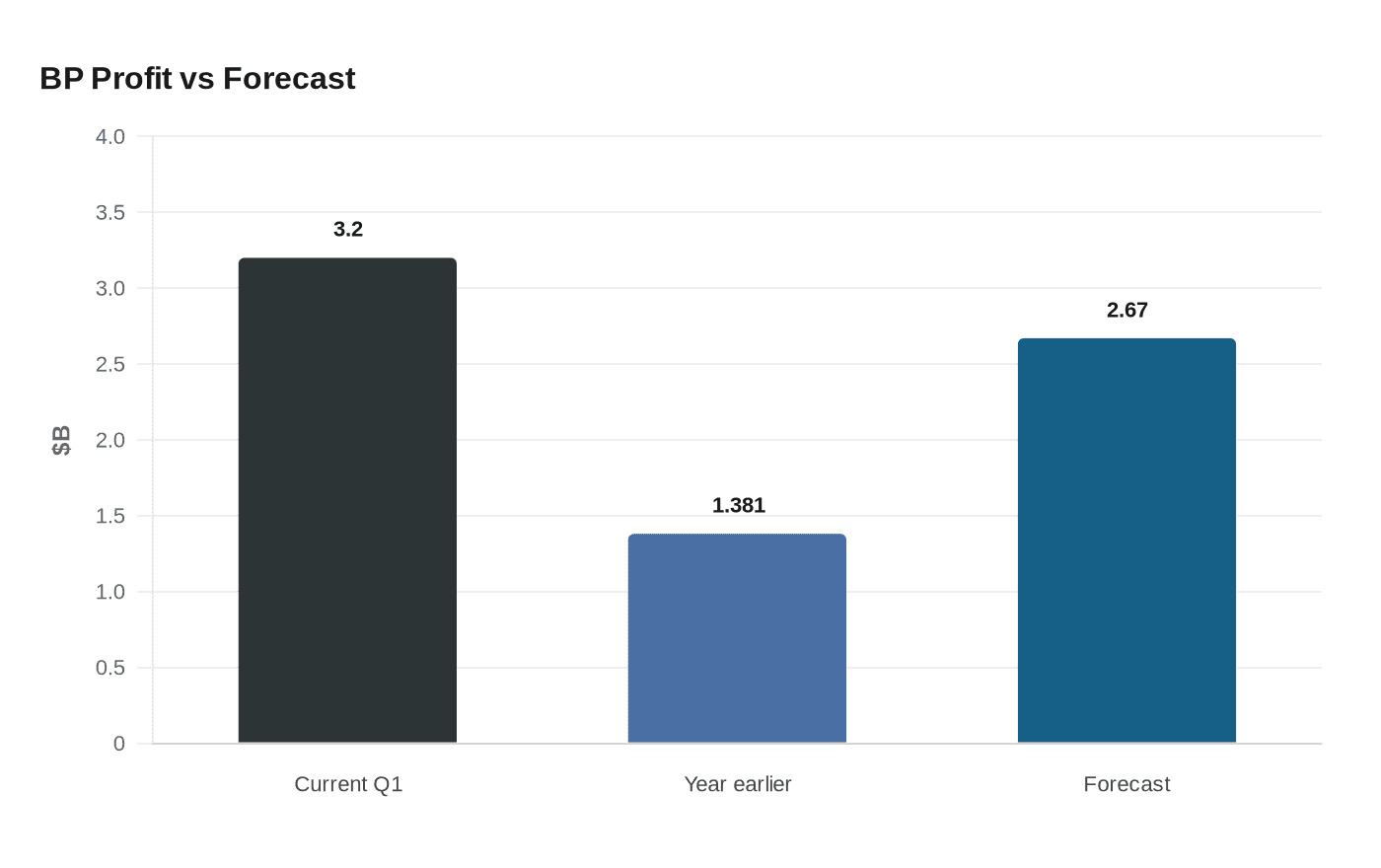
BP’s latest earnings showed how geopolitical shocks can move money fast. As oil prices jumped on market turbulence tied to the Iran war, the company said its trading arm delivered an exceptional contribution that helped push first-quarter underlying replacement cost profit to $3.2 billion, more than double the $1.381 billion it earned a year earlier and well ahead of the $2.67 billion forecast.
That jump lands in the middle of a wider squeeze for households and businesses that face higher fuel and energy costs when crude prices spike. BP said the gain came from an “exceptional oil trading contribution” and stronger midstream performance, with customers and products earnings rising to $2.5 billion from $1.4 billion in the previous quarter. The figures underscore how some parts of the energy system profit from volatility even as the broader economy absorbs the bill.
The company’s operating cash flow came in at $2.86 billion, but that followed a $6.0 billion working-capital build driven largely by higher prices and seasonal inventory increases. Net debt climbed to $25.309 billion from $22.182 billion at the end of the previous quarter, even as BP held its dividend steady at 8.320 cents per ordinary share. Refining availability improved to 96.3%, above BP’s 96% target, a sign that operational reliability remained strong across a stretched quarter.
BP said reported production was broadly flat. Higher output in the Gulf of America and strong performance at bpx Energy offset disruptions in the Middle East and the effect of a North Sea divestment completed at the end of 2025. The company also agreed to sell the Gelsenkirchen refinery, a transaction that, if completed, would raise its structural cost-reduction target by $1 billion to a range of $6.5 billion to $7.5 billion by 2027.
The results arrive against a charged governance backdrop. At BP’s annual meeting on April 23, shareholders rejected two board-backed resolutions, and chair Albert Manifold won only 81.8% support, a relatively weak result that reflected ongoing investor tension over climate disclosure and board oversight. With trading profits surging on wartime volatility, the numbers are likely to renew debate over whether energy companies are capturing an outsized gain from conflict and whether lawmakers should revisit windfall taxes or tighter scrutiny of trading revenues.
This article was produced by Prism’s automated news system from verified source data, official records, and press releases, then run through automated quality and moderation checks before publishing. The system is built and supervised by the people who set the standards it runs under. Read our full AI policy.
Did this article answer your question?

