Brazil current account deficit narrows as trade balance improves
Brazil’s May current account gap shrank to $3.185 billion, while foreign direct investment beat forecasts and trade gains lifted the outlook.
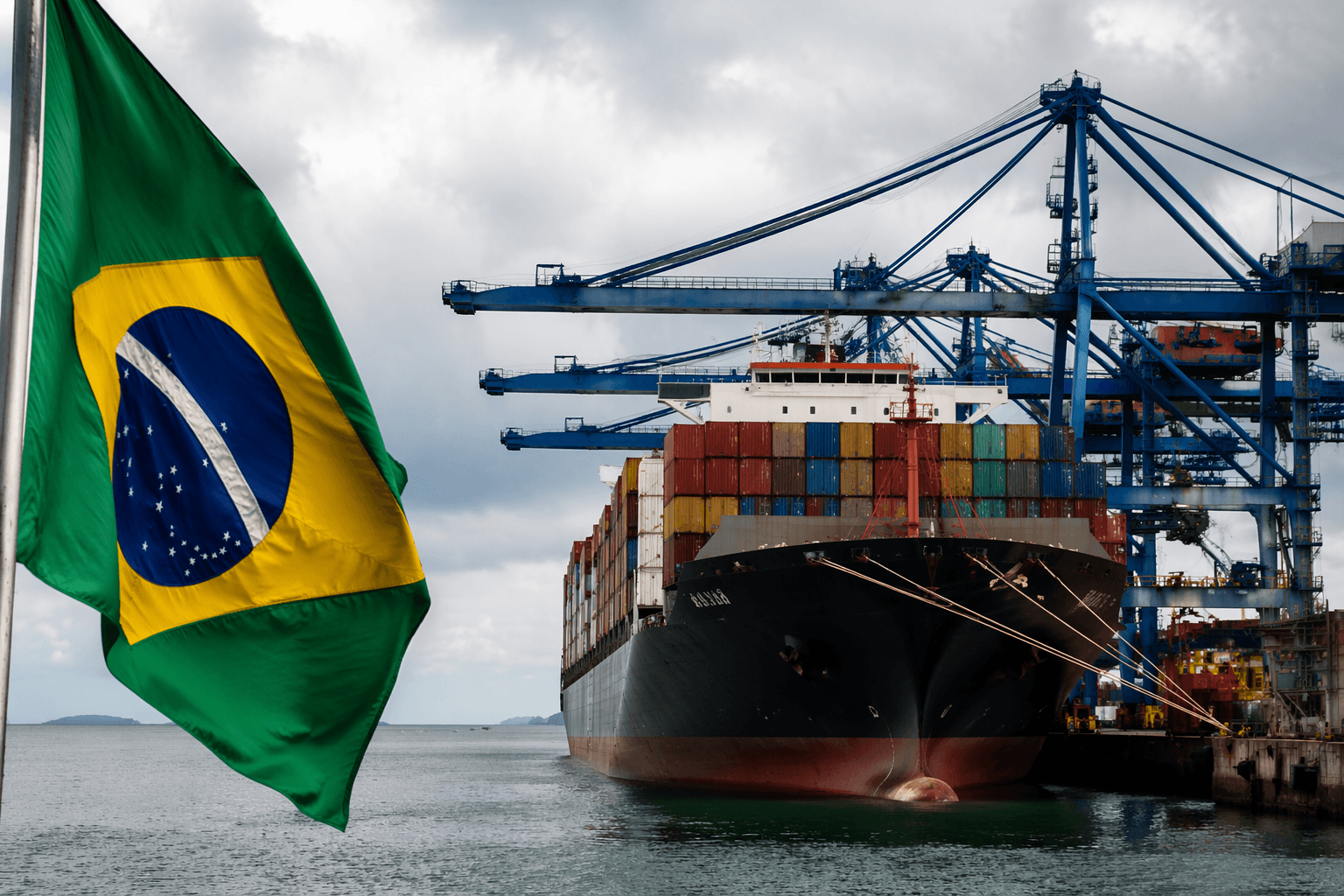
Brazil’s current account deficit narrowed to $3.185 billion in May, a smaller shortfall than economists expected and a sign that Latin America’s largest economy was entering the second half of the year with sturdier external accounts. The same month brought $7.974 billion in foreign direct investment, well above the $5.750 billion forecast, a detail that matters for U.S. investors, exporters and anyone watching emerging-market stability as global capital stays sensitive to interest rates and commodity swings.
The improvement in the external balance came mainly from trade, not from a broad collapse in spending on foreign services or income payments. Brazil’s trade surplus widened by about $500 million from a year earlier, while the services deficit rose by a similar amount and the factor payments account was broadly unchanged. That left the 12-month current account deficit at 2.60% of gross domestic product, down from 2.65% in April and 3.52% a year earlier, a cleaner sign that the pressure on Brazil’s external financing position has eased.
April’s data had already pointed in the same direction. The current account deficit that month was $1.8 billion, while the 12-month deficit stood at 2.66% of GDP. Brazil’s goods trade surplus widened to $9.7 billion from $7.0 billion a year earlier, with exports rising 13.9% to $34.3 billion and imports increasing 6.2% to $24.6 billion. The services deficit widened to $5.0 billion and the primary income deficit reached $6.8 billion, but the stronger merchandise trade line showed that the improvement was not coming from one isolated item.
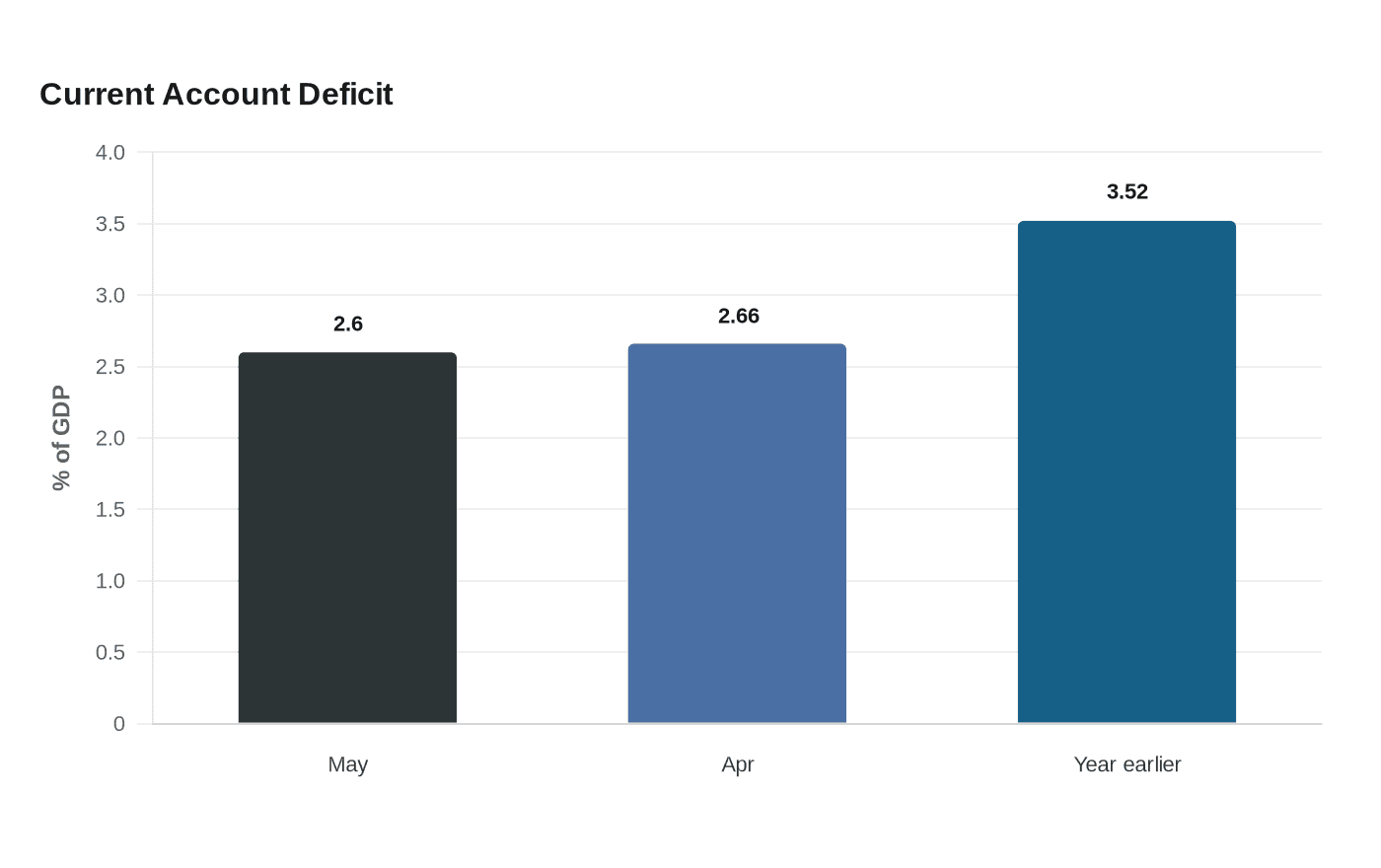
Banco Central do Brasil has since leaned further in that direction. On June 25, it cut its 2026 current account deficit forecast to $56 billion, or 2.1% of GDP, from $58 billion, and raised its projected trade surplus to $78 billion from $73 billion. Officials tied part of the better trade outlook to higher oil prices and tensions in the Middle East, which have lifted energy markets and helped a net oil exporter like Brazil. That support is real, but it also leaves the outlook exposed if commodity prices reverse or global financial conditions tighten again.
This article was produced by Prism’s automated news system from verified source data, official records, and press releases, then run through automated quality and moderation checks before publishing. The system is built and supervised by the people who set the standards it runs under. Read our full AI policy.
Know something we missed? Have a correction or additional information?
Submit a Tip