Britain’s deeper crisis won’t be fixed by a new leader
GDP grew 0.6% and NHS waiting lists fell by 312,000, yet debt hit 95.1% of GDP and Reform UK kept rising.

The next leader in Downing Street will inherit an economy that is improving on paper but still too weak to solve Britain’s broader malaise. Real GDP rose 0.6% in the first quarter of 2026 after 0.2% growth in the final quarter of 2025, and real GDP per head also climbed 0.6% in the quarter, but those gains sit on top of years of stagnation, heavy debt and a health service still under strain.
The public finances underline how little room any government has to maneuver. Public sector net debt stood at 95.1% of GDP at the end of May 2026, while borrowing that month reached £23.3 billion, £5.4 billion more than a year earlier and above the Office for Budget Responsibility forecast. That leaves Britain exposed if growth slows again, especially after a period in which repeated leadership changes have done little to restore confidence or investment.
The same pattern is visible in public services. NHS England said the waiting list in England fell by more than 312,000 over the year to March 2026, and 65.3% of patients were waiting no more than 18 weeks. That is a meaningful improvement, but it still leaves a large backlog and a health system that remains vulnerable to any fiscal squeeze. Even with some progress, the NHS is not yet in a position to absorb the pressure of an aging population, tight spending limits and weak productivity growth.
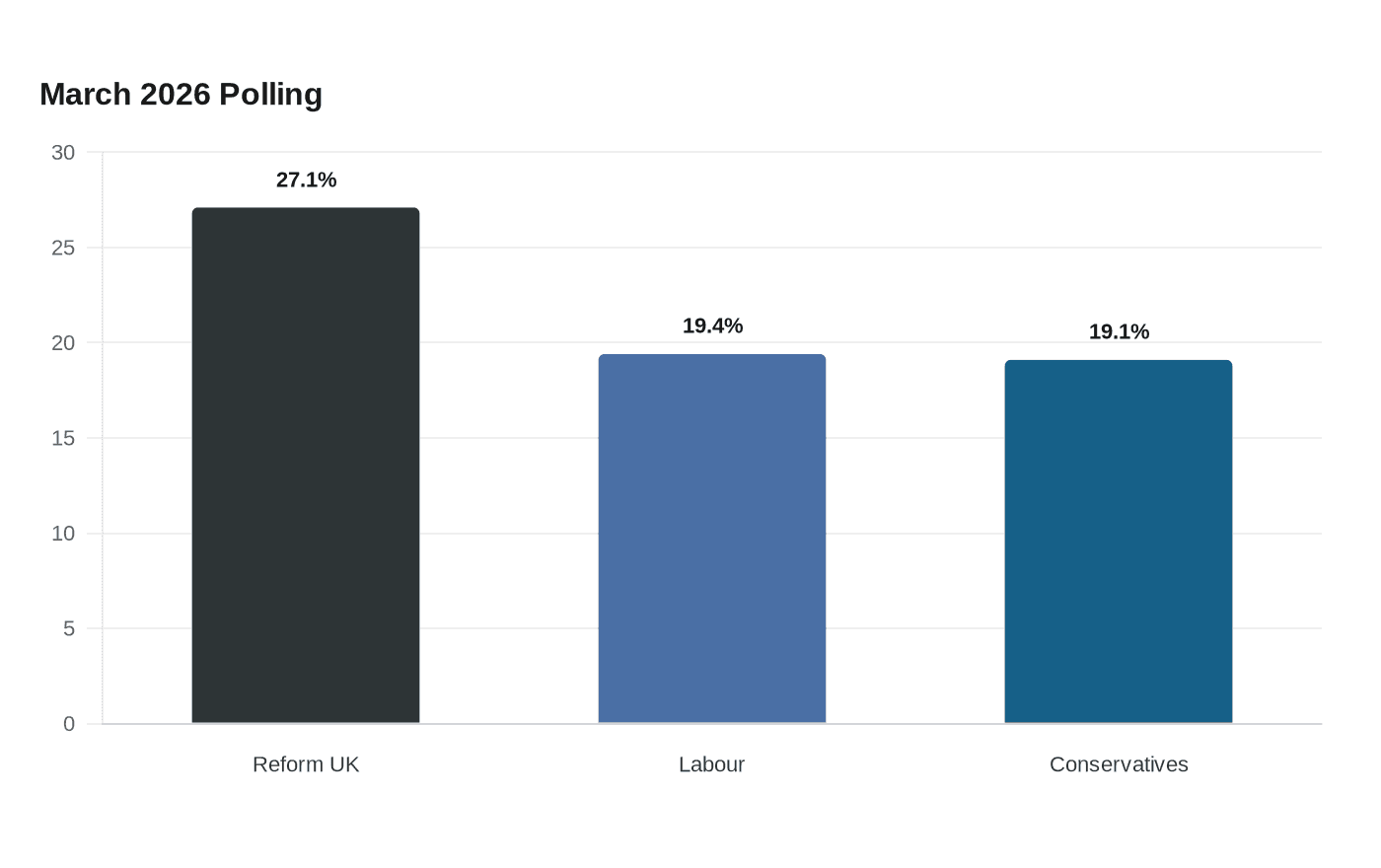
Politics has become more volatile as economic frustration has deepened. YouGov found that 24% of Britons would consider voting for Reform UK, and a March 2026 polling tracker put the party on 27.1%, ahead of Labour on 19.4% and the Conservatives on 19.1%. Reform’s anti-immigrant pitch is tapping anger that has built up around stagnant living standards, strained services and the sense that mainstream parties have failed to deliver.
That helps explain why a new prime minister is unlikely to be enough. Britain has moved from David Cameron to Theresa May, Boris Johnson, Liz Truss, Rishi Sunak and now Keir Starmer without fixing the deeper problems. Tony Blair remains the last prime minister to win an election outright and serve a full term, from 2001 to 2005, a reminder that durable political authority has been rare for more than two decades.
The hard evidence points to a structural problem, not a personality problem. Britain needs faster productivity growth, stronger private investment, healthier public finances and a more resilient NHS. Without that, leadership changes may alter the tone in London, but they will not change the underlying arithmetic.
This article was produced by Prism’s automated news system from verified source data, official records, and press releases, then run through automated quality and moderation checks before publishing. The system is built and supervised by the people who set the standards it runs under. Read our full AI policy.
Did this article answer your question?

