Britain’s two-party system strains as Reform surges in local elections
Reform UK won 677 council seats and took 10 councils on a 34% turnout, while a six-vote by-election win in Runcorn exposed Labour’s brittle hold.
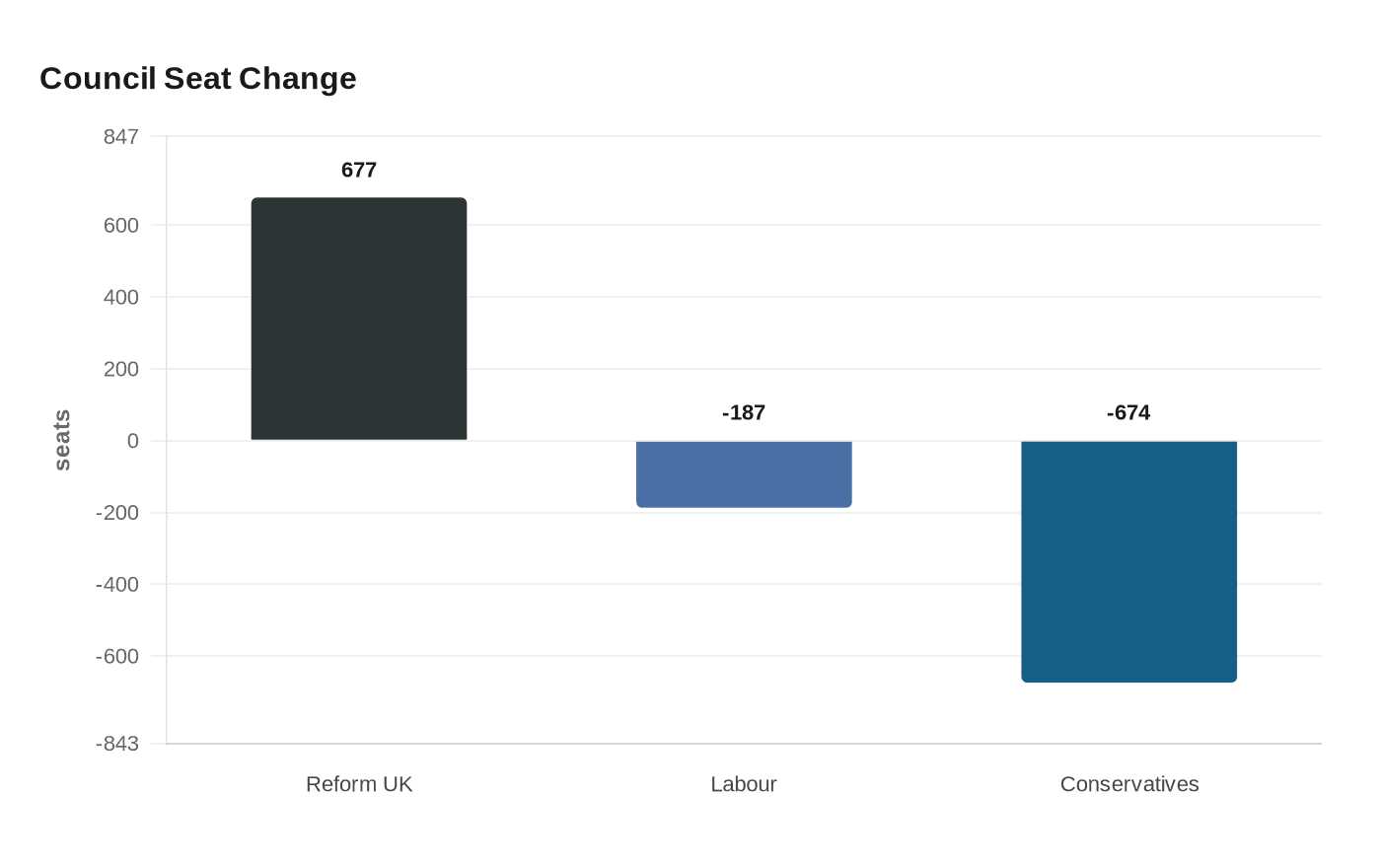
Britain’s winner-take-all politics was put under severe strain as Reform UK converted a fragmented electorate into a string of concrete gains across England, capturing 677 council seats, taking control of 10 councils and winning a parliamentary by-election in Runcorn and Helsby by six votes.
The May 1, 2025 contests covered 23 local authorities, 1,641 council seats, six mayoral races and the Runcorn and Helsby by-election, giving voters their first major chance to judge the post-2024 political landscape. Reform entered the round with no seats to defend and emerged as the largest winner. Labour lost 187 seats and the Conservatives lost 674, a collapse that exposed how quickly support can splinter when a third force breaks through a two-party field.
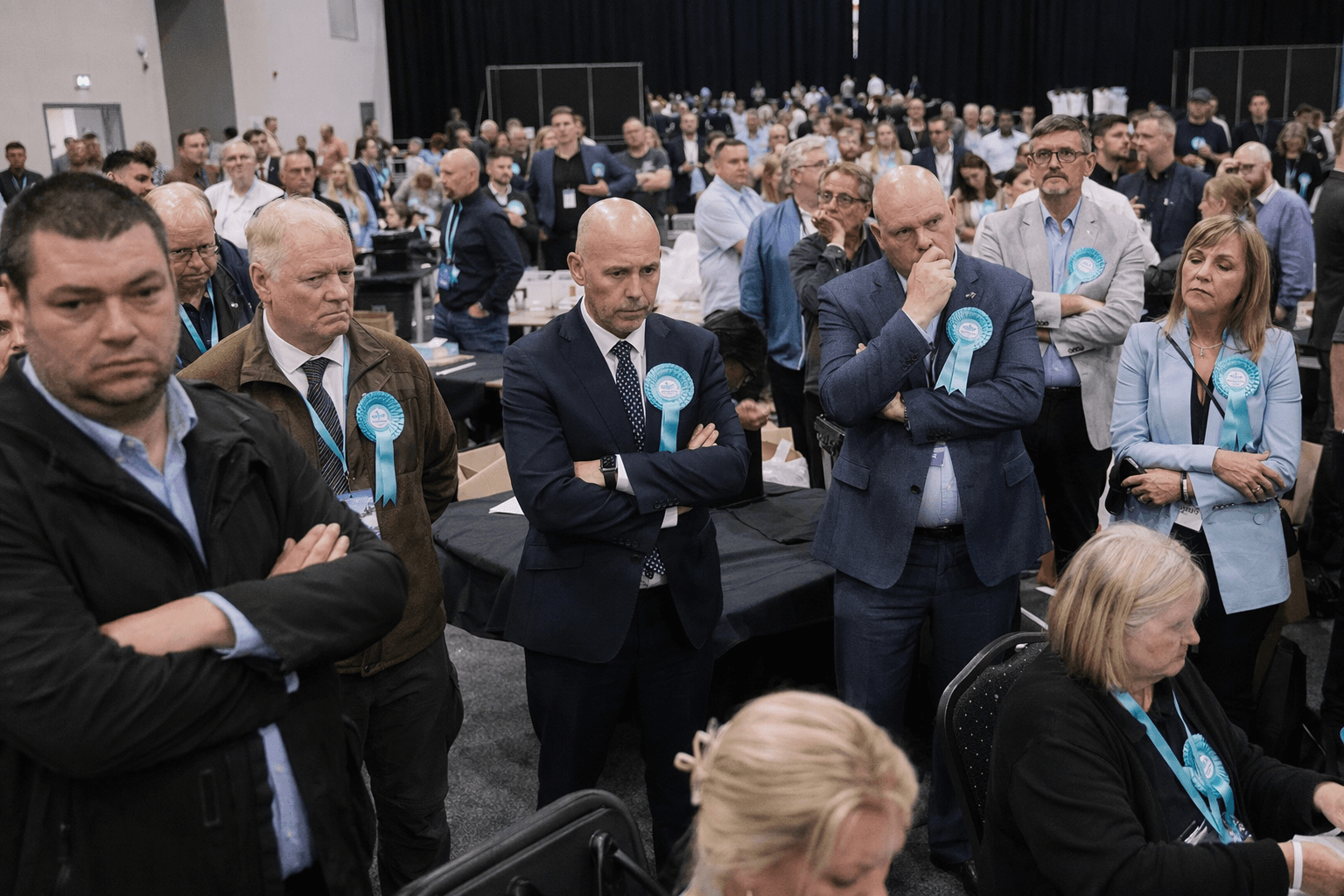
The Electoral Commission said 13.7 million people were eligible to vote in the English local elections, but turnout reached only 34%. In-person turnout was 27%, while postal-vote turnout was 69%, a sharp reminder that local contests still struggle to command mass participation even when the national implications are obvious. The numbers mattered because Reform’s advance came not from a broad turnout surge, but from a reshuffling of a relatively small electorate in a system that rewards concentrated gains.
That distortion was visible in Runcorn and Helsby, where Reform overturned a Labour majority of about 14,000 and won by just six votes. The margin captured the volatility of the moment better than any headline total. Reform also built a local power base in places such as Kent, Staffordshire, Durham, Derbyshire, Lincolnshire, Nottinghamshire, Lancashire and Doncaster, giving Nigel Farage’s party a foothold in government that was unthinkable only a year earlier.
The political fallout landed hardest on Keir Starmer. After the losses, he said he would not resign and promised to move “further and faster” in delivering change. That pledge did little to quiet Labour MPs, who saw the results as a warning that the party’s July 2024 general-election victory had not secured a stable governing coalition.
The deeper problem is structural. Britain’s electoral system was designed for a contest between two dominant parties, yet the 2025 local elections showed a electorate fragmenting across Labour, the Conservatives, Reform and smaller forces. When one party can win 41% of contested seats after starting from zero, while its rivals shed hundreds of councillors and a six-vote swing flips a Westminster seat, the system is no longer simply reflecting voter sentiment. It is amplifying instability.
This article was produced by Prism’s automated news system from verified source data, official records, and press releases, then run through automated quality and moderation checks before publishing. The system is built and supervised by the people who set the standards it runs under. Read our full AI policy.
Did this article answer your question?

