British business confidence stays weak as outlook remains fragile
Business confidence stayed weak as the CBI said orders were soft, activity expectations were negative and executives blamed weak household spending and hesitant customers.
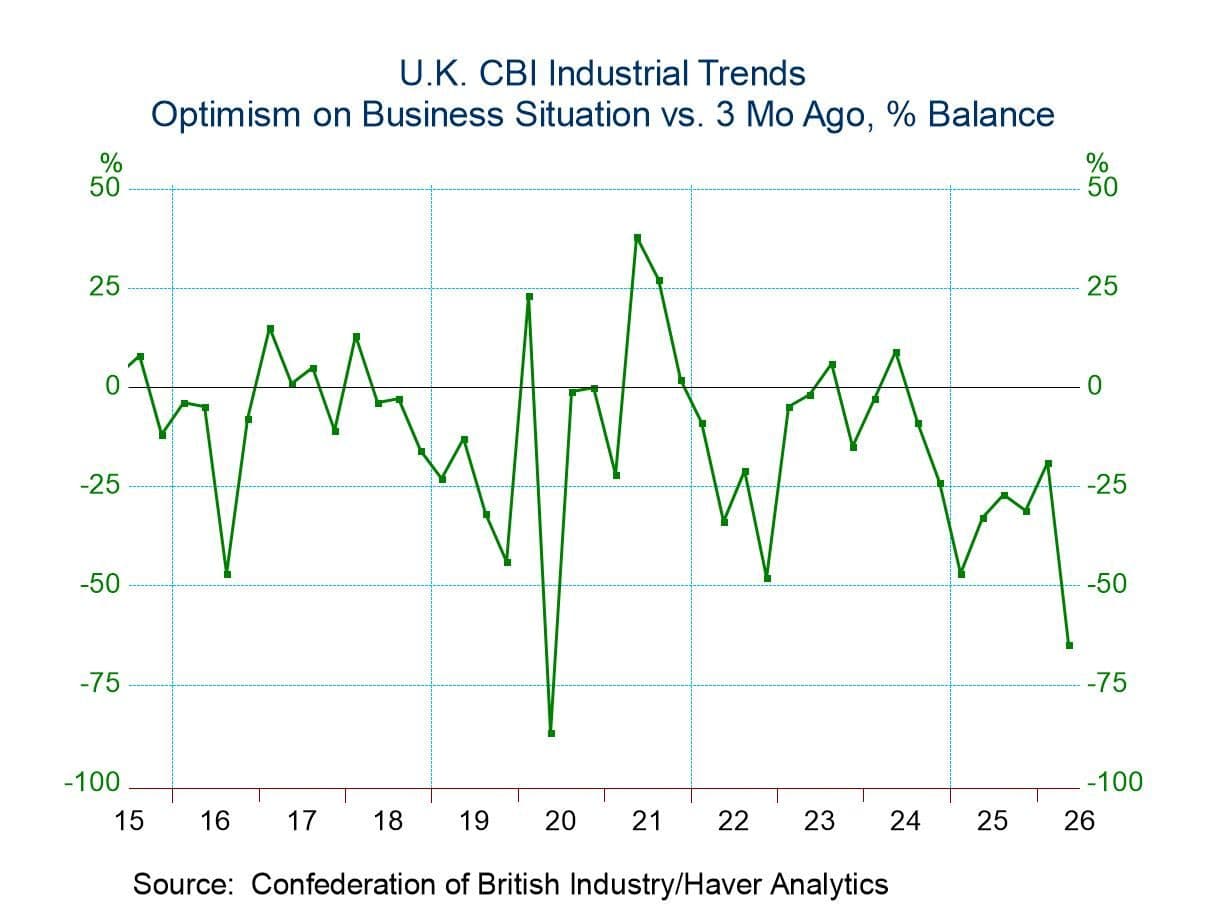
British business confidence remains fragile even as parts of the wider economic picture avoid a sharper downturn. New surveys from the Confederation of British Industry and the Institute of Directors showed executives still wary about the months ahead, with smaller firms somewhat less negative than the broader corporate mood but not enough to suggest a meaningful turn in sentiment.
The CBI’s latest reading fits a pattern that has been darkening for months. In late May, the group said manufacturing order books were at their weakest since 2020, a sign that demand is still not strong enough to give firms confidence to expand. In April, its Growth Indicator showed companies across the private sector expected activity to fall over the next three months by a weighted balance of -25%, following a March reading of -18%. The CBI said those expectations had been negative since the end of 2024, underscoring how persistent the caution has become.

Alpesh Paleja, the CBI’s deputy chief economist, said: “Activity continues to be buffeted by weak household spending and clients’ reluctance to commit to big expenditure.” That mix of soft consumer demand and delayed corporate spending helps explain why business leaders remain hesitant about hiring, investment and pricing, even if headline economic data does not point to a collapse in activity.

The CBI’s own forecast added to the sense of a recovery that is still relying on support rather than private-sector momentum. It projected UK GDP growth of 1.3% in 2026, an upgrade from 1.0%, but said the improvement was driven largely by a temporary boost to government expenditure after the Autumn Budget. The group also said weak demand, elevated labour and energy costs, and uncertainty were continuing to hold back the economy.
The Institute of Directors painted a similar picture of caution, though not outright alarm. Its Directors’ Economic Confidence Index fell to -63 in February from -48 in January, after improving only modestly to -66 in December from -73 in November. The index had dropped to -72 in July 2025, its lowest level since the measure began in 2016. A separate House of Commons Library tracker put business confidence at -23 in May 2026, up two points from April. For the Bank of England, the message is clear: firms are still waiting for firmer orders, cheaper borrowing and steadier demand before they commit to more investment or hiring.
This article was produced by Prism’s automated news system from verified source data, official records, and press releases, then run through automated quality and moderation checks before publishing. The system is built and supervised by the people who set the standards it runs under. Read our full AI policy.
Did this article answer your question?