Brothers Sentenced to Decades in Prison for Running Meth Ring From Behind Bars
Two brothers from Chiapas directed kilogram-level meth shipments into Tennessee from inside an Oklahoma prison using contraband phones and the U.S. mail.
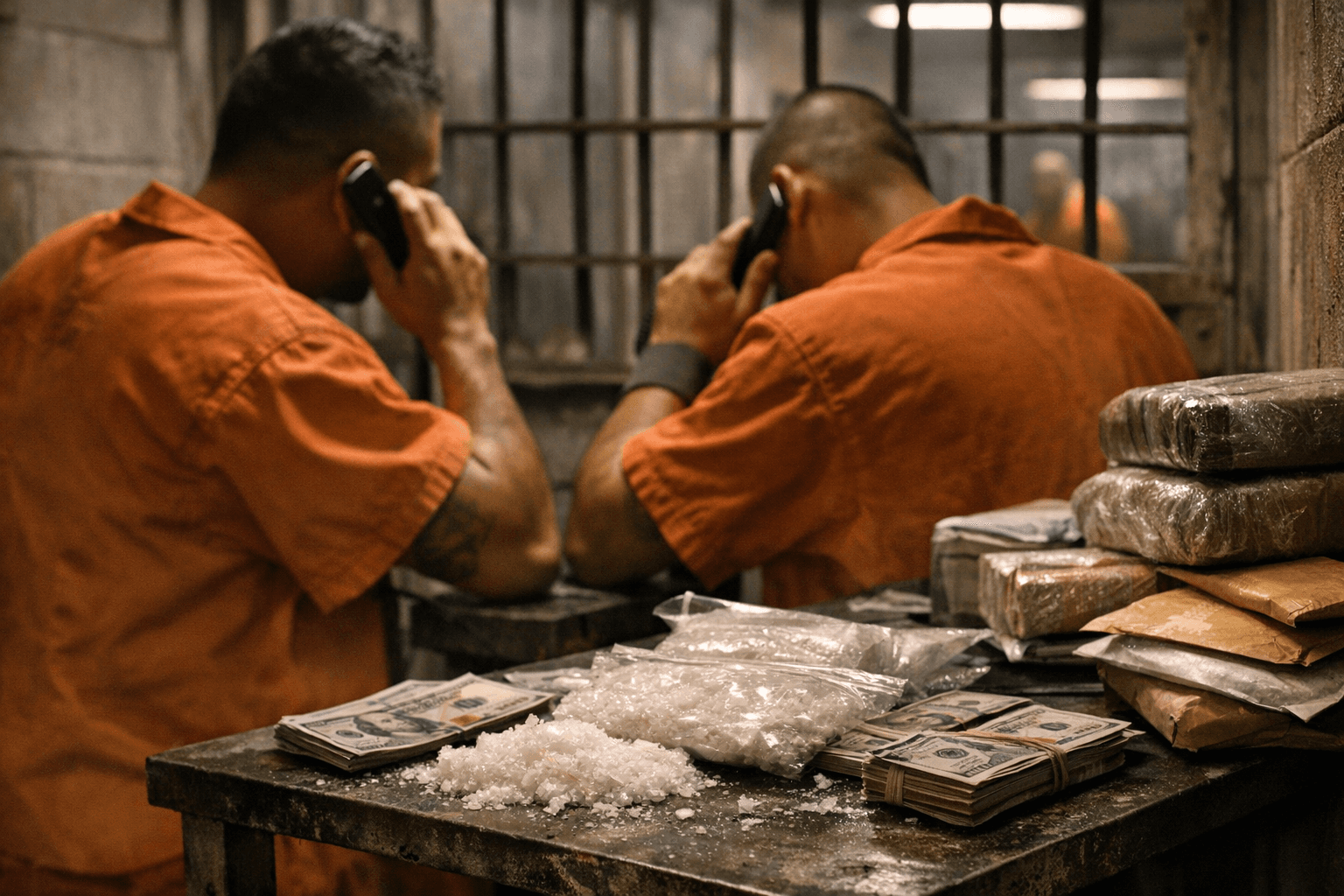
A federal prison cell in Hinton, Oklahoma served as the command center for a methamphetamine distribution network stretching from California into Tennessee, federal prosecutors established at trial. Now the architect of that scheme faces an additional 25 years in federal custody on top of the sentence he was already serving.
U.S. District Judge Mark S. Norris sentenced Julio Cesar Garcia, 45, to 300 months in federal prison on April 10, following his 2023 conviction in the Western District of Tennessee for conspiracy to possess with intent to distribute methamphetamine. That sentence runs consecutively to an existing term from a March 2019 narcotics trafficking conviction in the same district, a prior case that would have released Garcia as early as July 9, 2026. His brother and co-conspirator, Juan Carlos Garcia, 41, had previously received 188 months. Both are nationals of Chiapas, Mexico, and both were ordered not to unlawfully re-enter the United States after completing their terms.
The prosecution, built from a joint investigation by Homeland Security Investigations and the U.S. Postal Inspection Service, described a supply chain that began in California, moved east through the U.S. mail, and was directed entirely from inside the Great Plains Correctional Institution. Julio Cesar Garcia used contraband phones to identify buyers in the Western District and coordinate deliveries; Juan Carlos Garcia, operating freely on the outside, collected payments. Investigators intercepted two parcels shipped from California, one containing approximately 1 kilogram of crystalline methamphetamine and a second carrying roughly 1.5 kilograms. A federal jury convicted both brothers in February 2023 after four days of testimony.
"Let these prison sentences serve as a reminder that using the mail to traffic narcotics will be met with serious consequences," said Inspector in Charge Rodney Hopkins of the U.S. Postal Inspection Service.
The case maps a supply-chain model federal investigators have documented with increasing frequency: a coordinator insulated behind prison walls manages logistics through contraband cellphones while a network of outside contacts handles physical movement and payment collection. Oklahoma state correctional authorities seized more than 6,700 cell phones from their facilities during 2025 alone, a volume that reflects the scale of the contraband communication problem confronting prison administrators and law enforcement nationwide. The Garcia brothers exploited precisely that gap, using a private correctional facility to conduct business that generated kilogram-level shipments across state lines.
That operation fed a market already under severe pressure. Tennessee carries one of the nation's highest drug overdose mortality rates, and methamphetamine has remained a persistent driver of those numbers, with meth-linked overdose deaths climbing 20 percent between 2020 and 2022. The Western District, which encompasses Memphis and the state's southwestern corridor, sits at a regional crossroads where traffickers have historically relied on interstate infrastructure to move product efficiently.
Whether removing the Garcia brothers from that network compresses the meth supply reaching western Tennessee or simply opens space for successor distributors is a question law enforcement and public health researchers continue to confront. The sentences handed down by Judge Norris ensure that neither brother will be placing orders, routing parcels, or directing collections from any location for decades to come.
This article was produced by Prism’s automated news system from verified source data, official records, and press releases, then run through automated quality and moderation checks before publishing. The system is built and supervised by the people who set the standards it runs under. Read our full AI policy.
Did this article answer your question?

