Bruce Springsteen opens new music center at Monmouth University
Springsteen’s new center will turn 35,000 archival pieces into a public museum, concert hall and research hub near the spot where he wrote Born to Run.
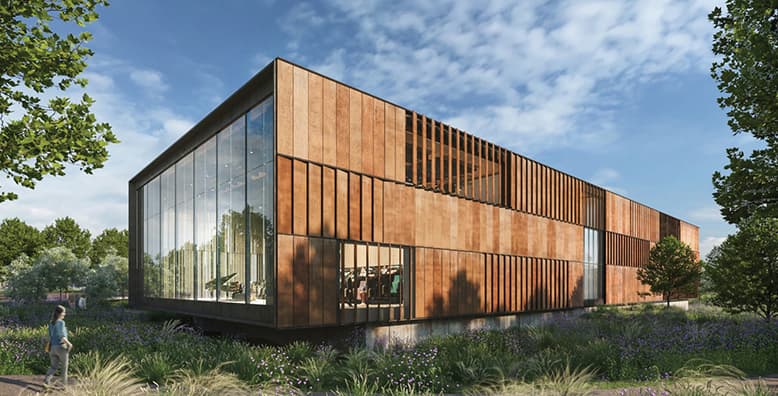
Bruce Springsteen is turning his personal archive into a public institution with national ambitions. The Bruce Springsteen Center for American Music will open to the public on June 13 at Monmouth University in West Long Branch, New Jersey, in a 32,000-square-foot building designed by COOKFOX Architects as part of an approximately $50 million project.
The center is the public-facing evolution of the Bruce Springsteen Archives and Center for American Music, which Monmouth renamed in January. What began as a repository built around Springsteen’s career now reaches far beyond one artist, with a mission that includes American music scholarship, education, exhibits and concerts. Monmouth says the archives hold more than 35,000 objects and materials, including photos, articles, journals, scrapbooks, interviews and other records tied to Springsteen and the E Street Band.
That breadth is central to the institution’s argument for why this belongs on a university campus rather than in a shrine to stardom. The new building will include exhibition galleries, research archives, immersive interactive experiences and a performance theater. It will also debut a new documentary by filmmaker Thom Zimny, adding a curated visual layer to a collection that already treats Springsteen’s work as living public history rather than finished mythology.
Monmouth officials are also tying the opening to place. The university says the building stands not far from where Springsteen wrote Born to Run nearly 50 years ago, linking the center to the geography of his early creative breakthrough and to the Jersey Shore identity that has long shaped the singer’s public image. For West Long Branch and the surrounding towns, the project is likely to deepen the region’s draw as a destination for cultural tourism built around a still-active artist’s legacy.

Patrick F. Leahy, Monmouth University’s president, said music is one of the most powerful teachers in American life and described the center as a destination for scholars, students, fans and neighbors. Robert Santelli, the founding executive director, has stressed that the building is meant to be more than a museum. “We’re not a museum,” he said, underscoring a model that combines archives with public programs, a theater and a steady calendar of events.
That schedule is already part of the institution’s identity. The center’s programming includes concerts, lectures, films, workshops, conferences and symposia, and its site promotes Music America as a two-night concert event tied to the opening. Monmouth has also staged the American Music Honors and a Native American music concert, signaling that the center is being built as an active civic venue, not a static monument. In an era when cultural institutions compete for audiences as well as authority, Springsteen’s center is making a bid to preserve an artist by placing him inside the broader American story.
This article was produced by Prism’s automated news system from verified source data, official records, and press releases, then run through automated quality and moderation checks before publishing. The system is built and supervised by the people who set the standards it runs under. Read our full AI policy.
Know something we missed? Have a correction or additional information?
Submit a Tip