Brutal Winter Ice Devastates Suffolk County Oyster Farms, Millions of Oysters Lost
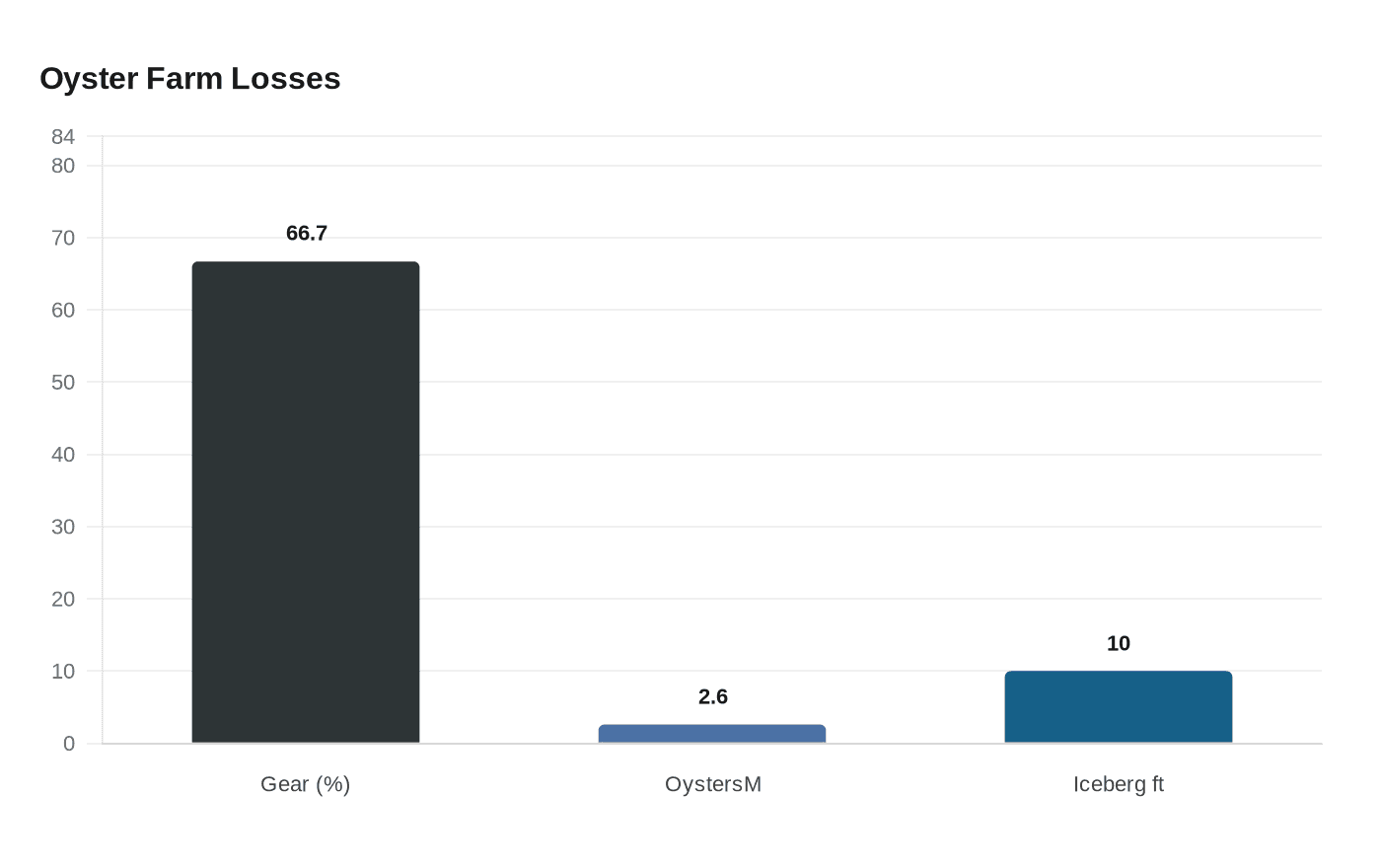
Islip’s Toasted Oysters estimates it lost about two-thirds of gear and 2.6 million Blue Point oysters after winter ice.
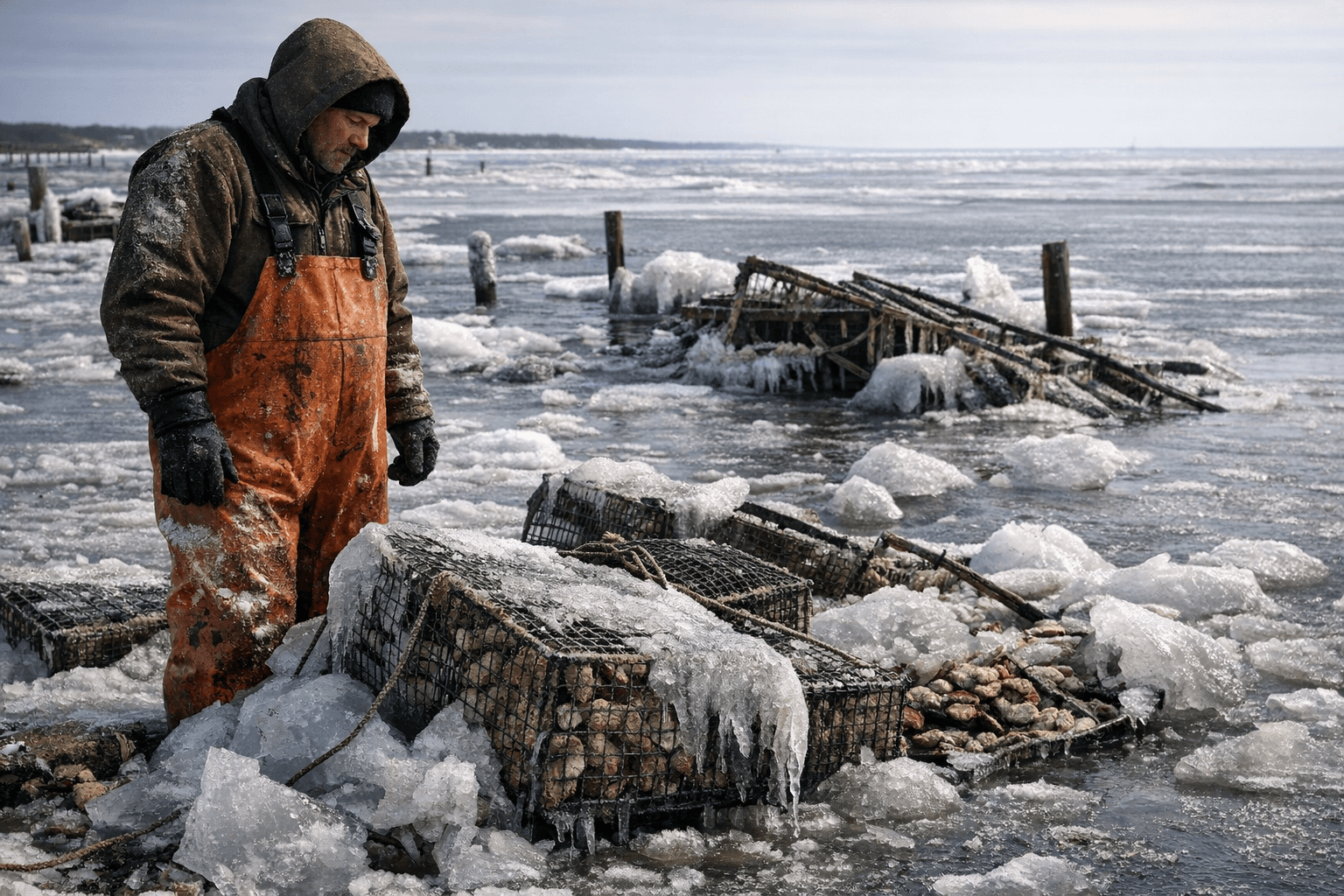
Toasted Oysters, an Islip operation that grows Blue Point oysters in the Great South Bay, says a brutal winter of prolonged freeze and thick ice tore through its beds and equipment, costing the company about two-thirds of its gear and an estimated 2.6 million oysters. U.S. Rep. Nick LaLota has requested a federal fishery disaster declaration for Long Island waters, and Suffolk County and industry partners have launched a coordinated survey to quantify losses across operations.
Co-owner Ray Smith described the damage and the scale of the ice when crews first inspected racks and lines. “We’re all kind of reeling a little bit from the icebergs that were traveling through the farm. There were some floating icebergs out there that were over 10 feet out of the water,” Smith said, and added that “as far as winters go, ‘this is probably the worst I’ve seen … in well over 15 years.’” As of March 6, 2026, Toasted Oysters’ estimates of equipment and crop loss stand as the clearest company-level tally available.
Farm-level damage on Long Island appears widespread from the North Fork to the South Fork and across the Great South Bay, where farmers reported massive floating ice chunks that snapped lines, broke racks and displaced cages. Long Island growers say much equipment is missing and that the breaks and displacements are “threatening months of work” to rebuild lines and recover gear.
Farmers have begun documenting impacts and mobilizing local search efforts. Mike Miezianka, co-owner at Toasted Oysters, said farmers are organizing community searches: “There’s some working parties that are being organized amongst the farmers in the Great South Bay to search together.” Suffolk County’s coordinated survey aims to capture the inventory of damaged gear and crop mortality across affected farms; officials and baymen are collecting that data to support relief requests.
The losses raise immediate market and policy questions. Farmers warn that locally sourced oysters could be scarce and more expensive this season — Smith warned that “Oysters are going to be hard to come by, especially after the winter we had.” The damage compounds recent market disruptions, including a U.S. Food and Drug Administration warning about Canadian oysters contaminated with norovirus, and follows a 2025 Cornell Cooperative Extension Marine Program feasibility study that found New York’s seafood industry lagging neighboring states. State agencies are said to be working to support aquaculture growth through grant programs while growers pursue replacement equipment and assess viability for a 2026 season.
With Rep. LaLota’s request for a fishery disaster declaration pending and Suffolk County’s survey underway, Long Island oyster farmers are racing to salvage gear, document losses and stabilize a supply that local restaurants and consumers rely on.
Know something we missed? Have a correction or additional information?
Submit a Tip