Buckingham Palace exhibition showcases Queen Elizabeth II's wardrobe across 10 decades
Queen Elizabeth II’s clothes are cast as statecraft in a sweeping Buckingham Palace exhibition, with 300-plus pieces tracing 10 decades of diplomacy.
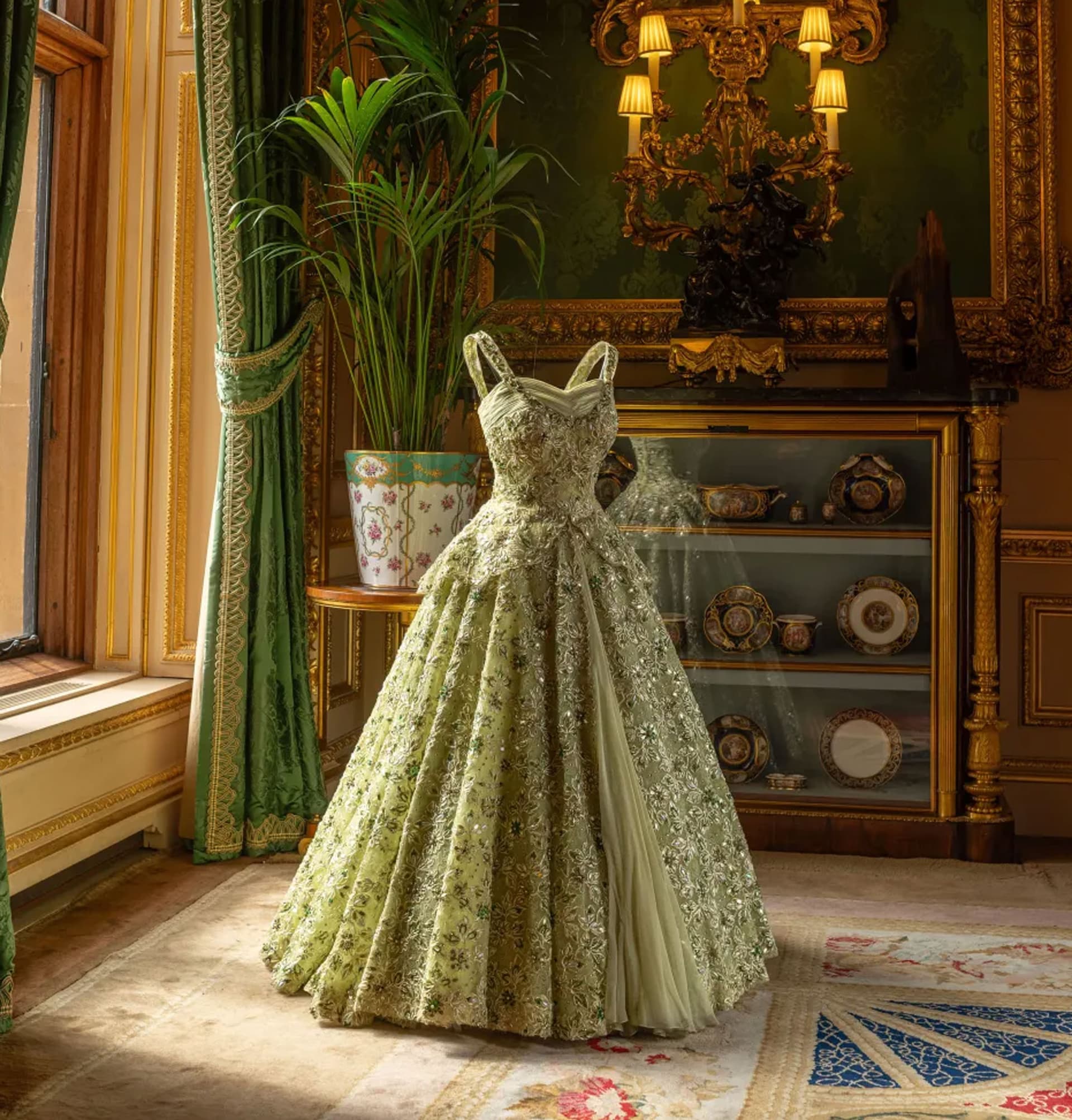
Queen Elizabeth II’s wardrobe takes center stage at Buckingham Palace in a show that treats clothing as a diplomatic instrument, not just a matter of personal taste. The exhibition, Queen Elizabeth II: Her Life in Style, brings together more than 300 items from her life, presenting fashion as part of the monarchy’s machinery of continuity, national identity, and soft power. It is the largest and most comprehensive presentation of the late Queen’s fashion ever mounted, and it runs at The King’s Gallery, Buckingham Palace, through October 18, 2026.
A wardrobe built for statecraft
The exhibition was organized to mark the centenary of Queen Elizabeth II’s birth in 1926, but its deeper argument is about how she used dress to communicate across a reign that spanned postwar recovery, decolonization, and the age of relentless media scrutiny. The Royal Collection Trust says the wardrobe demonstrates her understanding of the soft power behind clothing, with each outfit carrying a carefully coded message about monarchy, nation, and occasion.
That idea is visible in the way the show moves across all ten decades of her life, from birth to adulthood, from princess to queen, and from off-duty looks to garments designed for the global stage. Around half of the pieces are being shown to the public for the first time, a reminder that this is not simply a greatest-hits display, but an unusually intimate look at how the late Queen presented herself over time. The Royal Collection Trust describes the archive as one of the largest and most important surviving collections of 20th-century British fashion.
What visitors will see
The exhibition is built around clothing, but it stretches far beyond dresses and suits. Alongside garments, visitors see jewellery, hats, shoes, accessories, never-before-seen design sketches, fabric samples, and handwritten correspondence that reveal how closely Queen Elizabeth II was involved in shaping her wardrobe.
Several pieces anchor the story of her public life. Among the highlights are her christening robe, bridesmaid dress, wedding dress, Coronation dress, and the ensemble worn for Princess Margaret’s wedding. Taken together, they chart a visual biography of a monarch whose clothes marked major constitutional and family moments as clearly as any speech or ceremony could have done.
The setting at The King’s Gallery in Buckingham Palace reinforces the point. This is not a fashion retrospective detached from politics, but a display embedded in the royal institution itself, where dress functioned as a language of ceremony, hierarchy, and national symbolism. The exhibition asks viewers to read hems, silhouettes, and fabrics as part of the historical record.
The designers behind the image
A major strength of the show is the way it maps Queen Elizabeth II’s relationship with British designers. Norman Hartnell, perhaps the most famous among them, designed both her wedding dress and Coronation dress, two garments that became enduring symbols of the modern monarchy. The exhibition also credits the work of Hardy Amies, Edward Molyneux, Ian Thomas, and Angela Kelly, showing how the Queen relied on a range of designers across different periods and purposes.
That long collaboration helps explain why the show feels as much about political management as about style. The Queen’s wardrobe captured the difference between couture eveningwear and highly practical clothing, including tweed suits, riding clothes, protective outerwear, and distinctive headscarves. In other words, the archive shows a monarch who dressed to be recognized, respected, and understood, whether she was appearing before Parliament, attending a formal procession, or moving through public life in more practical settings.
The Royal Collection Trust has also published an official centenary book, Queen Elizabeth II: Fashion and Style, written by curator Caroline de Guitaut. The book includes a tribute by Dame Anna Wintour and an essay by Amy de la Haye, professor of dress history and curatorship at London College of Fashion, extending the exhibition’s argument into a more scholarly account of royal dress and its cultural force.
Why contemporary designers still look to her
The exhibition also reaches forward, showing how Queen Elizabeth II continues to shape British fashion culture now. Erdem Moralioglu, Richard Quinn, and Christopher Kane each contributed a piece drawn from a past collection inspired by the Queen’s style, to be shown alongside a related item from her own archive. That pairing underscores how her wardrobe has become a source of design inspiration as well as historical evidence.
Erdem described the wardrobe as “a snapshot of a very long life” and “a time capsule,” a description that suits the exhibition’s wider intent. Christopher Kane called it “one of the most significant living archives in modern fashion history,” while Richard Quinn, who received the inaugural Queen Elizabeth II Award for British Design from the Queen in 2018, said her style and support for British couture had a major impact on the country’s fashion industry. The British Fashion Council created that award to recognize the role fashion plays in society and diplomacy, a framing that fits this exhibition precisely.
Seen together, the garments, sketches, and archival material do more than celebrate a sovereign’s wardrobe. They show how Queen Elizabeth II used clothing to project steadiness in moments of change, to affirm British craftsmanship, and to turn personal style into a durable form of statecraft. That is what makes the exhibition compelling now: it presents fashion not as ornament, but as one of the monarchy’s most effective diplomatic tools.
This article was produced by Prism’s automated news system from verified source data, official records, and press releases, then run through automated quality and moderation checks before publishing. The system is built and supervised by the people who set the standards it runs under. Read our full AI policy.
Did this article answer your question?