Build Consistent Table Tennis Footwork: Basics, Drills and 4-Week Plan
Practical footwork plan lays out basics, drills and a 4-week progression so recreational and U-15 players can improve movement and shot consistency.
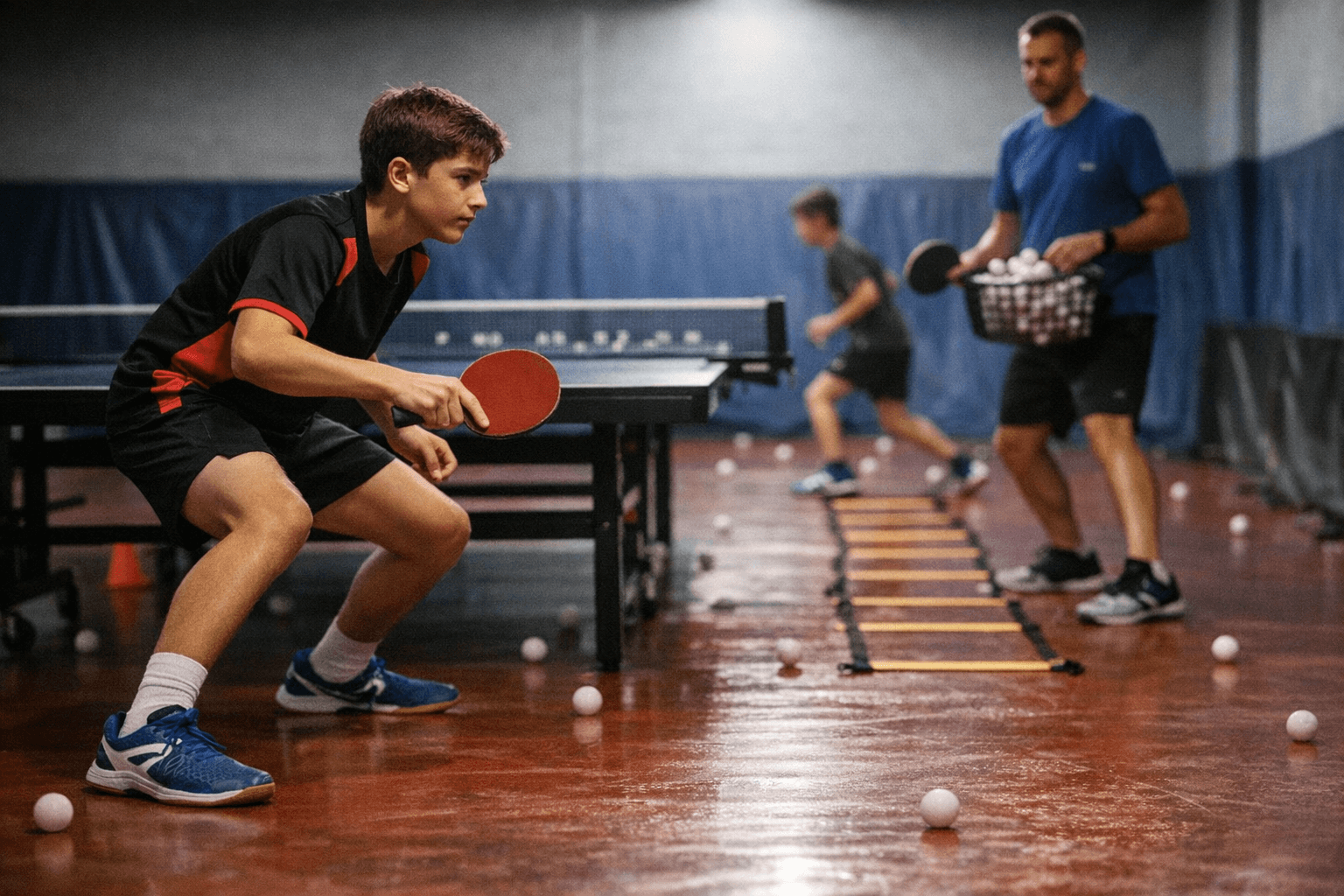
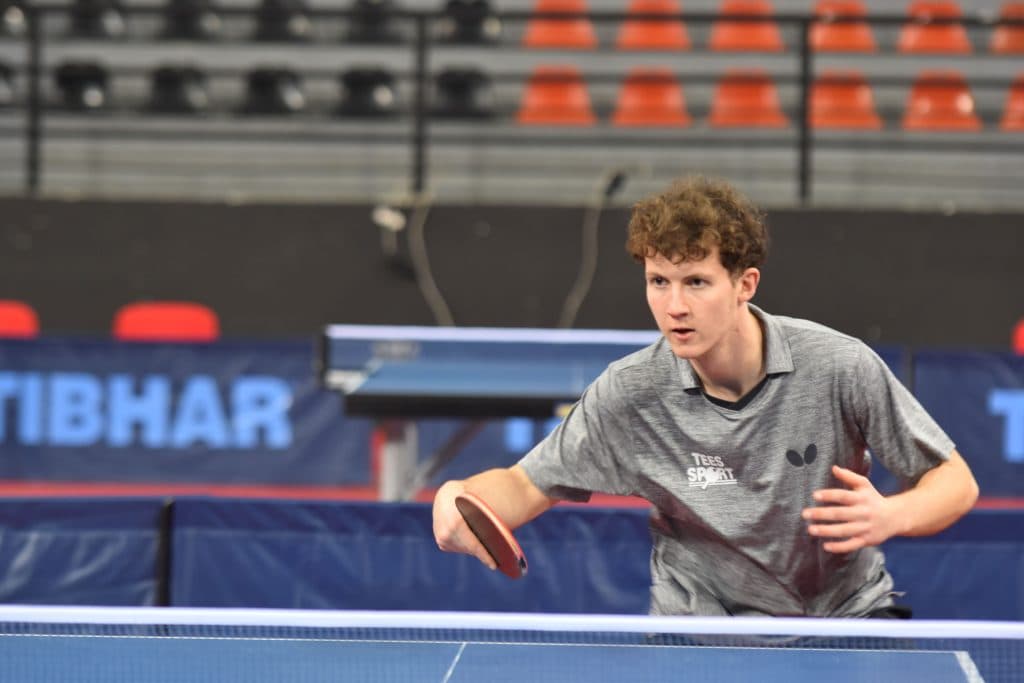
Footwork is the foundation of consistent table tennis and this plan gives players clear steps to move better, recover faster and convert more rallies into winners. Start by locking in the ready position: knees bent, weight on the balls of the feet, racket up and eyes on the ball. That balance sets everything from quick step-shuffles to decisive crossover steps.
Different situations call for different foot patterns. Use the step-shuffle for short adjustments and quick lateral recovery; use the crossover step to cover long, wide pushes that demand reach. When attacking a forehand, lead with the racket-side foot to drive into the shot. When a ball sits deep and wide, move the non-racket foot first to preserve balance and prepare for a stable recovery. Small technical choices like these separate sloppy positioning from reliable table coverage.
Drills translate concepts into muscle memory. Two-step forehand-backhand shadowing trains the rhythm of moving and striking without a ball; perform 50 reps each side to build consistent foot timing. Practice multi-ball short-to-long feeds that simulate a short push followed by a long loop so recovery between short and long patterns becomes automatic. Practice a side-to-side cone drill with a target recovery point to emphasize returning to the center and hitting your preferred launch zone. Finish sessions with multi-direction footwork ladder work for speed, balance and compact step mechanics.
The 4-week practice plan builds progressively. Weeks 1 and 2 focus on stance and the step-shuffle with slow feeds and controlled repetition. Keep footwork-only segments to 20-30 minutes so intensity stays high and form doesn't break down. Track progression by counting successful returns in a row; use that metric to increase drill difficulty rather than just adding time. Weeks 3 and 4 add dynamic multi-ball work and emphasize short-to-long transition recovery under pressure, integrating crossover steps and faster shuffles into rally patterns.
Video-check and self-analysis accelerate improvement. Film side and overhead angles to spot whether weight sits back, whether the racket-side foot leads on forehands, and whether recovery returns to a consistent center point. Use slow motion to compare early-week shadowing with later multi-ball sessions and adjust drills accordingly.
This plan is tailored for recreational players through early competitive levels such as U-15 and club circuits. Adopt the ready position, commit to the 50-rep shadowing and the 20-30 minute focused sets, and use the progression metric of consecutive successful returns to measure real gains. Consistent steps produce consistent shots; build the footwork now and you’ll see the payoff in match play.
Know something we missed? Have a correction or additional information?
Submit a Tip