Build Platform-Agnostic Black Ops 7 and Warzone Loadouts That Adapt to Patches
Build weapon and perk kits that work equally well on controller and mouse/keyboard, then follow a rapid post-patch checklist to validate or swap attachments within 24–72 hours.
1. Start with platform-agnostic weapon chassis
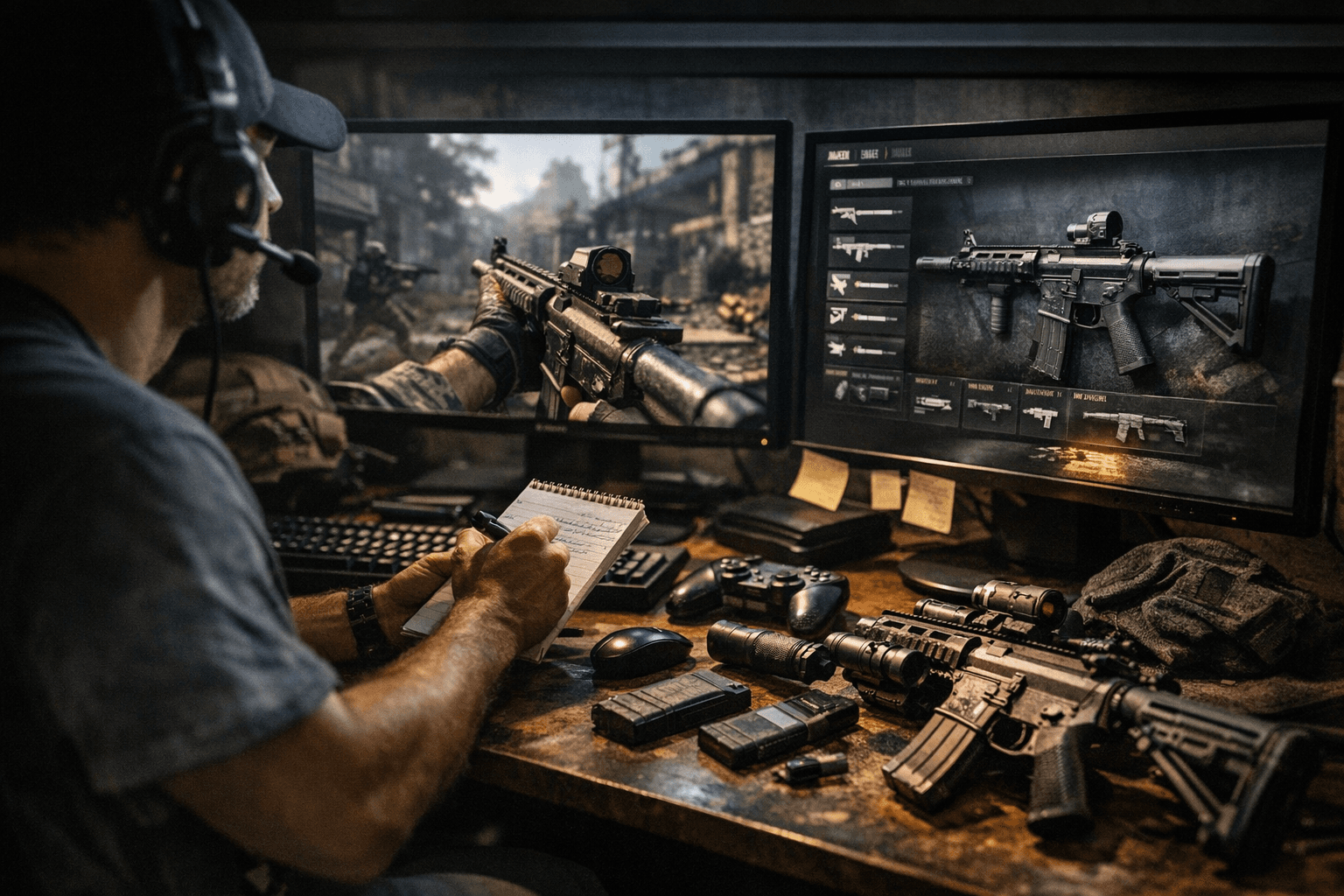
Choose weapon families that survive meta churn: versatile assault rifles, hybrid SMGs, and marksman rifles. These chassis are less dependent on single-attachment breaks and historically persist across Black Ops 7 and Warzone seasons — think the ARs that stayed relevant through HoverPoint ELO shifts and the SMGs that carried over into Loaded Resurgence. Picking a chassis you can tune (rather than a niche one that relies on one overperforming barrel) saves time after balance patches and during events like double XP weekends when weapon use spikes.
2. Build attachment hierarchies, not single “best” builds
Make a tiered attachment list for each slot: A (primary go-to), B (fallback if A gets nerfed), C (comfort/utility). For example, list muzzle options by recoil control, then barrels by range, then stocks by ADS speed. This hierarchy lets you swap attachments in minutes after a patch instead of rebuilding from scratch; when the game moved attachments around in previous seasons like Loaded Resurgence, teams that kept hierarchical lists swapped to B-tier parts and stayed competitive.
3. Make aim and control settings adaptable across input methods
Create two core tuning profiles: one for controller with aim assist optimized, and one for mouse/keyboard with higher sensitivity granularity. Document your dead zones, ADS multipliers, and mouse DPI mapping so teammates can replicate them — at events that matter (teams at Michelob ULTRA Arena $2,000,000 tournaments do this) consistency reduces warm-up time. Test each weapon for 50–100 engagements per profile after a patch to detect aim-assist or recoil changes quickly.
4. Choose flexible perk and field upgrade combos
Lock in a primary perk package that addresses mobility, survivability, and utility, then keep 2–3 alternate packages for common post-patch counters. For example, if a patch buffs tactical lethals, have a secondary package that trades an aggressive mobility perk for a defensive option. Field upgrades should be the last thing you change — items like deployables or grappling hooks are map or mode modifiers (grappling hook additions changed traversal in past seasons), so keep a launcher or melee backup if traversal tech is altered or banned.
5. Standardize universal secondary and equipment choices
Pick a backup that works everywhere: a fast-draw handgun or a compact launcher that clears lethals quickly. Standardizing secondaries reduces cognitive load when a primary weapon receives a nerf spike. For throwable and tactical slots, prefer items with consistent counters (frag/flash variants) — when the RC‑XD was banned in past rotations, teams relied on secondary explosives and launcher practice to maintain utility.
6. Build a concrete post-patch checklist with timelines
Follow a 24–72–168 hour cadence after any patch: 24 hours — read notes and flag affected weapons/attachments; 72 hours — test top-flagged weapons across platforms for 50–100 engagements; 168 hours — finalize and train with any swapped builds. This timeline mirrors pro-team behaviors seen around major season launches (the community expects rapid adaptation during events like 2XP weekends and seasonal Reloaded drops). Keep a single change log that records what you swapped and why so you can revert if the meta continues to shift.
7. Cross-platform testing protocol
Run the same three drills on both controller and KBM: close-range strafing fights, mid-range burst control, and long-range recoil correction. Use repeatable bots or private lobbies and log TTK differences, hitgroup variance, and burst pattern deviations. If a weapon shows higher variance on one platform after a patch, adjust attachments that influence recoil bloom and aim-assist reliance (this is how HoverPoint ELO shifts created platform disparities previously).
8. Map and mode adjustments that actually matter
Track the playlist and map pool changes each season — a map like Firing Range or Mission Peak favors different gear than compact urban rotations. Keep two map-mode profiles: “open/resurgence” for long sightlines and vehicle play, and “close/MP” for tight spawns and verticality. When a season adds a new map cluster or mode (past launches included Grind and Mission Peak additions), prioritize those profiles for the first round of testing.
9. Fast swap recipes for common nerf types
Prepare recipes keyed to the kind of nerf: recoil increase — add recoil-control muzzle and heavier barrel; ADS slowdown — swap to lighter stock and laser; damage falloff increase — favor range barrel and higher-velocity ammo. Keep a list of 6–8 rapid-swap recipes so you can iterate in-game during the first 48 hours without analysis paralysis. These recipes are faster than trial-and-error rebuids and mirror the practical adjustments teams used during Loaded Resurgence patches.
10. Shareable loadout templates and version control
Store your templates in a single place with version tags (e.g., “AR_mid_v1_prePatch”, “AR_mid_v1_postPatch_0326”). Include platform notes: “controller: +.5 ADS, KBM: +5% recoil compensation.” Sharing standardized templates makes scrims and pub play consistent — remember that only about 2% of community write-ups get shared broadly, so make yours easy to replicate and concise to increase uptake. Use timestamps and patch-cycle tags so you can see what build was used when a particular event or tournament succeeded.
11. Practice schedule and scrim protocols after balance changes
Within a week of a major patch, schedule at least five scrims or private match sessions focused solely on new builds and map rotations. Make two rules for each scrim: each player must run the platform-agnostic core kit at least twice, and the team must test one fallback recipe per round. This disciplined approach is what separates teams that adapt within a season from those that lag through multiple balance windows.
12. Decision rules for reverting or committing to a meta pivot
Set objective thresholds for committing to a new primary: average team TTK up to 10% faster, win rate in scrims +7%, or top-12 placement in a public tournament. If none of those thresholds are met within two weeks, revert to your pre-patch core and re-evaluate. Having rules reduces argument time and mirrors roster/contract pressure mechanics in competitive scenes — when stakes are high, clear decision criteria keep teams moving.
Conclusion A platform-agnostic loadout is less a single gun and more a disciplined system: chassis choices, attachment hierarchies, cross-input tuning, and a rapid post-patch workflow. Follow the timelines, keep templates versioned, and test across controller and KBM to stay competitive through Black Ops 7 and Warzone seasonal churn — that’s how you turn patch volatility into a consistent advantage.
Know something we missed? Have a correction or additional information?
Submit a Tip