Bulgaria Adopts the Euro, Replacing Lev and Joining Eurozone
Bulgaria officially adopts the euro at midnight local time, becoming the euro area's 21st member as euro banknotes and coins begin circulating across the country. The handover mixes public jubilation and anxiety over price rises, while institutional steps completed today integrate the Bulgarian National Bank into the Eurosystem and the ECB's operations.
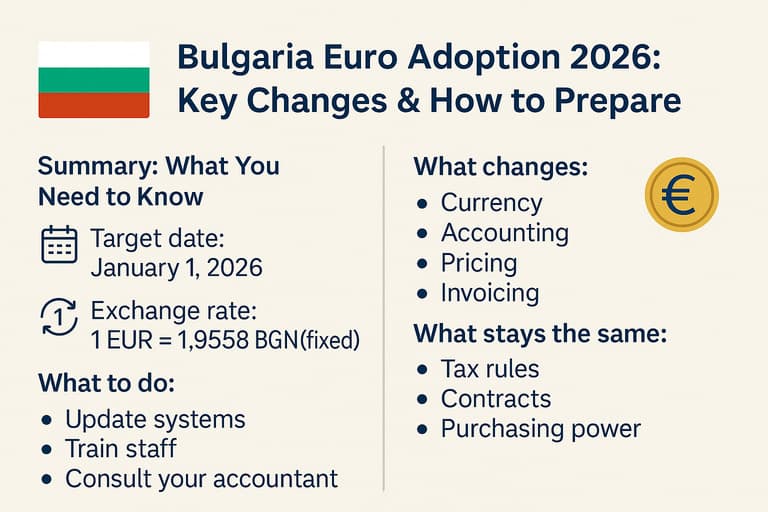
Bulgaria adopted the euro at midnight local time on 1 January 2026, replacing the lev and entering the eurozone as its 21st member. Euro banknotes and coins began circulating nationwide as the Bulgarian National Bank's façade in Sofia was lit with images of euro notes and Bulgarian euro coin designs and fireworks punctuated official celebrations that marked a long-anticipated change in the nation's monetary identity.
The handover is both ceremonial and operational. The European Central Bank said the Bulgarian National Bank paid the remainder of its contribution to the ECB’s capital and transferred its share of foreign reserve assets. The ECB confirmed that Bulgarian counterparties of the Eurosystem are now eligible to participate in ECB open market operations announced after 1 January 2026, and that lists of credit institutions and branches in Bulgaria subject to reserve requirements will be published on the ECB’s website. After a period of close cooperation, the Bulgarian National Bank joined the Eurosystem and became a full member of the Single Supervisory Mechanism.
Public reaction has been mixed. Citizens queued at bank branches and exchange points to swap levs for euros, with many posing for photographs that captured the symbolism of the moment. At the same time, observers described a backdrop of "deep political divisions at home and widespread fears over rising prices," and warned that "elections in March will test whether reforms can follow." The political context is fraught: domestic polarization, resistance from nationalist forces and concerns about disinformation have shadowed the changeover and are expected to shape debate ahead of national elections scheduled for March 2026.
Proponents argue that the single currency will anchor Bulgaria more firmly within European economic structures, reduce currency risk and attract foreign direct investment by shortening the list of barriers for euro-area investors. Economists note that elimination of exchange-rate volatility and the ability to access ECB liquidity operations could lower borrowing costs for banks, which over time may feed into cheaper credit for firms and households.

Opponents caution that the immediate effect could be inflationary. Many Bulgarians fear that prices will rise as businesses round up prices to the new currency or pass on higher costs, squeezing household budgets in a country long described as the poorest member of the European Union. The pace at which any such effects materialize, and whether they are transitory, will influence both popular sentiment and political fortunes in the months ahead.
Market implications will become clearer as Bulgarian banks begin regular participation in Eurosystem operations and as sovereign and corporate bond yields adjust to the new risk profile. In the long term, euro adoption anchors monetary policy to the ECB and could hasten structural reforms needed to close income gaps with richer EU states. For now, the symbolic moment in Sofia blends celebration with caution; the transformation of the currency marks a milestone, but the economic and political tests of integration lie ahead.
This article was produced by Prism’s automated news system from verified source data, official records, and press releases, then run through automated quality and moderation checks before publishing. The system is built and supervised by the people who set the standards it runs under. Read our full AI policy.
Did this article answer your question?