Buncombe County faces seven-year capital spending spike to $66.1M
Buncombe County staff projected general-fund capital spending could rise from $18.3M to $66.1M by FY2031-32, a shift that could raise property taxes and reshape budget priorities.

County finance staff presented a seven-year capital plan showing general-fund capital spending could jump from $18.3 million this fiscal year to as much as $66.1 million by fiscal year 2031-32. The projection, discussed at a January 22 work session, would push general-fund outlays above $30 million as soon as FY2026-27 and represents more than a threefold increase over current-year levels.
That scale of spending would carry immediate fiscal consequences. County materials show the current property tax rate is 54.66 cents per $100 of assessed value; a funding scenario tied to the general fund would require nearly a 6-cent increase per $100 of assessed value, a near 11 percent hike. One calculation presented to the public would raise the annual bill on a $350,000 home by roughly $207 to about $2,120.
County officials and staff point to a substantial backlog of maintenance and an expanding project list as drivers of the spike. John Hudson, Buncombe County budget director, said, “Several factors are coinciding to drive the substantially higher costs.” A 2021 facility study flagged many county buildings as being in rough condition, and Hudson also noted that “the county courthouse is nearly a century old.” Commissioners have already approved a $13.8 million contract to replace courthouse plumbing and a $1.1 million agreement for elevator repairs, and the county list includes repairs to parking decks and new greenways.
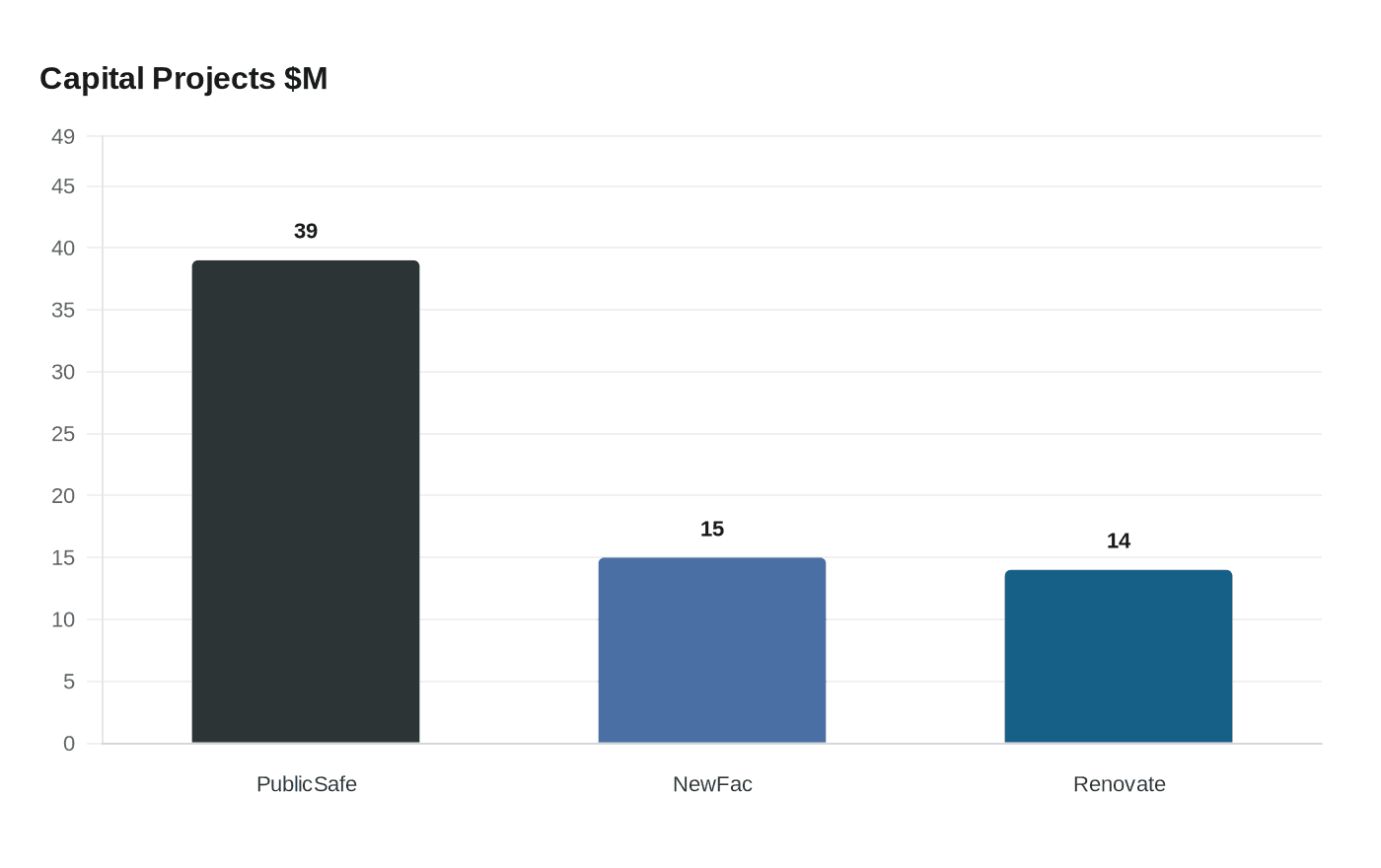
The broader inventory of capital work is large. As of January 2026, the county has more than 60 adopted capital projects totaling around $200 million across multiple funds. County planning documents break notable projects into categories including Public Safety at roughly $39 million, New Facilities at about $15 million, and Facility Renovations near $14 million. Public safety items include courthouse work, detention center projects, and several EMS base projects in Swannanoa, at 40 McCormick Place, and a west regional site.
Audited financial statements provide context for how the county has funded recent capital needs. Buncombe County reported net capital assets of $275.7 million as of June 30, 2024. Fund-level movements in FY2024 included a roughly $789,000 decrease in the Capital Project Fund for AB Tech (down to $20.2 million), a $4.1 million increase in the Special Projects Capital Projects Fund (to $22.9 million), and a $32.9 million increase in the Public School Capital Needs Fund (to $66.6 million) driven primarily by new debt issuance for school projects.
Those debt choices carry operating implications. County staff say continuing capital projects and existing debt will add about $5 million in annual debt service over the next few years. The proposed FY26 county budget shows $438 million in projected expenditures against $415.5 million in projected revenues, producing a potential $22.5 million gap that county staff say will require balancing strategies.
Project selection follows a formal review process. The Capital Review Team scores submissions on service delivery, feasibility, operating costs, health and safety, and other criteria; project scores are considered when funding CIP requests. Solid waste operations also show pressure: the average tipping fee rose to $48.50 per ton in FY2024, operating expenses outpaced operating revenues by $3.5 million, and the county committed to reevaluate fees after FY2025.
For residents, the numbers mean commissioners will face concrete tradeoffs between accelerating repairs and managing taxes, debt, and operating services. County finance staff and the Board of Commissioners will need to map the seven-year totals into a fiscal schedule, explain which projects drive the FY2031-32 peak, and present funding options. Decisions on timing, borrowing, possible fee changes, and any property tax proposals will determine whether the projected spike becomes a one-time bulge, a phased program, or a longer-term tax and debt burden for Buncombe households.
Know something we missed? Have a correction or additional information?
Submit a Tip