Byrd Elementary fifth graders design resilient future cities after disaster
Byrd Elementary fifth graders presented interdisciplinary future-city projects inspired by City of Ember; the work shows local gains in STEM, writing, and collaboration.

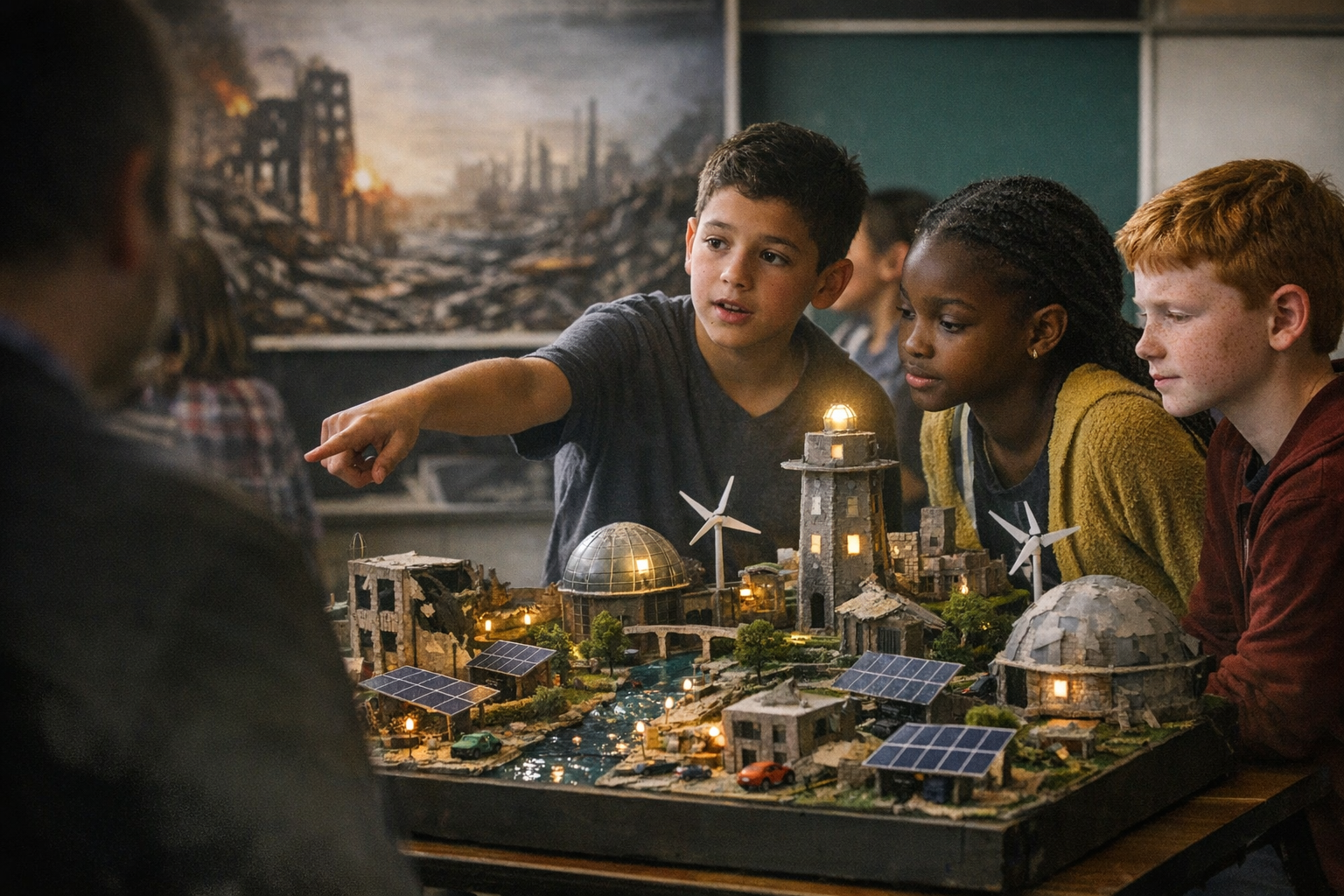
On January 12, 2026, fifth grade students at Byrd Elementary (RES) in Goochland County unveiled a series of future-city projects designed to help humanity survive after a disaster. The classroom unit, inspired by the book City of Ember, combined science, writing, communication, and STEM skills as students planned cities in the clouds, underwater, and in treetops.
The projects were developed as an interdisciplinary unit that required students to research environmental constraints, engineer systems for food, water and shelter, and communicate their ideas through written explanations and presentations. Teachers coordinated across subjects to give students opportunities to prototype structures, model energy and water systems, and explain trade-offs in design choices. The district posted photos of the projects and congratulated students and staff, signaling administrative support for the curriculum.
Beyond a classroom showcase, the work highlights how project-based learning can reinforce multiple academic standards at once. Students practiced core literacy skills by writing technical descriptions and persuasive rationales for their designs. They applied math and science principles to calculate loads, buoyancy and energy needs. Communication tasks asked students to present to peers and adults, building public speaking confidence that translates to civic participation.
For local families and taxpayers, the unit matters because it demonstrates how relatively low-cost classroom innovation can build resilience-oriented thinking. Designing a treetop village or an underwater habitat requires students to balance resources, plan for long-term survival, and anticipate community needs—skills relevant to civic planning and emergency preparedness at any scale. The visible products also provide a tangible measure of student engagement that school leaders can point to when making curricular or budget decisions.
Institutionally, the unit illustrates how cross-departmental collaboration among teachers can expand learning without wholesale curriculum changes. It also raises policy questions for the division: will Goochland County Schools sustain and expand interdisciplinary, hands-on experiences as part of regular programming? Are there investments in maker spaces, STEM materials and professional development needed to scale similar work across grade levels?
Our two cents? Ask your child about the building choices they made and attend the next showcase if you can. Practical support from parents and community volunteers, plus steady investment from the district, will help turn one inspired unit into an ongoing pipeline for local students to practice problem solving, teamwork and civic-minded design.
Sources:
Know something we missed? Have a correction or additional information?
Submit a Tip