Cake Picnic founder turns cake lovers’ gathering into touring sensation
What started as one San Francisco cake meetup has become a touring community ritual, with thousands showing up to trade slices, photos, and a shared offline spectacle.

From one potrero picnic to a touring dessert circuit
Cake Picnic began with a simple premise and an almost absurdly specific rule: no cake, no entry. Elisa Sunga expected about 15 people when she launched the first gathering in San Francisco in April 2024, but 250 people showed up and 183 cakes arrived, turning a low-key meetup into a cultural event almost overnight.
That mismatch between expectation and turnout explains the appeal. Cake Picnic is not a convention, a competition, or a formal club. It is a highly visual, low-stakes social ritual built around one food that carries instant emotional recognition. In a moment when Americans are hungry for offline connection without the baggage of traditional institutions, that kind of gathering can spread fast.
How a pandemic hobby became a traveling phenomenon
Sunga’s backstory makes the event feel less like a stunt and more like a personal solution that scaled. She grew up in Baguio City in the Philippines, moved with her family to Antioch in 2001, and later worked as a Google UX program manager. During the pandemic, she took up baking, and she has said the spark for Cake Picnic was wanting to eat a lot of cake without baking all of it herself.
That origin matters because it explains the tone of the event. Sunga has described Cake Picnic as open to all kinds of cake, from chiffon and upside-down cakes to princess cakes, Russian honey cakes, trifles, and cupcakes. The mix is deliberate: beginners can bring a store-bought favorite, pastry chefs can show off elaborate layers, and everyone arrives with something that reads well on camera.
Why the format spread so quickly
Cake Picnic works because it compresses several modern social desires into one scene. It is easy to understand, photogenic, participatory, and not loaded with status markers that can make other events feel exclusionary. The result is a gathering that feels equal parts potluck, art installation, and internet-born community ritual.
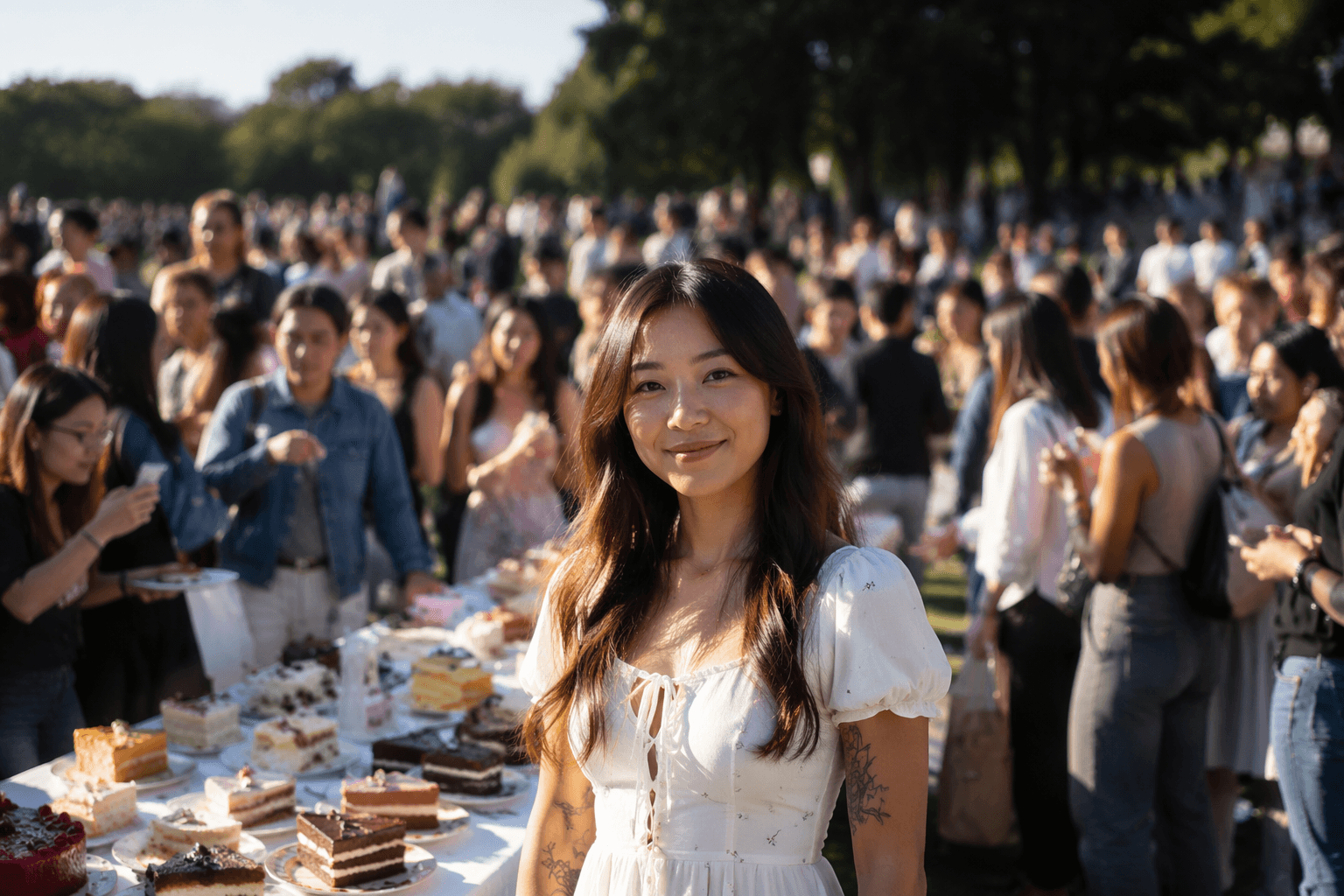
The numbers show how quickly the formula scaled. By the time the event returned to San Francisco at the Legion of Honor on March 29, 2025, about 1,387 cakes were counted. One report said the event sold out in a minute, and Sunga said her Instagram following jumped from about 25,000 to 100,000 in a single day after that gathering.
That surge reflects more than novelty. A cake-covered table is visually legible in seconds, which makes the event ideal for social feeds. It also gives attendees a reason to show up with effort attached to the experience, without requiring the kind of commitment associated with formal membership, fundraising galas, or institution-driven social life.
The art-world crossover gave the spectacle extra momentum
The March 2025 San Francisco event had another layer: it was linked to the Legion of Honor’s Wayne Thiebaud exhibit. That connection gave Cake Picnic an art-world echo, since Thiebaud’s work is closely associated with cakes, pastries, and the aesthetics of abundance.
The pairing helped turn a dessert meetup into something with broader cultural meaning. It suggested that the event was not just about sugar and frosting, but about the way cake functions in American visual culture, as a symbol of celebration, excess, nostalgia, and shared pleasure. In that sense, the event sits at the intersection of food, art, and the internet’s appetite for things that photograph well.
A touring series with a clear national and international footprint
After San Francisco, Cake Picnic expanded into a touring series that has traveled to Los Angeles, New York, San Diego County, London, and Paris. Sunga’s website also lists tentative 2025 stops including Miami, San Francisco, Los Angeles, London, Paris, and New York, showing that the project has become flexible enough to move across markets and still preserve its identity.
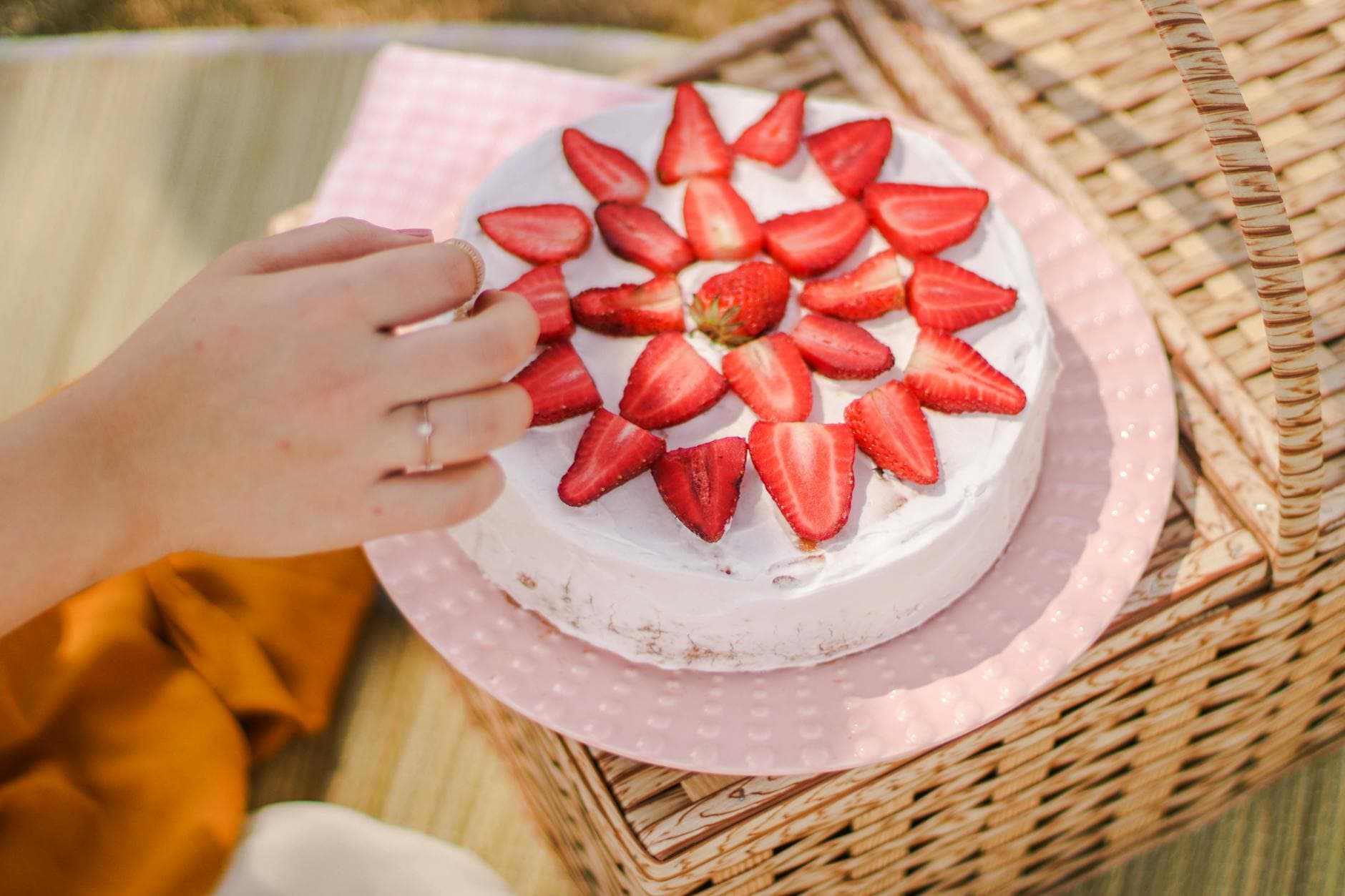
That is part of the story’s economic logic. A pop-up community event with a simple rule and a strong visual brand can travel far faster than a traditional institution, because it relies on shared internet literacy rather than local infrastructure alone. People already know how to participate the second they see the premise: bring cake, join the crowd, take part in the communal display.
What the next San Francisco chapter was designed to test
Sunga said the next San Francisco Cake Picnic was planned for Treasure Island on Oct. 19, 2025, with a goal of 2,000 cakes and tickets priced at $30 after earlier events had been free. That move points to a natural evolution for viral gatherings: once demand spikes, the event has to decide whether to stay intimate or build a more durable structure.
The Treasure Island target also shows how the event has matured from a happy accident into an engineered spectacle. Moving from 183 cakes at the first gathering to 1,387 at the Legion of Honor and then aiming for 2,000 at the next San Francisco edition is not just growth in attendance. It is a sign that Cake Picnic now operates as a repeatable format with its own expectations, costs, and audience.
Why Cake Picnic resonates beyond dessert
The lasting appeal of Cake Picnic is that it turns something ordinary into a shared public ritual without making it feel formal or intimidating. It gives beginners and pastry pros the same stage, lets store-bought cakes sit beside elaborate homemade ones, and keeps the experience playful rather than hierarchical.
That is a revealing model for post-pandemic community life. Americans still want to gather offline, but many want events that feel lighter, more visual, and less institution-bound than the old civic templates. Cake Picnic shows how a single strong idea, one clear rule, and a flood of cake can transform a small local meetup into a touring sensation with thousands of participants and an audience that keeps growing.
Know something we missed? Have a correction or additional information?
Submit a Tip