California cities intensify RV crackdowns as vehicle homelessness rises
Cities are clearing R.V. encampments faster than they are opening alternatives, even as San Francisco’s vehicle homelessness keeps rising.
California cities are cracking down on R.V. encampments faster than they are creating places for the people living in them. That gap has sharpened a basic policy contradiction: neighborhoods want the vehicles gone, but the state still lacks enough real housing and interim shelter to absorb the people being pushed out.
The crackdown accelerated after the U.S. Supreme Court’s June 2024 Grants Pass v. Johnson ruling gave cities and counties more power to clear homeless encampments. A month later, Gov. Gavin Newsom ordered state agencies to remove encampments from state property and urged local governments to do the same. Since then, more than two dozen California cities and counties have passed new camping bans, resumed enforcing old bans, or made existing ordinances more punitive.
The visible result is a shift in where homelessness is showing up. In San Francisco, the number of lived-in vehicles on city streets rose from 474 in July 2024 to 612 in June 2025, even as the count of tents fell from 319 to 165. The change reflects how enforcement can move people out of one form of visible encampment and into another, without solving the underlying shortage of housing.
San Jose has built one of the state’s most aggressive vehicle-enforcement systems. City materials describe an oversized and lived-in vehicle program that uses temporary tow-away zones, permanent parking restrictions in some areas, and biannual inventories of oversized and presumed lived-in vehicles. The city’s Homelessness Hub says the program was approved in the 2024-2025 budget. At the same time, San Jose approved an $18.9 million lease in June 2023 for a Berryessa RV safe-parking site, part of a strategy to create interim shelter options, and city materials say it plans to bring all planned shelter and safe-parking units online by 2025.
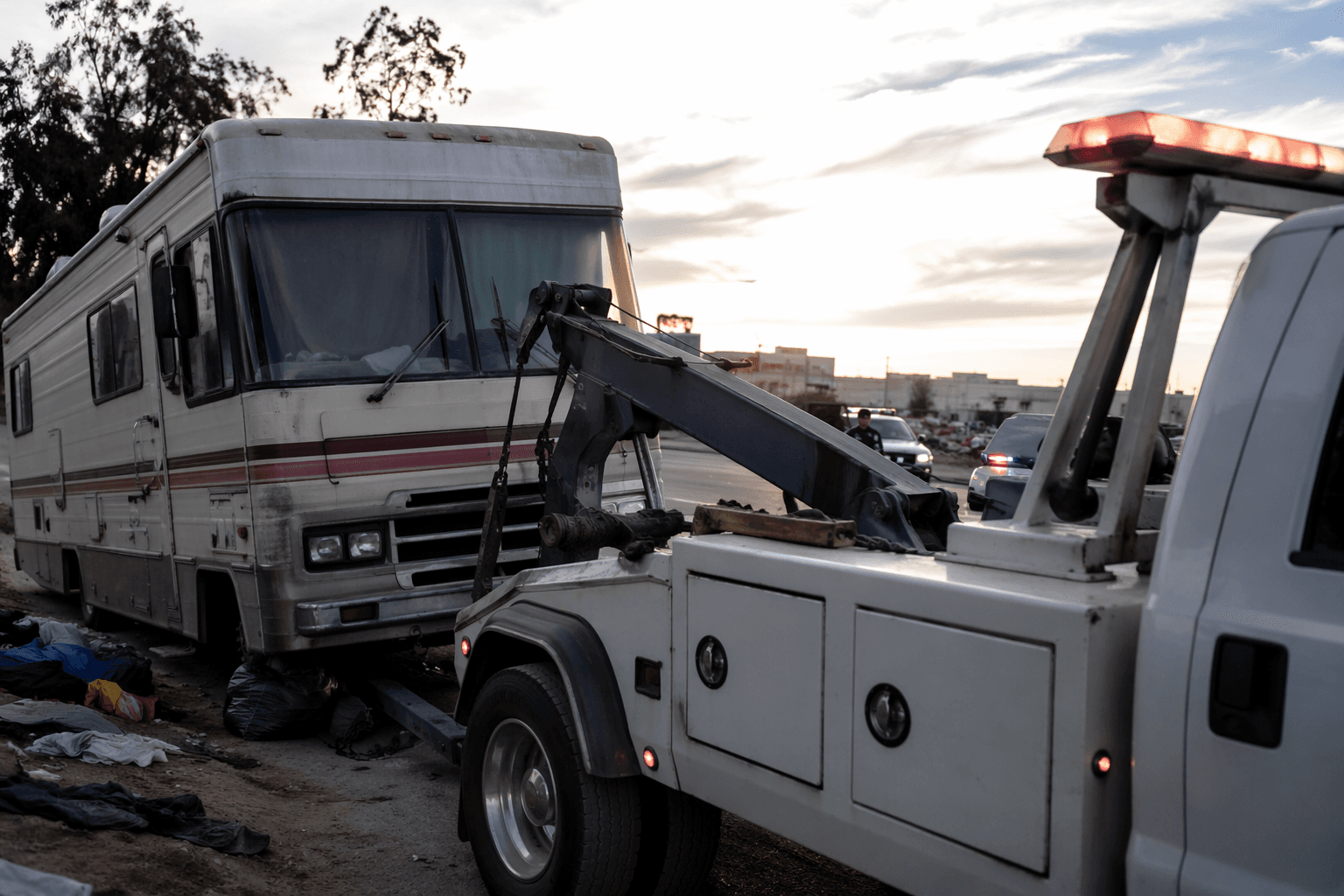
Los Angeles County has taken a similar route with the Pathway Home RV Interim Housing Pilot Program, launched in late 2024 to provide legal parking, a safer place to sleep and services aimed at moving R.V. residents into permanent housing. Advocates say towing and banning R.V.s can simply push unhoused families and individuals into another neighborhood, while city officials and many residents argue the vehicles create trash, wastewater, traffic and public-safety problems that are among the hardest forms of homelessness for cities to manage.
The wider crisis remains the same: California still does not build enough housing, and homelessness researchers say official counts likely understate how many people are living in tents and vehicles. The state’s enforcement drive may make encampments less visible, but without enough places to go, it mostly redistributes the crisis from one block to the next.
Know something we missed? Have a correction or additional information?
Submit a Tip