California governor candidates trade barbs in crowded CBS debate
Eight candidates turned the CBS debate into a scramble over affordability and housing as California’s open governor’s race headed toward ballots.
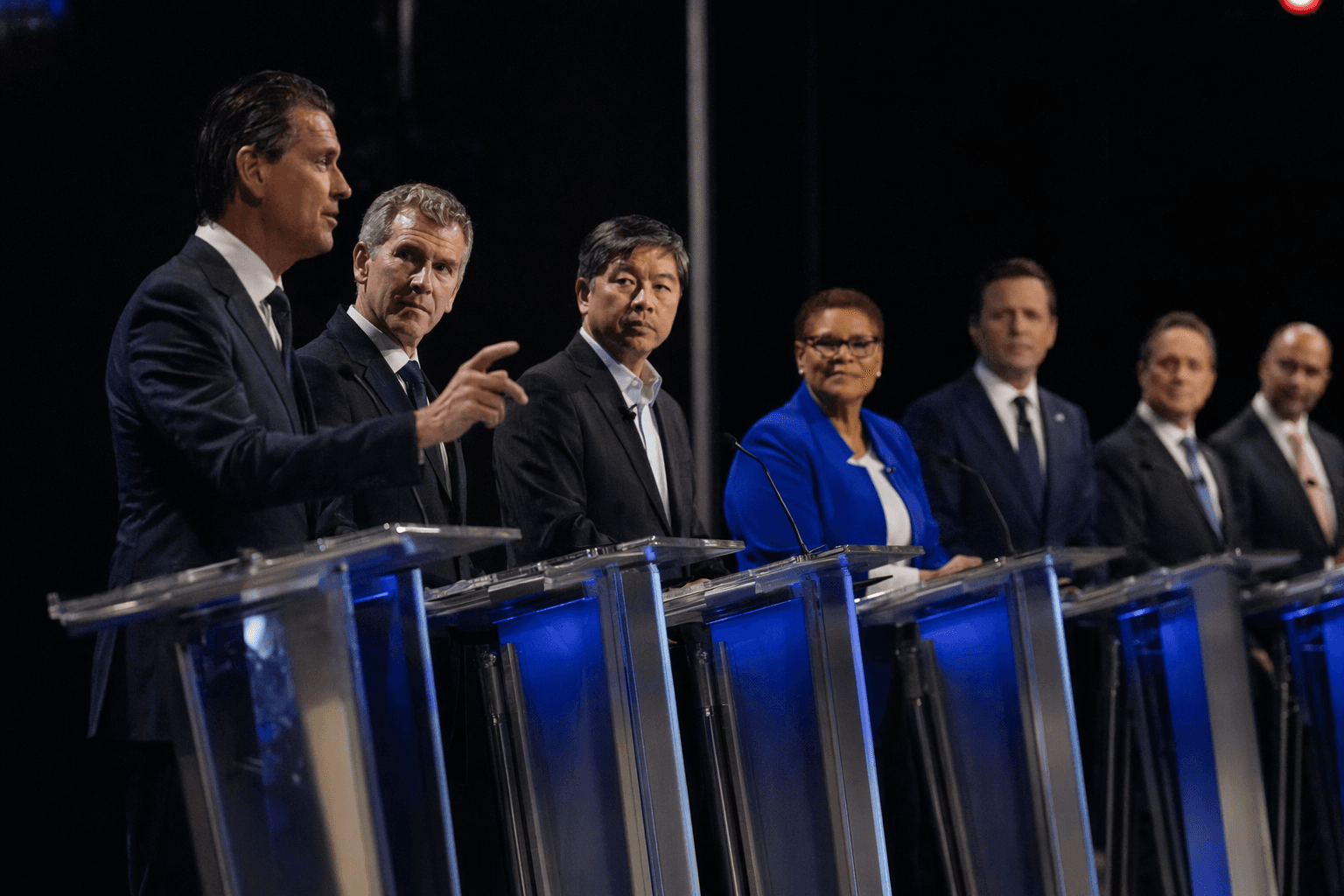
Eight candidates crowded onto the stage at Pomona College in Claremont and spent the night trying to break through in a race with no clear leader and more than 50 names on the ballot. The CBS California Governor’s Debate was billed by CBS-owned stations as the state’s largest gubernatorial debate, a sign of how wide open the contest has become as voters prepare to choose under California’s top-two primary system.
The stakes were sharpened by the calendar. Ballots for the June 2 primary began going out to military and overseas voters as early as April 3, and counties must start mailing ballots to all other voters no later than May 4. Under the top-two rules, the two candidates with the most votes will advance to the November 3 general election, making this late-April faceoff one of the few remaining chances to reset a chaotic race before voting accelerates.
Affordability dominated the exchanges, with housing, homelessness, wildfire insurance, gas prices, healthcare funding and social media restrictions for children all driving the discussion. Democrats Xavier Becerra, Katie Porter, Tom Steyer, Matt Mahan and Tony Thurmond spent much of the evening trying to separate themselves from one another, while Republicans Chad Bianco and Steve Hilton pressed the argument that years of Democratic control had left the state more expensive and harder to manage. On a stage meant to reward clarity, the most durable contrast was not a single line but the split over who could claim the clearest plan for everyday costs.
The race entered the debate with unusual instability. The California Secretary of State certified the candidate list on March 26, and AP described the contest as the first wide-open governor’s race in a generation in a heavily Democratic state. Eric Swalwell’s exit in April, after sexual misconduct allegations that he denied, further underscored how unsettled the field had become. For voters, the debate offered less a coronation than a stress test: who could talk about housing, crime, and the state budget in a way that felt like governing rather than sparring, and who was still searching for the one moment that could change the race.
This article was produced by Prism’s automated news system from verified source data, official records, and press releases, then run through automated quality and moderation checks before publishing. The system is built and supervised by the people who set the standards it runs under. Read our full AI policy.
Did this article answer your question?

