California governor race could produce rare same-party runoff
California’s top-two primary could push two Democrats or two Republicans into November, a rare outcome in a race blurred by scandal, 61 ballot names and weak name recognition.
California’s governor’s race has been reshaped by a system built to reward broad appeal, but this year the same rules could produce something far stranger: a November runoff with two candidates from the same party. The top-two primary, approved by voters in Proposition 14 in June 2010 and in place since 2012, sends the two highest vote-getters to the general election regardless of party. California began using it for governor’s races in 2014, and in the three previous top-two primaries for governor, no two candidates from the same party made it through.
That possibility is back because Gov. Gavin Newsom is term-limited, leaving an open race in the nation’s most populous state and a consequential test of Democratic strength in a deeply blue electorate. The June 2 primary drew 10 officially filed candidates, eight Democrats and two Republicans, and recent reporting put 61 names on the ballot once all listed candidates were counted. In a contest with that many names and so much uncertainty, small shifts in turnout and consolidation can decide who survives the primary and who goes home.
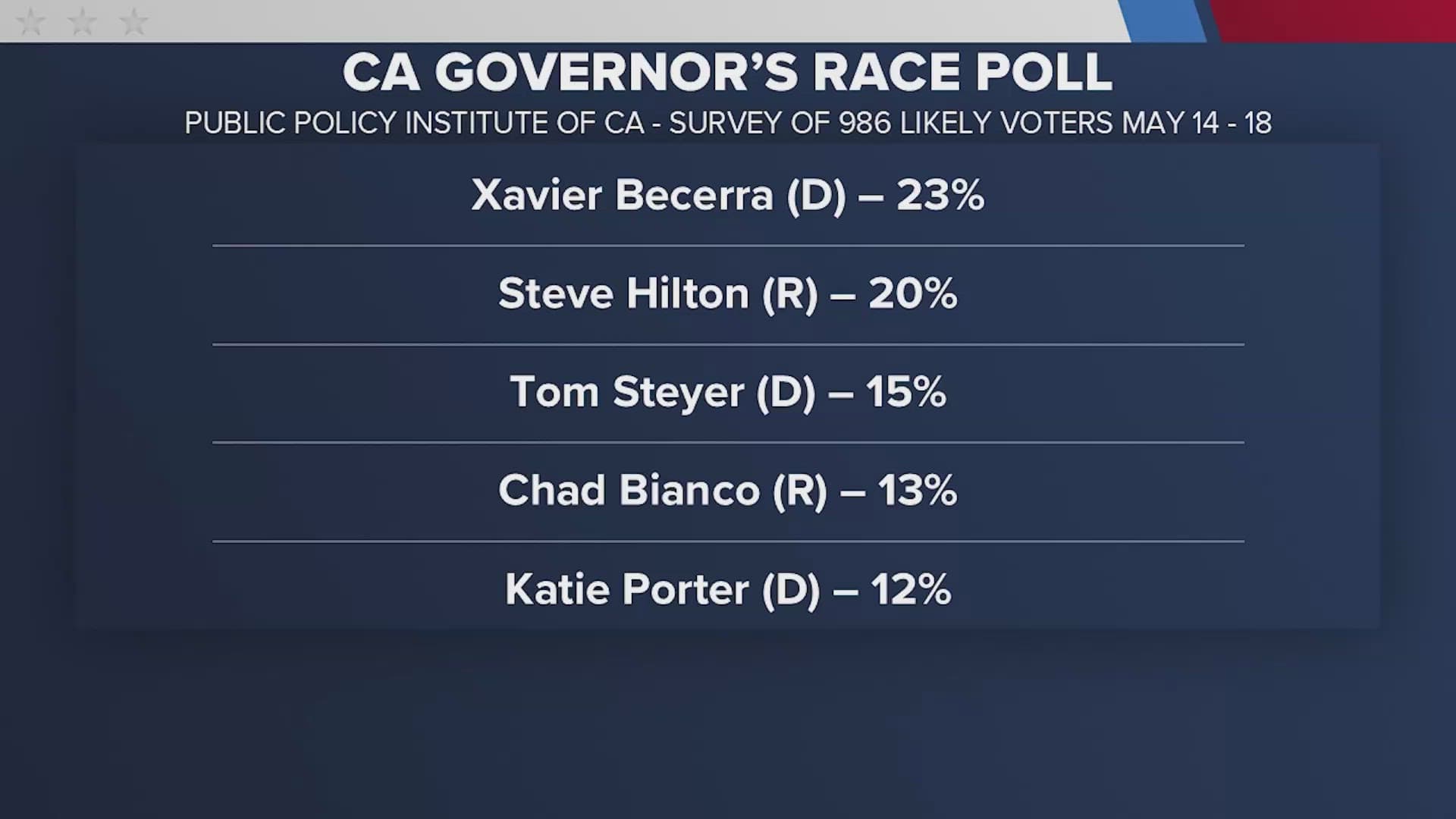
The field has also been hard to read. Xavier Becerra, Tom Steyer, Steve Hilton, Katie Porter and Chad Bianco have all been central figures in late-stage coverage, but no clear front-runner emerged in the final stretch. Polling and reporting showed a large share of undecided voters, while scandals and weak name recognition left many Californians with only a loose sense of who was running. That kind of low-visibility race is exactly where the top-two system can defy normal partisan expectations.
The practical question is not simply which party has more registered strength in California, but how votes are divided inside each party. Democrats enter the primary with many more candidates, which can split their vote across several well-known names. Republicans have fewer prominent contenders, which can make it easier for one or two of them to concentrate support. If the Democratic vote fragments enough, two Republicans could advance. If Republican support proves too thin, two Democrats could still lock up the top spots. In a state this large, with so many voters still uncommitted and so little consensus about the front-runners, the race may be decided less by party label than by which coalition turns out and which candidate gets the clearest slice of an overcrowded field.
This article was produced by Prism’s automated news system from verified source data, official records, and press releases, then run through automated quality and moderation checks before publishing. The system is built and supervised by the people who set the standards it runs under. Read our full AI policy.
Did this article answer your question?

