California, Iowa lead six-state primaries shaping 2026 midterms
California and Iowa offered the clearest clues on Tuesday: new maps, open seats and crowded nomination fights that could reshape November’s balance.
California and Iowa carried the sharpest stakes in Tuesday’s six-state primary slate, offering the clearest read on party strength, turnout and candidate viability heading into November. Alongside Montana, New Jersey, New Mexico and South Dakota, the contests tested whether Democrats and Republicans could convert open seats and new political maps into momentum before the general election.
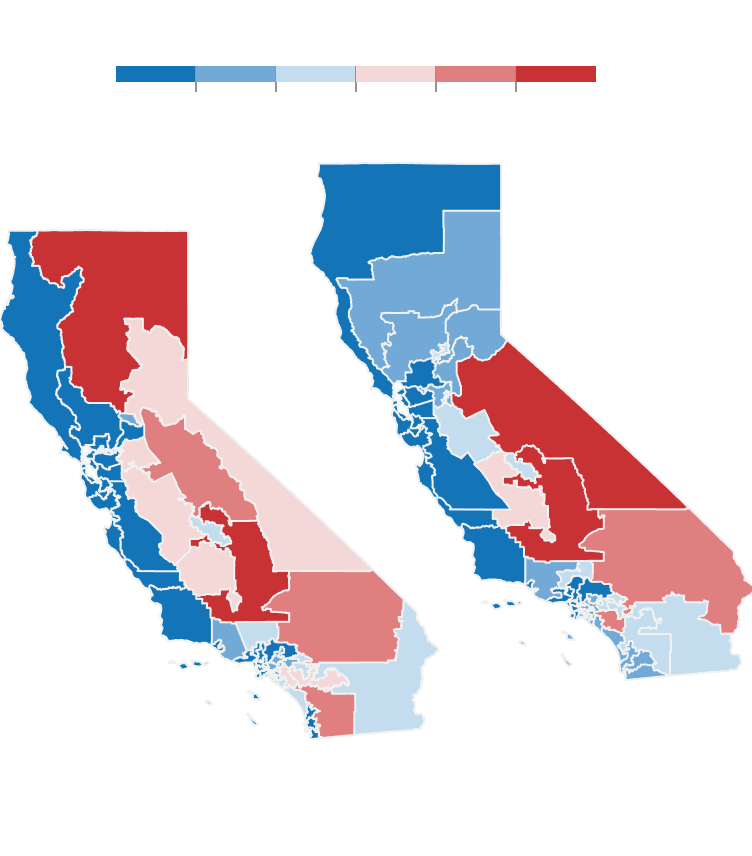
California stood at the center of the night. Voters chose nominees for governor, U.S. House, Los Angeles mayor and other state and local offices, but the congressional races were especially significant because they unfolded under new district boundaries approved by voters in 2025. Proposition 50 authorized those new lines beginning with the 2026 elections, a change that made the state’s House primaries more than a routine date on the calendar. California also held a special election in the 1st District under the current boundaries, adding one more measure of how voters were responding to the state’s shifting political terrain.
Iowa, meanwhile, became a test of succession politics. The retirements of Gov. Kim Reynolds and U.S. Sen. Joni Ernst set off competitive nomination battles at the top of the ticket and a chain reaction of open seats farther down the ballot. That kind of turnover can scramble alliances, widen ideological fights and expose whether either party has a durable bench in a state that often rewards discipline and turnout. The outcomes there were likely to tell both parties whether their message still travels well in a state that has repeatedly signaled the limits of complacency.

The six-state primary came inside a much larger 2026 cycle in which voters will choose nominees for U.S. Senate in 35 states, governor in 36 states and the U.S. House in every state. Those contests will set the field for midterm elections that will shape the final two years of President Donald Trump’s second term, raising the stakes far beyond any single state.
The June 2 primaries also sat inside a compressed calendar. They followed a run of May contests and came before another primary date on June 9 that includes Maine and Nevada. In that crowded stretch, California’s new districts and Iowa’s open seats offered especially sharp clues about where both parties are strongest, where their coalitions are brittle and which candidates are positioned to survive the march to November.
This article was produced by Prism’s automated news system from verified source data, official records, and press releases, then run through automated quality and moderation checks before publishing. The system is built and supervised by the people who set the standards it runs under. Read our full AI policy.
Did this article answer your question?

