California McDonald's staff urge employers to sign rights pledge after ICE raids
Oakland McDonald’s workers were “shaken” after spotting ICE outside last month, and fast-food unions are pushing a three-page Constitutional Pledge for employers to limit raids and protect workers.
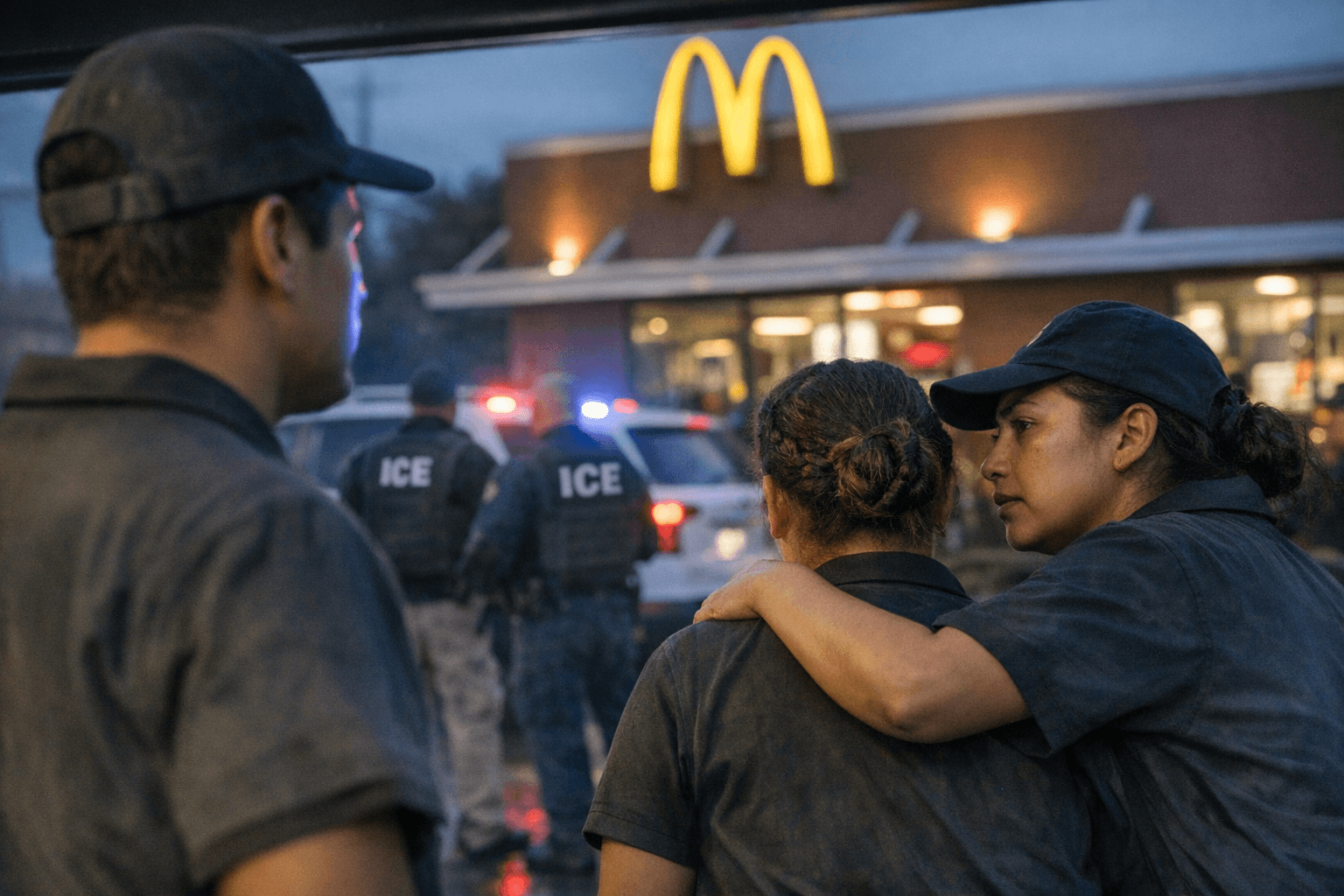
Maria Maldonado, statewide director of the California Fast Food Workers Union, said managers at an Oakland McDonald’s “had to close the door and workers didn’t want to come out” after employees spotted ICE officers outside the restaurant last month. “It’s been really scary. Workers are nervous,” Maldonado added, describing a workplace rattled enough that some staff stayed off the clock.
An open letter from union cooks and cashiers published earlier this month asked California fast-food employers to sign a three-page Constitutional Pledge to Protect California Workers’ Rights, a document drafted and promoted by the California Fast Food Workers Union. The pledge asks businesses to limit ICE access to private workplace areas without a judicial warrant, protect workers’ privacy during immigration-related audits, and ensure all employees’ labor rights are enforced regardless of immigration status.
The union has framed the legal question bluntly, saying McDonald’s “has the legal right to deny [immigration enforcement officers] entry to private areas of the store if they don’t present a warrant signed by a federal judge,” and noting that “other businesses have put up signs as well as trained their staff to enforce that right.” Union leaders say signage and staff training are practical steps some employers have already taken.
Workers report tangible fallout beyond fear. McDonald’s crew member Candida Masin said that “as immigration enforcement ramped up over last summer, co-workers started calling out of work,” a pattern that supervisors and managers are seeing across franchises. Union research cited in the pledge package - the 2025 California Fast Food Worker Survey - found that workers worried about immigration status are less likely to report safety hazards, wage theft, harassment or to seek compensation, and that those workers face higher risks of mistreatment. The union document includes a first-person account in which a worker wrote, “I was thrown to the ground and kicked in the back, requiring surgery. When I filed a Workers Comp claim about it, they fired me.”
Business owners and operators report disruption alongside workers’ fear. The owners of Buona Forchetta said their San Diego restaurant “was the site of a ‘traumatic raid’” and that they “had to close for a couple of days.” A Mission District Mexican restaurant owner said he has rehearsed possible scenarios with staff in case federal agents enter. Altadena food truck operator Salazar — who runs LA Cajun Seafood Boil — closed after January fires, reopened to sparse customers, and says she was barred from an SBA low-interest disaster loan because she is a DACA recipient; she called that “frustrating because she is a taxpayer just trying to make a living.” Salazar said she shut down again to protect herself and her workers and started a GoFundMe “to try to raise money not just for her but for an employee who is out of work now.”
The industry-wide stakes are large: state figures show about 1.42 million people work in California’s food and restaurant sector as of April, including nearly 600,000 in full-service restaurants, and industry leaders warn the wave of enforcement squeezes already strained businesses. Jot Condie, president of the California Restaurant Association, called immigrants “the lifeblood of our industry.”
Organizers are pressing global employers for a visible commitment. “Working people across Los Angeles are demanding global fast food employers sign the constitutional pledge to declare they are choosing courage over silence and dignity over fear,” said David Green, president and executive director of SEIU Local 721 in Los Angeles. “Fast-food companies must stand with cooks and cashiers in this moment, and do their part in building workplaces and communities where all of us can thrive together, stronger and unafraid.” Union leaders say the three-page pledge provides a concrete checklist employers can sign to reassure staff and reduce the disruptions that have hit restaurants and workers alike.
Know something we missed? Have a correction or additional information?
Submit a Tip