California voters weigh crowded race to replace Newsom in top-two primary
About 60 candidates crowded California’s top-two primary, with Xavier Becerra and Steve Hilton near 20% and Democrats uneasy about who could reach November.

California’s hunt for Gavin Newsom’s successor became a test of party strength, not just personality, as about 60 candidates crowded the ballot and no clear front-runner emerged. In a state that can shape national debates on housing, crime, immigration and climate, the top-two primary forced voters from every party into the same field and left candidates fighting to assemble the broadest coalition, not just the most loyal base.
Under California’s voter-nominated system, any voter could choose any candidate regardless of party preference, and the two highest vote-getters were set to advance to the November 3, 2026, general election. That structure has made governor’s races unusually unpredictable since California adopted the top-two primary in 2014, and none of the three prior gubernatorial contests under the system sent two candidates from the same party to November. This year’s race looked even more unsettled, with several outlets describing it as the first wide-open governor’s contest in a generation.
Late-May polling showed Democrat Xavier Becerra and Republican Steve Hilton each around 20% among likely voters, leaving the outcome far from certain and opening the door for other Democrats, including Katie Porter, Tom Steyer, Antonio Villaraigosa and Matt Mahan. Two prominent Democrats, Kamala Harris and Alex Padilla, declined to run, narrowing the party’s establishment options while deepening the scramble for Newsom’s coalition. The result was a crowded battlefield in which Democrats risked splitting the vote and Republicans saw a rare opening to remain viable in a state they have struggled to win statewide.
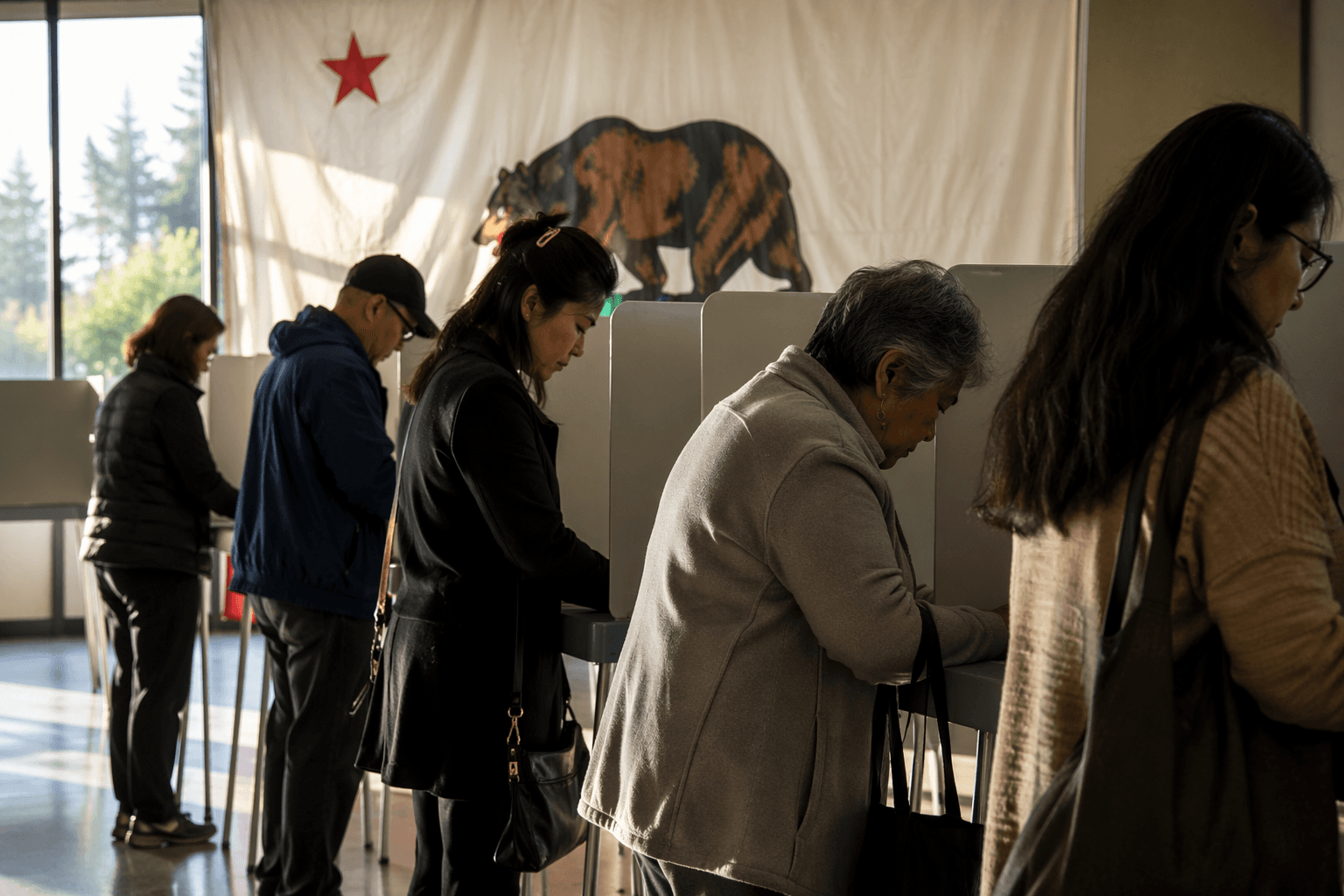
The campaign also reflected voter fatigue. Many Democrats were still shrugging at their choices in the final days, and ballot returns were slower than normal after a campaign full of surprises. One San Diego voter captured that mood bluntly, saying he was “pinching my nose and voting” for Tom Steyer. That reluctance underscored how the top-two format can leave voters choosing the candidate they dislike least rather than the one who best represents their priorities.
The next governor will inherit a difficult fiscal ledger. CalMatters reported that Newsom’s final budget faced a projected $18 billion deficit, while the state’s structural deficit could grow to about $35 billion in a few years. That squeeze will confront the winner immediately, alongside pressure over affordability, public safety and the broader challenge of governing a state that is both a policy laboratory and a political target for Donald Trump.

Election administration itself has reflected the scale of the contest. Ballots for military and overseas voters could go out as early as April 3, counties began mailing ballots to other voters no later than May 4, secure ballot drop-off locations opened May 5, and eligible citizens who missed the May 18 registration deadline could still use same-day registration through Election Day. California’s succession battle was not just about who finished first; it was about which voters, and which governing agenda, would be shut out of November.
This article was produced by Prism’s automated news system from verified source data, official records, and press releases, then run through automated quality and moderation checks before publishing. The system is built and supervised by the people who set the standards it runs under. Read our full AI policy.
Did this article answer your question?

