Cambodia’s Supreme Court upholds 14-year sentences for two journalists
Cambodia’s top court left two reporters with 14-year prison terms after a border-area photo was treated as a military-secrets offense.
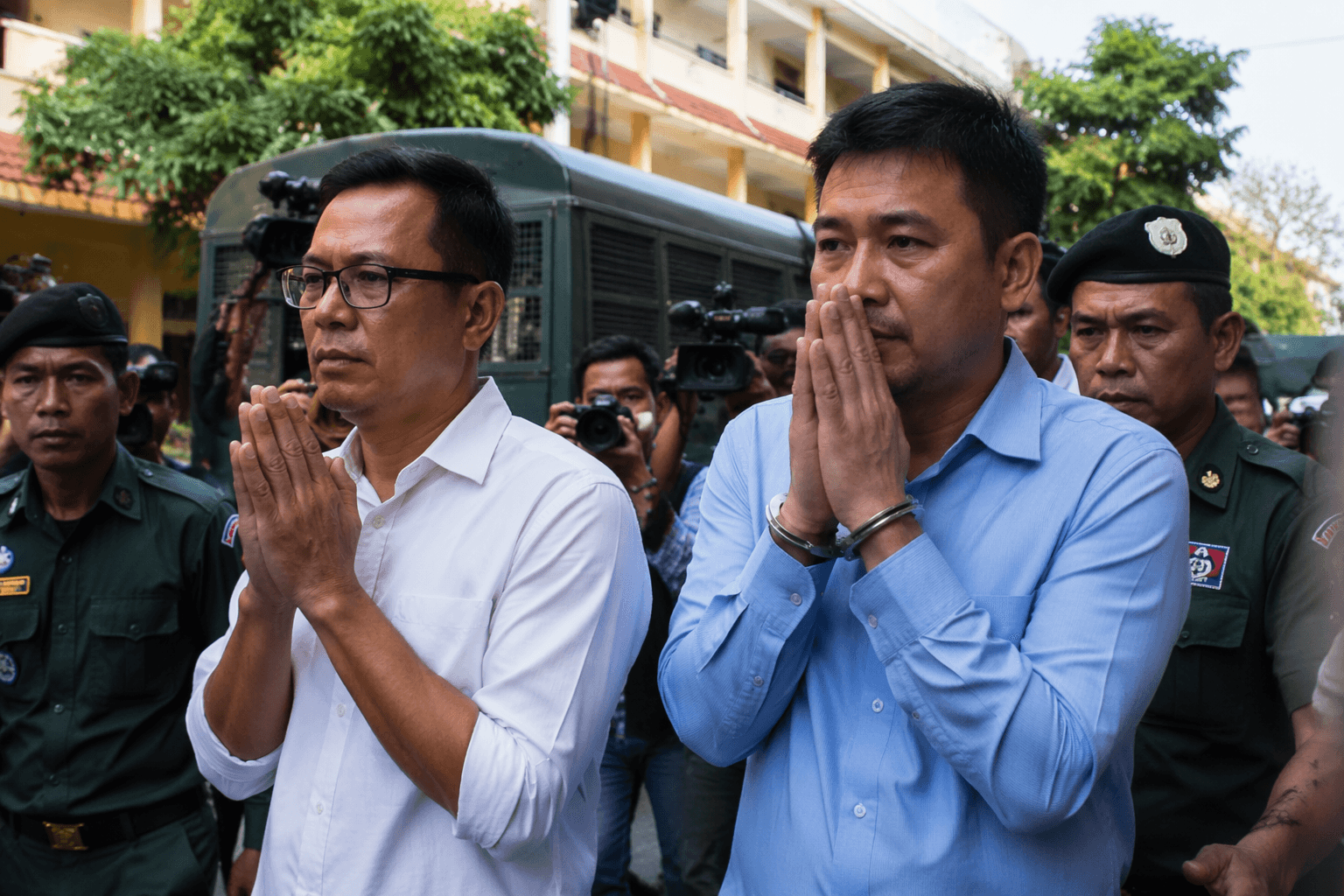
A photograph taken near Cambodian troops in a military-restricted area close to Ta Krabei Temple led to 14-year prison sentences for journalists Phorn Sopheap, 39, and Pheap Pheara, 41, upheld by Cambodia’s Supreme Court. The two reporters worked for TSP 68 TV Online. Sopheap was also identified with Battambang Post TV Online.
The image later circulated on social media and showed landmines in the background. The temple is also known as Ta Kowai Temple. Authorities treated the image as evidence that the pair had exposed military information during border clashes with Thailand, and the Siem Reap Provincial Court sentenced each man to 14 years in prison on Dec. 17, 2025.
Their convictions were entered under Article 445 of Cambodia’s Criminal Code for “supplying a foreign state with information prejudicial to national defense.” Committee to Protect Journalists says Article 445 is an anti-state law carrying a maximum 15-year sentence. The Battambang Appeal Court upheld the convictions in March 2026 before the Supreme Court’s ruling on June 25, 2026.
Human Rights Watch called the 14-year sentences unjust. Reporters Without Borders ranked Cambodia 161st out of 180 countries in its 2025 World Press Freedom Index. Political opposition, corruption and other sensitive subjects are treated as off-limits, and major broadcasters and many newspapers stay close to the government line.
The ruling came months after CPJ urged Cambodian authorities to release journalist Luot Sophal, who was detained in February 2026 after publishing a report about an alleged water shortage faced by frontline Cambodian soldiers. The ruling left Sopheap and Pheara with no further appeal inside the country’s courts.
This article was produced by Prism’s automated news system from verified source data, official records, and press releases, then run through automated quality and moderation checks before publishing. The system is built and supervised by the people who set the standards it runs under. Read our full AI policy.
Know something we missed? Have a correction or additional information?
Submit a Tip